J.T. The L.A. Storyteller Supports Calls to Block Garcetti this Winter

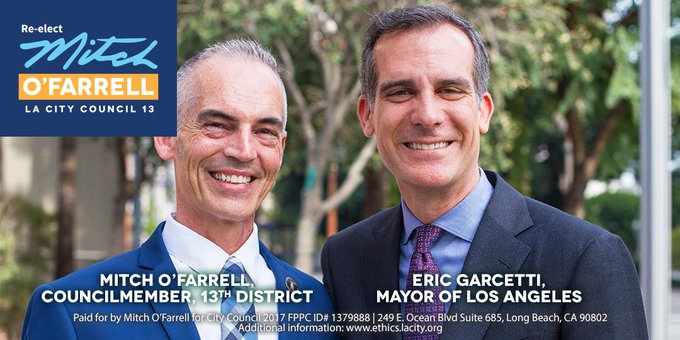
As Los Angeles enters the 2021 winter season, a new initiative known as Garcettiville is calling for Mayor Garcetti to be blocked from a potential appointment to the incoming Biden administration’s cabinet following reports that his name may be on a short-list for secretary of transportation, or possibly even for secretary of housing. Yes, you read that correctly.

In addition to daily protests led by Black Lives Matter and GroundGame-LA calling for the mayor to ‘be kept in’ L.A., the Garcettiville website is accepting submissions from L.A. residents as to why the mayor should not be allowed anywhere near a public office.

After nearly 20 years as an elected official, starting in 2001 as a council member for District 13 in Los Angeles, and then since 2013 as mayor, under Garcetti’s leadership the city of L.A. is on track to landing more than 50,000 bodies on its streets and sidewalks within the next year alone, even while there are tens of thousands of luxury housing units in L.A. that can be commandeered in lieu of expanded powers for mayors due to the emergency presented by the pandemic; powers which have just sat there aimlessly, accumulating nothing but dust.

This is because while Garcetti has done everything in his power to open up the city for business, that is, for big banks and transnational corporations, he’s done it by no less than trading in the rights of workers, immigrants, and Black Los Angeles to live in a more equitable city. Despite myriads of protest, civil rights advocates, and other leaders calling for him to do better, the mayor has proven unwilling to serve as an actual representative for every resident who actually resides and pays the taxes funding his salary each year.

As a result, whether Garcetti leaves office in 2021 or 2022, by almost every measure, since the start of his tenure in 2013, L.A. has become a poorer, more unhealthy, and more hostile grounds towards its working-class communities, which will take decades to undo.

This is also not just a viewpoint from the “radical” left. In 2017, professor Philip Alston, assigned by the United Nations as a Special Rapporteur on extreme poverty and human rights, said of his visit to Los Angeles:

“In June 2017, it was reported that the approximately 1,800 homeless individuals on Skid Row in Los Angeles had access to only nine public toilets. Los Angeles failed to meet even the minimum standards the United Nations High Commissioner for Refugees sets for refugee camps in the Syrian Arab Republic and other emergency situations.”

The writing is on the wall, and people all over the world can see: Garcetti is not fit to serve in any public office in Los Angeles, let alone a national one in Washington D.C. Visit the new Garcettiville website and tell your side of the story.

J.T.

Support the Coalition for Fair Remapping in Los Angeles this 2020

With all the talk of elections and ‘fair’ counting this week, can anyone really stomach any more politics? Yet eventually it’s never too early to talk about the future for J.T. The L.A. Storyteller. It’s what’s right around the corner. Consider then that the 469 square miles which make up the city of Los Angeles will actually be ‘redistricted’ or redrawn soon. In other words, new maps and designations for vicinities are coming.

Wait. Does this mean that your neighborhood, like the new letter names in place of L.A.’s formerly ‘colored’ Metro rail-lines, is going to be totally remade, completely taking away what you’ve come to know as your specific part of L.A.? Or does this mean that the neighbors you’ve spent all this time getting to know will no longer be counted as your fellow stakeholders at your favorite Neighborhood Council meetings? Probably not, though given that today the L.A. City Council is better known for building luxury lofts and downtown hotels rather than affordable housing and shelter for its unhoused, one can never be too sure.

But in order to complement the decennial census’s updated figures for population counts, the various boundaries for L.A.’s neighborhoods need to be redrawn within the next couple of years. At least, that’s what City Council’s heralded Los Angeles City Charter says:

“Every ten years, the Council shall by ordinance redraw district lines to be used for all elections of Council members, including their recall, and for filling any vacancy in the office of member of the Council, after the effective date of the redistricting ordinance. Districts so formed shall each contain, as nearly as practicable, equal portions of the total population of the City as shown by the Federal Census immediately preceding the formation of districts.”

Yet by the time the last redistricting for L.A. was completed in 2012, when the redistricting commission signed approximately 250,000 residents into each of the 15 L.A. City Council members’ districts, the commission was widely blasted as a parody of accountability and fairness. For one, commission appointees, many of whom were former employees or people with close ties to L.A. City Hall, were handpicked by L.A. City Council members themselves.

For another, those representatives themselves were just pawns, either oblivious or obsequious to backdoor deals to the redistricting process overseen by council members. This was captured no better than by various stories of Herb Wesson–the now termed-out former representative of Council District 10–basically admitting to directing that his district be drawn in favor of Black votership on the south side at the expense of Asian-American voters in central Los Angeles, all the while forgetting to mention that such Black votership was meant to favor him and his political prospects, personally.

Wesson’s debacle led to a lawsuit against him from his own constituents in Koreatown, Lee v. City Of Los Angeles (15-55478), which argued that Wesson basically disenfranchised Asian-American voters there in order to fulfill his own narrow political interests. After eight years, the case is still in court, awaiting a ruling from the Ninth Circuit Court of Appeals. But the lawsuit made one thing clear: L.A.’s redistricting has been little more than a way for various council members to consolidate power over the city, much to the chagrin of its less powerful communities. Even the normally conservative L.A. Times editorial board has called L.A.’s redistricting over the last few decades a ‘sham’ process, and cited the need for a total makeover:

“If Los Angeles had a truly independent citizen redistricting commission, like the ones that serve San Diego, Long Beach and Sacramento, City Hall insiders and political operatives would likely be disqualified from serving on it.”

“L.A.’s last redistricting was a sham. Do better this time”, L.A. Times, 2020

Also fearing a repeat of 2012, earlier this year more than thirty different civic groups, nonprofit organizations, and other activists in Los Angeles sent a letter to the current group of L.A. City Council members calling for a transparent and inclusive redistricting process this next go-round. Their letter notes concerns regarding the recent appointment of commissioners with previous ties to L.A. City Council–as it was the case back in 2012–as well as a rushed appointment process. It also points out that there are no specifications regarding how appointees may be removed if conflict of interest makes their removal necessary, as well as concerns about an accessible process for the public in all forms, including in terms of language access for the multitude of languages spoken by the city’s immigrant communities.

Such issues would be important in a “normal” year, but given that in just the last six months one former L.A. City Council member, Mitchell Englander, has plead guilty to corruption charges while another, Jose Huizar, has been arrested for using his office to satisfy Chinese real estate moguls, it’s anything but a normal year, which is not lost on the coalition members:

“With trust in LA City Hall waning, we cannot afford a repeat of previous redistricting efforts which not only divided communities and resulted in litigation, but further entrenched fierce divisions within City Council.”

RE: A More Independent Redistricting Process for LA, Coalition Letter from 30+ organizations

Still, even with such public calls for transparency, considering that this is the same city hall which responded to a summer of vehement outcries to “de-fund the police” by merely rescinding a scheduled raise for L.A.’s police force this next fiscal year–which, for the record, was initially a raise unilaterally agreed to by the mayor’s office to begin with and not an item that was voted on by the full council–is it better to be cynical that City Hall will budge on a more accountable redistricting process for its millions of constituents this next decade? It just may be.

But what’s also true is that with support from various progressive coalitions in L.A–including some signed on to the redistricting letter to the council–Nithya Raman, a first time candidate for public office, has just successfully unseated incumbent David Ryu. It’s also true that Black Lives Matter-L.A., after a years-long effort to expose eight-year incumbent District Attorney Jackie Lacey for failing to press charges against a single LAPD officer after more than 600 shooting deaths, has just ousted her. In other words, it’s safe to say that calls and coalitions for a more accountable Los Angeles are only growing louder every year; and in the next two years alone, if City Hall’s council members continue pretending not to see or hear some of these most vocal constituents, then they should expect only further rude awakenings, all of which will be in order. After all, as The Los Angeles City Charter states:

“Every City office and department, and every City official and employee, is expected to perform their functions with diligence and dedication on behalf of the people of the City of Los Angeles. In the delivery of City services and in the performance of its tasks, the government shall endeavor to perform at the highest levels of achievement, including efficiency, accessibility, accountability, quality, use of technologically advanced methods, and responsiveness to public concerns within budgetary limitations. (emphasis mine)”

In the 13th district, to get in touch with Mitch O’Farrell’s office for any concerns regarding his handpicked commissioner for the redrawing of the district, you can find the contact info for his Chief of Staff, Jean Min, HERE.

J.T.

J.T.’s Community College Trustee and Superior Court Judge Picks for this November 2020

Los Angeles Community College District – Member of the Board of Trustees, SEAT 1: Andra Hoffman

Why? She’s a transfer student, meaning she hailed from a working class background in the valley when she began her pursuit of a B.A. at L.A. Valley Community College, from which she transferred to Antioch University, the latter of which is especially celebrated throughout Los Angeles for low-cost tuition and accessibility. Moreover, as an adjunct professor at Glendale Community College, it’s clear that Hoffman has a passion for community learning and empowerment. She should continue working to improve the transfer rate for the entirety of LACCD, especially given the transformation of the CC system with this last year of online learning. She should also work towards directing LACCD’s budget towards student housing and work needs.

Los Angeles Community College District – Member of the Board of Trustees, SEAT 3: Anthony Joseph Danna

Why? Danna has a well-crafted Position Paper, which, among other things, notes the need for the LACCD to build student housing through unobligated bond money from Measure CC, which was passed by over 75% of the electorate in November 2016. Danna notes the possibility of building live/learn housing facilities off LACCD campuses with programs similar to Cal State Long Beach’s, which until just recently was building a live/learn hub in downtown Long Beach with the express purpose of developing affordable housing for students and a connection between the university and its downtown area. He also notes the possibility of a satellite facility for LACCD in South Los Angeles in order for the district to improve its services for L.A.’s Black students and community.

Los Angeles Community College District – Member of the Board of Trustees, SEAT 5: Nichelle M. Henderson

Why? She brings much needed energy to the board as a long-time activist, educator, and community organizer. And while her list of priorities doesn’t quite yet include housing for students, she does note that she seeks to make the community college system at the LACCD more relevant to foster youth and formerly incarcerated youth. Two huge wins for this blogger.

Los Angeles Community College District – Member of the Board of Trustees, SEAT 7: Mike Fong

Why? He’s a transfer student, who attended both LACC and ELAC before earning his B.A. from UCLA. Mike also played a role in ensuring a partnership between the LACCD and LAUSD to make the first two years for students graduating from LAUSD free of charge. He should continue to improve on accessibility for students at LACCD, as well as seek opportunities to address student housing needs, food insecurity, and retention within the district.

Member of the State Assembly – 43rd District: Laura Friedman

Why? She talks affordable housing, racial justice and redress, protections for LGBT communities, and even curbing the allowance of higher speed limits. She’s basically kind of a super-legislator, and it’s surprising, and then not surprising, how small of a profile she seems to maintain in Los Angeles.

United States Representative – 28th District: Adam B. Schiff

Honestly, Schiff has had no serious competition ever since he won this seat in 2001, and that needs to change immediately. It’s hard to say just how Schiff hopes to bring badly needed affordable housing for the 28th district in Los Angeles while he spends so much time in Washington D.C., and especially after more than a year focused on “Russiagate.” His opponent, however, who’s placed billboards and flyers around Echo Park claiming that he “defends cops while Schiff defunds them,” is unacceptable to the values of this blogger.

Judge of the Superior Court, Office No. 72: Myanna Dellinger

While Dellinger is not as “experienced” as her rival for this seat, it’s also true that her tenure at the Superior Court should benefit from her international experience as an immigrant from Denmark, not to mention her time as a Fulbright Scholar. She is also a podcaster, producing The Global Energy & Environmental Law Podcast, who has noted that in California, “Power structures, including the government, need to be much more inclusive of women, immigrants, low- and middle-income earners, educators, and other people from a ‘non-traditional’ background including people of color and LGBT people.” She thus earns her marks with J.T. The L.A. Storyteller.

Judge of the Superior Court, Office No. 80: Klint James Mckay

Apart from what’s probably the coolest video for public office for any prospective official in the Golden State this year, Mckay’s understanding that “we’re all more than the worst that we’ve ever done” is precisely the type of judgement that we can use more of in the state with the largest jail system of the United States. Let’s get him the seat.

Judge of the Superior Court, Office No. 162: Scott Andrew Yang

While Yang’s definition of “justice” for Voters Edge comes off as not quite impartial, it’s also true that he’s been assigned to a victims defense unit for something like a decade, which has clearly informed his perspective. Moreover, as an immigrant and former refugee from Vietnam, Yang should understand well the importance of “a second chance” through the arm of the state’s powerful superior court position. J.T. The L.A. Storyteller approves.

Made a mistake on your ballot? Not to worry, you can always make some last-minute corrections. Check out KQUED’s “Tips for Correcting your Choices.”

J.T.

Meet The Anti Eviction Mapping Project in Los Angeles

Originally founded in San Francisco in 2013, the Anti Eviction Mapping Project (AEMP) was a response to the city’s hostile developments against working class families to make room for the tech and AirBnB booms there over the last decade that have kept San Francisco, along with much of the Bay Area, within the top five most unaffordable cities in the country for nearly a decade. Since then, a mix of scholars, activists, artists and working-class voices have regularly updated and expanded the reach of the AEMP to create visibility for the role of Ellis Act evictions in the manufacturing of unaffordability in the state of California.

The Ellis Act, a state law passed in 1985 that was originally intended–at least on paper–to give “mom and pop” landlords the opportunity to leave the rental business when they want to opt out, has since provided increasingly more corporate landlords the right to evict tenants, including tenants living in rent-controlled units, substantially reducing the availability of such units from the rental market for working class families. As a result, since 2001, the city of L.A. alone has lost at least 27,067 rent-controlled units to Ellis Act Evictions.

Since 2017, the AEMP has documented this process in Los Angeles, tracing available public data on the date of evictions, as well as on how many units were taken off the rental market by their displacement. In the words of scholar-activists Terra Graziani, who co-founded the AEMP in L.A., and Mary Shi, a UC Berkeley based scholar, regarding the role of documenting such processes:

“AEMP’s Ellis Act Eviction Map visualized the city’s erased history of “no-fault,” Ellis Act evictions as a series of time-lapsed, exploding, black and red circles. By culminating in the image of a city pockmarked by eviction, this visualization served to re-signify San Francisco as a site of mass displacement and thereby counter growth machine imaginaries of the city as an unblemished terrain ripe for capital accumulation.”

– Data for Justice: Tensions and Lessons from the Anti-Eviction Mapping Project’s Work between Academia and Activism

If you live in the city of Los Angeles, or any of the other AEMP-documented counties, there’s no reason why you should not know how many Ellis Act evictions, for starters, have taken place in your community over the last 20 years. After a brief survey of the interactive map, in the vicinity of the Virgil Village area, which spans the length of only a single mile radius, I counted up to 84 ‘no-fault’ Ellis Act evictions of residents here. I will update the count for the East Hollywood area before too long. Check back for that update.

Meanwhile, to learn more about the AEMP, click the flyer below to check out the latest free talk held by the Anti Eviction Mapping Project in conjunction with the Los Angeles Tenants Union on how to organize for tenant protections in Los Angeles. Tune in with yours truly to learn how you can start a Tenants Union or Association within your community, if not join one nearby. And remember: at the time of this writing, in the city of L.A., more than 2.4 million people of the city’s estimated 4 million residents rent rather than own the homes they live in.

Additionally, from now on, readers can view a histogram charting the number of rent-controlled units lost in L.A. over the past two decades due to the Ellis Act at the footer of this website.

J.T.

How Low Voter Turnout in L.A. Rewarded Garcetti, O’Farrell

In a not so distant future, beyond the year of the pandemic, one might hope that the politics just before this extraordinary year won’t be easily forgotten by our cities and their leadership, in order for us to avoid a simple repetition of the past. Here’s a brief look back at some of that recent past, then, analyzing a handful of numbers and some change.

On May 21st, 2013, in a runoff election with a former L.A. City Controller, Wendy Greuel, Eric Garcetti was elected to the Mayor’s office by 222,300 votes. Those votes were won out of nearly 1.8 million registered voters in the city of Los Angeles in 2013, making it so that he was originally elected by just 12.3% of L.A.’s electorate.

For Garcetti’s original election bid in the mayoral primary race, contributions or donations to his campaign amounted to more than $8.7 million dollars, making him the most expensive candidate in the race by a considerable margin. Wendy Greuel, on the other hand, came in second place for contributions with more than $7.3 million. The third-in-place candidate in the original primary race, Jan Perry, raised $1.6 million. The 2013 race was a battle of the millions then, where the most millions got the most hundreds of thousands of votes, or in Garcetti’s case, 34,691 more votes than Greuel in the runoff to place him over the top.

Four years later, on March 7th, 2017, Garcetti was reelected to the Mayor’s office by 331,310 votes. This was nearly 110,000 more votes than what he received when he first ran for the mayor’s office, but from an electorate of 1.7 million registered voters, Garcetti’s 331,310 votes returned him to the mayor’s office with just 23% of L.A.’s electorate.

In contrast to Garcetti’s close runoff for the Mayor’s seat in 2013, reelection four years later was a quick and painless walk through hyper-policed Grand Park. While Garcetti raised less than half of what he did four years prior, with $3.8 million reported to the L.A. Ethics Commission, his reelection campaign had more than eight times the fundraising of the second-place candidate’s, Mitchell Schwartz, a first-time candidate for public office and former communications director who raised only $463,000 for his run. The third-in-place candidate for the 2017 Mayoral Election, Steve Barr, raised less than $21,000 for the race.

Even if Schwartz and Barr had combined their totals in 2017, they would still have needed to multiply their fundraising by almost eight times over to come close to the “screen time,” or media coverage, afforded by Garcetti’s $3.8 million. As the Times put it when Schwartz first launched his campaign:

“With no endorsements and lacking exposure, the question is whether Schwartz’s low-profile campaign can affect Garcetti, who unrolled his own campaign TV spots last week.”

Adding in low voter enthusiasm for the race, or even awareness that there was a race, reelection was a smooth, if inconspicuous operation. Garcetti defeated Schwartz, who became the mayor’s closest opponent, by a decisive 298,082 votes, or nine times what Schwartz garnered.

Garcetti’s rise to the Mayor’s office in L.A. also took place at the same time that another city “insider” decided to go for the big screen. As the Mayor-elect prepared to leave his old “Hollywood” district, or the vicinity of East Hollywood, Silver Lake, Echo Park and more, a former staffer of his, Mitch O’Farrell, ran to replace him.

On May 21st, 2013, in a runoff election with union-backed John Choi, Mitch O’Farrell was elected to office for Council District 13 by 13,940 votes, defeating Choi by only 1,455 votes. This result was from a pool of 106,061 registered voters in District 13 in 2013, according to the L.A. City Clerk, making it so O’Farrell was originally elected by 27% of “The Hollywood District’s” electorate, which was still twice the rate of Garcetti’s vote percentage for 2013, not that anyone is keeping score.

In O’Farrell’s original bid for the 13th District, contributions to his campaign amounted to just over $490,000. But at that time, O’Farrell’s primary opponent, John Choi, raised over $700,748. In other words, as the Times pointed out, at that point, O’Farrell was more of the “underdog” for the win given his opponent’s larger fundraising. Nonetheless, O’Farrell took the seat despite being outmatched, even if by the slim margin of less than 1,500 votes. The third-in-place candidate for the race, Matt Szabo, raised slightly over $174,000. Had Szabo “lent” his fundraising totals to Choi back in 2013, then, it might be Choi dodging questions about the rise of homelessness in the 13th district right now, which has climbed to nearly 4,000 by last count, according to LAHSA.

Four years later, on March 7th, 2017, O’Farrell was reelected to office for Council District 13 with 17,053 votes. While this was over 3,100 more votes than what he garnered when he first ran, as it was the case for his predecessor, those votes were from an expanded pool of voters in the 13th district at 119,832 registered voters in 2017, according to the L.A. County Registrar. Thus, O’Farrell’s larger vote tally was actually smaller than it might seem at first, and so he was officially reelected as L.A. City Council member for District 13 by only 14.2% of the district’s electorate.

Similarly to Garcetti, in 2017, O’Farrell’s lackluster reelection percentage was just as indicative of low voter engagement as his election from four years prior.

O’Farrell’s reelection bid, like Garcetti’s, was also less costly than his original campaign, but far and away from the opposition in terms of fundraising.

In 2017, when O’Farrell sought his reelection for the 13th district, he raised slightly over $425,000, according to the L.A. Ethics Commission. While this sum was smaller than his original fundraising amounts back in 2013, by then O’Farrell’s name was literally and figuratively embedded in L.A. “officialdom” following four years in office; the simple fact was that his name was on the ballot, that it was recognizable, and that low voter engagement essentially acted like insurance policy against unrecognizable names; O’Farrell defeated his closest opponent in 2017, a local tenants rights activist and first time candidate, Silvie Shain, by 12,715 votes.

Shain raised up to $35,967 for her challenge to O’Farrell’s incumbency in 2017, while the third-in-place candidate, Jessica Salans, raised only $15,197. As a result, even if Shain and Salans had combined their fundraising totals, they would still have needed to multiply their amount more than eight times to come close to O’Farrell’s screen-time or media coverage, an order that would prove massive to most L.A. City Hall “outsiders,” or the majority of working-class people in Los Angeles, especially considering that much of the early year in 2017 was spent processing the election of a talk show host into the white house.

But what if these are just anomalies? What about other districts in L.A., one might say?

Consider that in the same year that Garcetti and O’Farrell won their current seats, Nury Martinez, a former LAUSD Board Representative out of the East San Fernando Valley district, also fended off a larger fundraising pool belonging to her opponent at the time, Cindy Montañez, a former Assembly member and adviser to the LADWP.

In a June 2013 special election for District 6, Martinez won by 4,917 votes compared to Montañez’s 4,093 votes, even while Montañez had almost twice Martinez’s sum in campaign contributions at nearly $600,000. This tally was drawn from a pool of about 89,118 eligible voters in District 6, meaning that Martinez was elected to the seat in 2013 by just 10.2% of her district’s electorate.

Two years later, when Martinez ran for the seat again in a primary election on March 3rd, 2015, it was her turn to play the favorite. In a rematch with Montañez, Martinez’s fundraising amount was almost triple that of her opponent’s at just under $300,000. Martinez’s name recognition as the incumbent and her larger fundraising pool acted as buffers. She won the seat by 6,625 votes, compared to Montañez’s 4,219 in an election where just 8.6% of L.A.’s registered voters participated.

And five years later, by March 03, 2020, in the Presidential Primary Election, Martinez sought her second full term for the 6th district seat, and once again raised just under $300,000 for her bid; by then, however, this amount was over 48 times the sum of that of the second-in-place challenger, Benito B Bernal. Martinez catapulted through the primary with 21,126 votes to Bernal’s 4,580, while a third-in-place candidate, Bill Haler, accrued only 3,698 votes and did not register any fundraising amount with the L.A. Ethics Commission.

Clearly, cases like these suggest that “money in politics” in terms of campaign contributions, combined with low voter engagement in L.A., at least during the last 10 years, have worked well for Garcetti, O’Farrell, and even Martinez. And while theirs make for just a few seats at L.A. City Hall out of 15 council seats and various other offices to which figures are elected, it’s unlikely that any other seats or offices fared better in terms of voter engagement and “outsider” candidates’ fundraising given the city of L.A.’s generally low voter enthusiasm for elections since at least 2013.

What’s also true is that while in O’Farrell’s and Martinez’s original elections their opponents had the larger war chests, it would be difficult for either of their offices to argue that low voter engagement in their districts did not create a fine line for their opponents to walk in their discretion of those larger funds. Somewhere along the way, both Choi’s and Montañez’s campaigns in 2013 mismanaged their larger fundraising pools and lost a couple of hundred to a thousand votes, tipping the scales in their opponents’ favor. But neither Choi nor Montañez were complete outsiders, either. Choi was a former L.A. City Commissioner and had the backing of the L.A. Federation of Labor; Montañez was a formerly elected official in the SFV who also had the backing of the notorious LADWP.

The data also suggests that once certain names or figures, perhaps especially those of “insiders,” break through to claim seats at City Hall, campaign contributors tend to fall right in line to keep them there during the next election cycle. Consider for example that at start of the races, during the primaries, it was generally long-time L.A. City Hall insiders like Garcetti, Greuel, O’Farell, Choi and Montañez who benefited the most in terms of donations to their campaigns. This was likely due to their “experience” in public office, while “outsiders” or activists definitely struggled to so much as consider matching insider fundraising rates to pose a serious challenge to “establishment” candidacies.

Moreover, because donors to insiders’ campaigns tend to include real estate agencies, developer corporations, and groups such as the Los Angeles Police Protective League, it’s not hard to see how such donations–at a minimum–place the concerns of these groups ahead of those in the electorate who are unable to curry such favors. In L.A., there are not many bus drivers, nannies, cooks, teachers, and/or long-time small business owners such as Don Pedro Avila of the historic El Gran Burrito in East Hollywood, who can make campaign contributions to the tune of hundreds of dollars, if not hundreds of thousands, for local elected officials during election cycles.

Given this model, it’s of little surprise that in the decade before the pandemic, L.A.’s political engagement was growing exceedingly more disaffected, with less and less registered voters participating in elections each year. The city’s professionals, including at The L.A. Times and other media outlets pointed this out, though to generally little fanfare. Less discussed, however, has been the way in which races like these suggest that working class people, or “outsiders” tend generally not to stand even a chance against insiders for L.A.’s political seats.

This is what makes the sudden, record-breaking engagement with elections all over the U.S. after widespread upheaval against police violence this summer all the more extraordinary. Just next door to East Hollywood, in the Los Feliz neighborhood, there’s suddenly a very tight race for the 4th district seat between Nythia Raman, an Urban Planner and activist running for the first time for public office, and first-term incumbent David Ryu. Turnout of the vote for the 4th district seat, along with turnout for the presidential election itself in L.A. county, has already beaten records this 2020.

A key question then is: How long does a surge in voter engagement with the electoral process last after November 3rd, 2020?

And more specifically, just who is it that will have the time to remain more engaged once the pandemic levels out and it’s time for people to return to work?

One thing’s for certain: if the sudden engagement from previously uninterested voters holds for at least the next two years, it will be fascinating to watch how some of our officials, particularly those insiders, plan to hold out against a massive new well of citizens scrutinizing their roles in the city’s increasingly neglected conditions. And all the more so when the next generation of progressives look and sound like first-time candidate for public office, Nythia Raman, has recently. There’s only one way to find out, Los Angeles.

J.T.