Petition for Immediate Action to Address Firestorm Catastrophes in Los Angeles County

From the brilliant minds of Lauren Bon, Metabolic Studio, Patrisse Cullors, The Center for Art and Abolition, Anawakalmekak, Chief Ya’anna Vera Rocha Regenerative Learning Village,  Gabrielino-Shoshone Nation of Southern California:

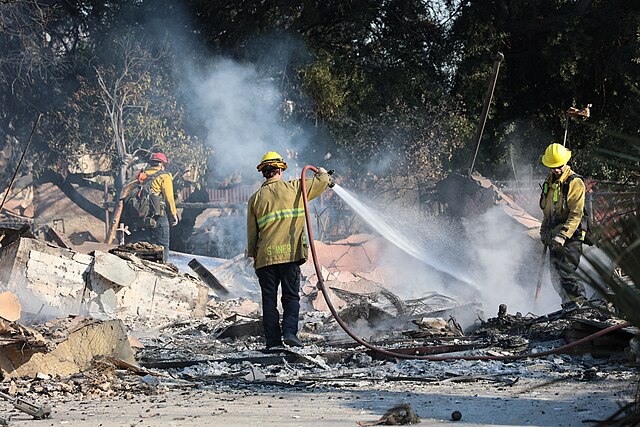
“The January 2025 firestorms have devastated the mountains and basins of Los Angeles County, underscoring the dire consequences of climate change, insufficient land and water management, and a lack of coordinated preparedness. Entire communities have been displaced, ecosystems decimated, and lives forever altered.

We, the undersigned, call upon the following entities to take immediate and transformative action:

Los Angeles County Board of Supervisors and City Councils:

  • Develop comprehensive water collection systems to capture and retain rainwater during storm events, ensuring availability for:
    • Firefighting efforts during wildfire seasons.
    • Cultivating and sustaining green corridors that act as natural firebreaks and habitat restoration zones.
    • Dust suppression in burned or arid areas to mitigate health impacts and protect vulnerable populations.
  • Incorporate Traditional Ecological Knowledge (TEK): Partner with local Indigenous tribal nations, communities, organizations and knowledge holders to guide restoration efforts, drawing on time-tested practices for managing land, water, and fire in ways that align with natural systems.
  • Appoint a Special Liaison for Land and Water Governance to oversee the integration of TEK and contemporary science into long-term strategies for fire prevention, water conservation, and ecological resilience.
  • Develop a systemwide strategic response plan in all school districts, inclusive of charter schools, to consider and prioritize the needs of children and youth by providing emergency resources and guidance to school level emergency response actions.
  • During recovery, halt evictions and sweeps of unhoused people as communities recover, a drastically increased number of local people find themselves without safe, forever housing, and seven+ people die daily on the streets of Los Angeles.

State of California:

  • Coordinate efforts to prevent and manage landslides in burn areas by:
    • Installing erosion control measures such as wattles, sediment basins, and plantings of fire-resistant vegetation.
    • Salvaging displaced soil following landslides to regenerate brownfields and restore degraded landscapes.
    • Funding research into long-term, regenerative strategies for mitigating debris flow and restoring soil health in post-fire regions.
  • Support TEK Integration: Provide grants to Indigenous-led organizations and communities for ecological restoration projects, ensuring that their expertise informs statewide fire and water management policies.
  • Provide grants and funding for local governments and institutions to implement labor and study programs that integrate ecological recovery with workforce development.
  • Offer incentives and accessible education through the CA Energy Commission and other statewide entities for construction with earth blocks, adobe, cob, and other natural.

Federal Government:

  • Establish a modern version of the WPA focused on climate resilience, supporting large-scale employment opportunities in fire recovery, water conservation, and landscape restoration.
  • Provide emergency funds and technical expertise for post-fire debris management, including soil salvage and toxic runoff mitigation.
  • Partner with Indigenous tribal nations and communities to develop national frameworks for integrating TEK into land and water governance.
  • Climate emergencies and disasters such as these should include defense of all community residents including the unhoused and migrant communities that live, work, worship or study in our communities. All exploitive deportation activities must stop.

Global Climate Advocacy Groups:

  • Partner with local and federal governments to implement innovative soil and water restoration technologies in burn zones while supporting education and employment initiatives focused on long-term ecological stewardship.

Key Requests:

  1. Management of Toxicity in Burn Zones: Test and remediate soil and water near burn zones to address contamination caused by fires, protecting public health and ecosystems.
  2. Landslide and Debris Management: Establish protocols to stabilize burn areas, collect displaced soil from landslides, and repurpose it for regenerating brownfields and degraded lands.
  3. Labor and Study Programs: Incentivize programs that employ local residents and train the next generation to restore ecosystems, enhance fire resilience, and create sustainable infrastructure.
  4. Traditional Ecological Knowledge (TEK): Partner with Indigenous communities to implement restoration practices that align with natural systems, ensuring sustainable land and water governance for future generations.
  5. Special Liaison for Governance: Appoint a dedicated leader to integrate TEK, scientific research, and community input into cohesive strategies for long-term ecological resilience.
  6. Water as a Resource: Ensure rainwater is retained and used strategically to prevent and fight fires, establish green corridors, and rehabilitate burn zones.
  7. Prioritizing keeping, restoring, and creating housing and safety for people of this place by pausing all evictions, sweeps, and identify and transfer land for earth-abiding housing by/for houseless people.

Why TEK and Governance Matter:

The integration of Traditional Ecological Knowledge (TEK) into fire recovery and prevention is essential for fostering harmony between human activity and natural systems. Indigenous knowledge offers invaluable insights into sustainable land and water management that can enhance resilience and promote biodiversity. Appointing a dedicated liaison ensures long-term, coordinated governance that honors both traditional practices and modern science, addressing the challenges of today while planning for future generations.

This is a collective plea for bold action to protect our communities, our natural landscapes, and future generations from the accelerating impacts of climate change. The time for incremental solutions has passed—this is a crisis that demands immediate, systemic change.”

Please sign your name on this petition HERE, which takes less than a minute to complete.

Thank you, and we’ll be in touch again in no time, Los Angeles.

J.T.

A man sits waiting for the bus at the Vermont and Santa Monica transit center.

Is Riding L.A. Metro just too dangerous now?

With recent attacks on passengers and operators alike, is L.A. Metro even safe to ride anymore? And what’s the Transit Watch app, and how can you use it while riding public transportation in Los Angeles? Let the city know!

And if you’re not subscribed to my channel on YouTube yet, please do so here. To support the production of J.T. the L.A. Storyteller Podcast for as little as $5 a month, check out my page at patreon.com/jimbotimes.

J.T.

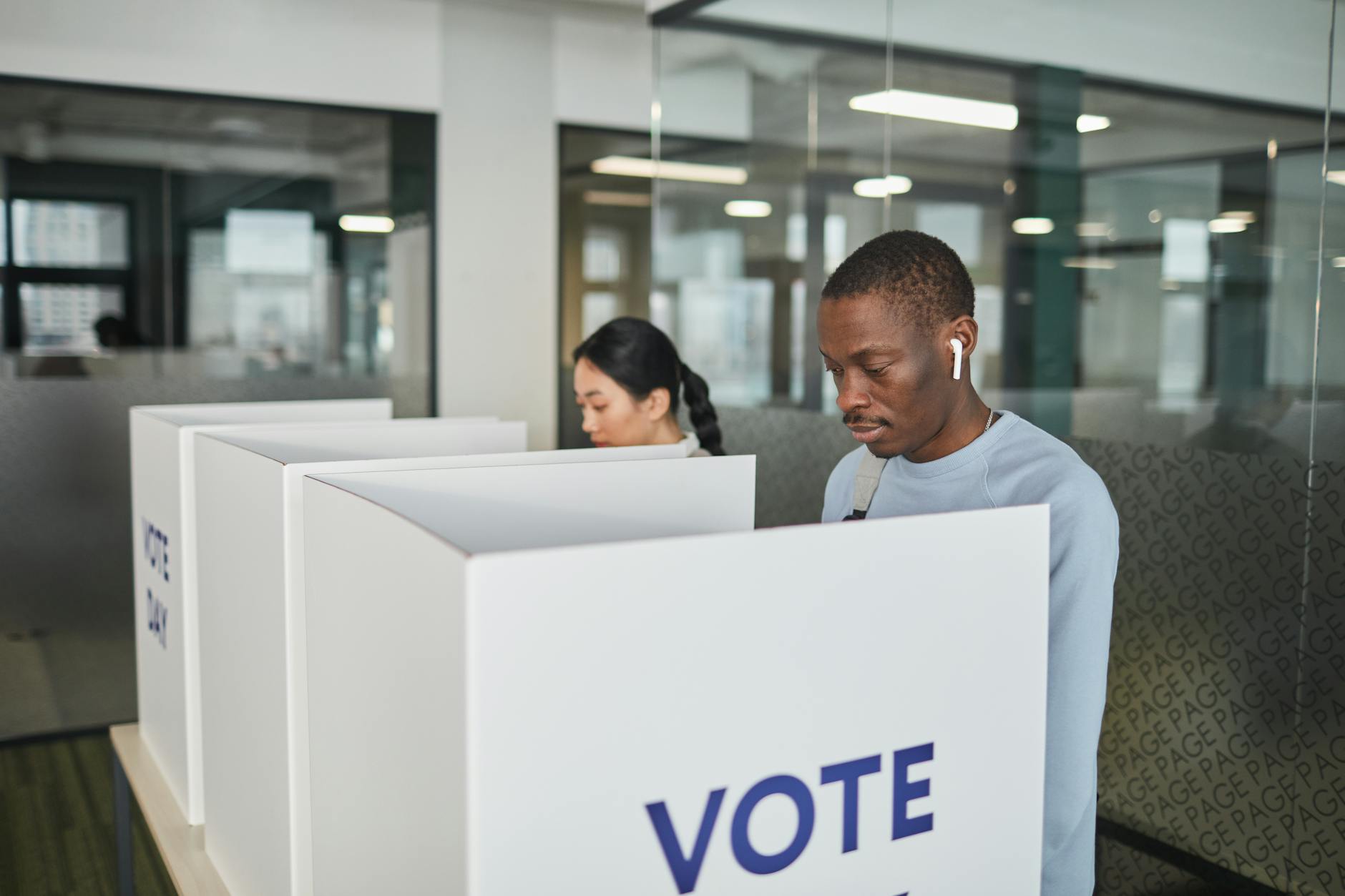
a man wearing a earpod

Last Minute Reminders about Voting

With only seven days to go before Election Day, according to California’s Secretary of State, as of Monday, February 26th, at least 5.7 million Vote By Mail ballots have reached voters’ mailboxes in Los Angeles County. Out of this bunch, some 311,853 ballots, or 5% of all ballots mailed, have been returned. For the 95% of the rest of you, then, here are just a handful of brief reminders from the L.A. County Registrar-Recorder/County Clerk’s office.

On Your Ballot

  • You do not have to vote in every race.
  • Vote-by-mail ballots can be returned by mail, at a drop-off location, or your county elections office.
  • Vote centers open for early in-person voting in all Voter’s Choice Act counties (which applies to L.A. County) beginning on February 24, 2024.
  • Vote-by-mail ballots must be postmarked on or before Election Day and received by March 12, 2024.

Write-In Candidates

  • A voter is entitled to cast a vote for a qualified write-in candidate for any party-nominated, voter-nominated, or nonpartisan office by writing, on the write-in portion of the ballot, the name of the qualified candidate.
  • To add a candidate, fill in the circle to the left of “Write-In Candidate” and write the name on the dotted line.
  • A list of qualified write-in candidates is available eleven days before the election here.

Additional Note On Last Minute Voting

  • Here’s an example to consider. If you’re registered with California’s Democratic Party, but between now and Election Day on March 5th, you have a change of heart regarding your choice for the Presidency and actually want to vote for say, Claudia De La Cruz, of the Peace and Freedom Party. Can you can write her name on the dotted line below the “Write-In Candidate” bubble on your Vote by Mail ballot and have that counted as an official vote for De La Cruz? NO, YOU CANNOT. However, you can still manage to vote for De La Cruz under Conditional Voter Registration (CVR).
  • Find De La Cruz’s name and other Qualified Candidates whose names will appear on L.A. County ballots, including for the presidential race and more here.

Conditional Voter Registration

From the L.A. County Registrar-Recorder/County Clerk’s Office:

  • Any eligible voter can go to any Vote Center in the County during the 11-day voting period.
  • Once at the Vote Center, the eligible voter [can] complete the CVR application.
  • The voter is then issued a CVR ballot to take to the new fully accessible Ballot Marking Device (like a voting iPad).
  • The voter’s experience reading and marking their ballot will be the same, however after the voter prints their paper ballot they will be instructed to return their paper ballot to an Election Worker.
  • As soon as the CVR application is verified, their ballot will be counted and the registration will become active.
  • The voter may then vote in any future election in which they are eligible to participate.

Tracking Your Vote

  • After submitting your vote, you can sign up to know the status of your ballot on the California Secretary of State’s part here.

For other questions, comments, or concerns, you can reach out to your local Vote Center, which should have more specific details on any of these particulars.

Otherwise, happy voting, Los Angeles!

J.T.

senior man with beer can and bag near wire fence

The Rate of Homelessness by L.A. City Council District in 2022

In 2011 the Los Angeles Homeless Services Authority (LAHSA) published a map and sheet showing homelessness rates per district in Los Angeles. On LAHSA’s 2011 map, the districts with the highest numbers of unhoused people were shaded dark-blue and included CD-9, CD-14, CD-13, and CD-8.

For the 2020 count, LAHSA did not publish a map showing district per homelessness, but that didn’t stop yours truly and some friends from publishing another one on their behalf. Our choropleth map below noted percent changes for homelessness rates per district in a bivariate color scheme from green to red. Also listed was a sheet ranking homelessness rates from highest to lowest per district based on LAHSA’s most recent count.

A map of homelessness rates in Los Angeles per district based on percent changes from LAHSA’s count in 2011 through LAHSA’s count in 2020.
A list of homelessness rates in Los Angeles per district as of LAHSA’s count in 2020.

By 2020, fourteen of L.A.’s fifteen council districts, or 93% of the city, saw an increase of homelessness since 2011. The districts with the highest numbers of unhoused residents actually included the same four districts from ten years earlier, though in a slightly rearranged order. These districts were:

I. CD-14, where Skid Row, along with much of downtown, was moved to after city redistricting in 2012. The district was overseen by Jose Huizar from 2005 – 2020 but has been overseen by Kevin De Leon since 2020. At the start of his term an estimate of at least 7,600 people were reported without shelter, an increase of more than 245% since 2011.

II. CD-9, where historic South Central was still based after redistricting in 2012. The area was overseen by Curren D. Price from 2013 – 2020, when an estimated 4,900 people were reported without shelter, a decrease of 15.5% since 2011.

III. CD-8, where Leimert Park was still based after redistricting in 2012 along with the Crenshaw Corridor. The district was overseen by Marqueece Harris-Dawson from 2015 – 2022, when an estimated 4,400 people were reported without shelter, an increase of 175% since 2011.

IV. CD-13, where East Hollywood remained after redistricting in 2012. The district was represented by Mitch O’Farrell from 2013 – 2022 and but has been overseen by Hugo Soto-Martinez since 2022. An estimated 3,900 people were reported without shelter in CD-13 as of 2020, an increase of 105% since 2011.

Here is what the rate looked like in 2022, according to LAHSA

Council DistrictTotalUnshelteredShelteredIndividualsFamily MembersFamiliesUnaccompanied Minors
14920465232681853066421010
9564029432697366519686307
83579133422452105146249612
13395257082530912951089
6322815901638195112693618
1329922310682268429010218
15237319164572168196619
11201217043081897115370
717461484262169650140
101671134832315231344314
213641128236132934101
312709703001141129340
512527874658583941330
412038873161067134482
1210519648798962190
Total419802845813522340947196230690
In 2022 the number of unsheltered people in L.A. was more than twice that of those temporarily sheltered, according to LAHSA.

In 2022, the city saw improvements in getting more people sheltered, but nonetheless saw an overall increase in the rate of homelessness. The districts with the highest numbers of unhoused residents actually included the same top three districts from 2011, but there was a change for the fourth most affected area. These districts were:

I. CD-14, where Skid Row, along with much of downtown, remained even after redistricting in 2022. The district is still overseen by Kevin De Leon, though he is up for election this year and is likely to face a considerable challenge in November. Boyle Heights Beat is also holding a Candidate Forum for the community on Saturday, February 10, 2024.

II. CD-9, where the historic South Central area remained even after redistricting in 2022. The district is still technically overseen by Curren D. Price, but just earlier this week he pleaded not guilty to charges of embezzlement and is therefore going to remain away from the council until the case concludes, depriving the area of active representation at City Hall for the foreseeable future. CD-9 is also where dozens of residents were left homeless in 2021 after the Los Angeles Police Department detonated explosives there which injured 17 people and damaged at least 35 homes; as of June 2023, at least 15 families were still living in a hotel being paid for by the city–at least $9.5 million dollars most recently. The city also attempted to evict families from this arrangement until it was faced with a major public outcry.

III. CD-8, still home to the Crenshaw area, West Adams, and the Vermont-Florence area even after redistricting in 2022. The district is still helmed by Marqueece Harris-Dawson, who is likely to be reelected in 2024 for his final term as the community’s representative at L.A. City Hall. While CD-8 has remained the third most hit in terms of homelessness for over a decade, the district did see improvement in terms of people housed since 2020. CD-8 is also the only district of the top four on this list to have more sheltered than unsheltered people experiencing homelessness. Given Harris-Dawson’s position as the Chair of the Planning and Land Use Management committee at L.A. City Hall since 2019, it’ll be key to keep track of CD-8’s progress on this enduring issue.

IV. CD-1, still home to Pico-Union, Westlake-MacArthur Park, Lincoln Heights and Highland Park even after redistricting in 2022. While the district was overseen by Gil Cedillo since 2013, in June 2022 he was defeated by Eunisses Hernandez. Hernandez has pledged to fight gentrification in the community she was born and raised in and even to explore options for social housing in the area. The next couple of years are crucial, then, if she’s to fulfill these promises.

As usual, this is a developing story. To learn more, including on how to get involved, be sure you’re subscribed to J.T. the L.A. Storyteller!

J.T