
J.T.
Let The City Know.

J.T.
First up, enjoy a new Intro for the podcast! Followed by a few notes on the week from yours truly, including on the tragic passing of Mirna Soza while boarding L.A. Metro’s B Line on Monday, April 22nd, as well as on the Armenian Genocide of 1915, commemorated every year on April 24th.
Then, from Columbia University to USC, this week belonged to Students for Palestine! In this spirit, this episode of J.T. the L.A. Storyteller Podcast features Sarah Orozco, a 1st-generation, low-income, Oaxaqueña at UC Berkeley, class of ’24; earlier this year, Sarah actually interviewed yours truly on what it means to be Oaxacan-American in the current media landscape, the Bracero program of World War II, which brought many Oaxaqueños to the U.S. for the first time during the 1940s and 1950s, and much more!
(0:01) New intro song!
(1:18) Be sure to follow the podcast on YouTube as well!
(1:56) You can also support the podcast via Patreon
(2:29) Updates for the week of April 21st, starting with Earth Day 2024
(3:37) Shout out Mirna Soza, who was fatally attacked on L.A. Metro’s B Line on Monday
(5:34) Shout out Students for Palestine! From USC to Columbia and beyond
(6:49) Shout out the Armenian Genocide, commemorated each year on April 24th
(8:17) This week also saw both L.A. City and L.A. County present budgets for fiscal years 2024 – 2025
(9:12) At least 4 out of 10 people living in L.A. now seriously fear becoming homeless in the foreseeable future
(10:03) Remember to subscribe via YouTube, or wherever you keep up with yours truly
(11:31) With that said, this installment of JT the LA Storyteller podcast is brought to you in particular by South Central L.A. and UC Berkeley’s Sarah Michelle Orozco
(13:41) Our first question: On identities
(17:50) Challenges when it comes to identity or identities growing up
(22:37) On the question of pride for indigeneity and being Oaxacan
(25:32) On the question of remixing identities in L.A. (K-Town is Oaxacan Korean)
(28:14) How age plays a part in the work one’s involved in
(29:56) Seasonal Oaxacan Migration to the U.S. going back to the 1940s Bracero Program
(34:46) Sarah’s grandpa was also in the Bracero Program
(36:13) Gender’s influence on what one’s involved in
(41:43) The first time I saw a Oaxacan American presence online (Shout out the L.A. Public Library!)
(45:30) Oaxacan Twitter
(47:59) Oaxaqueño and Oaxaqueña Americans to follow on Instagram
(55:14) Trends and social movements among Oaxacan Americans online (Viva Palestina!)
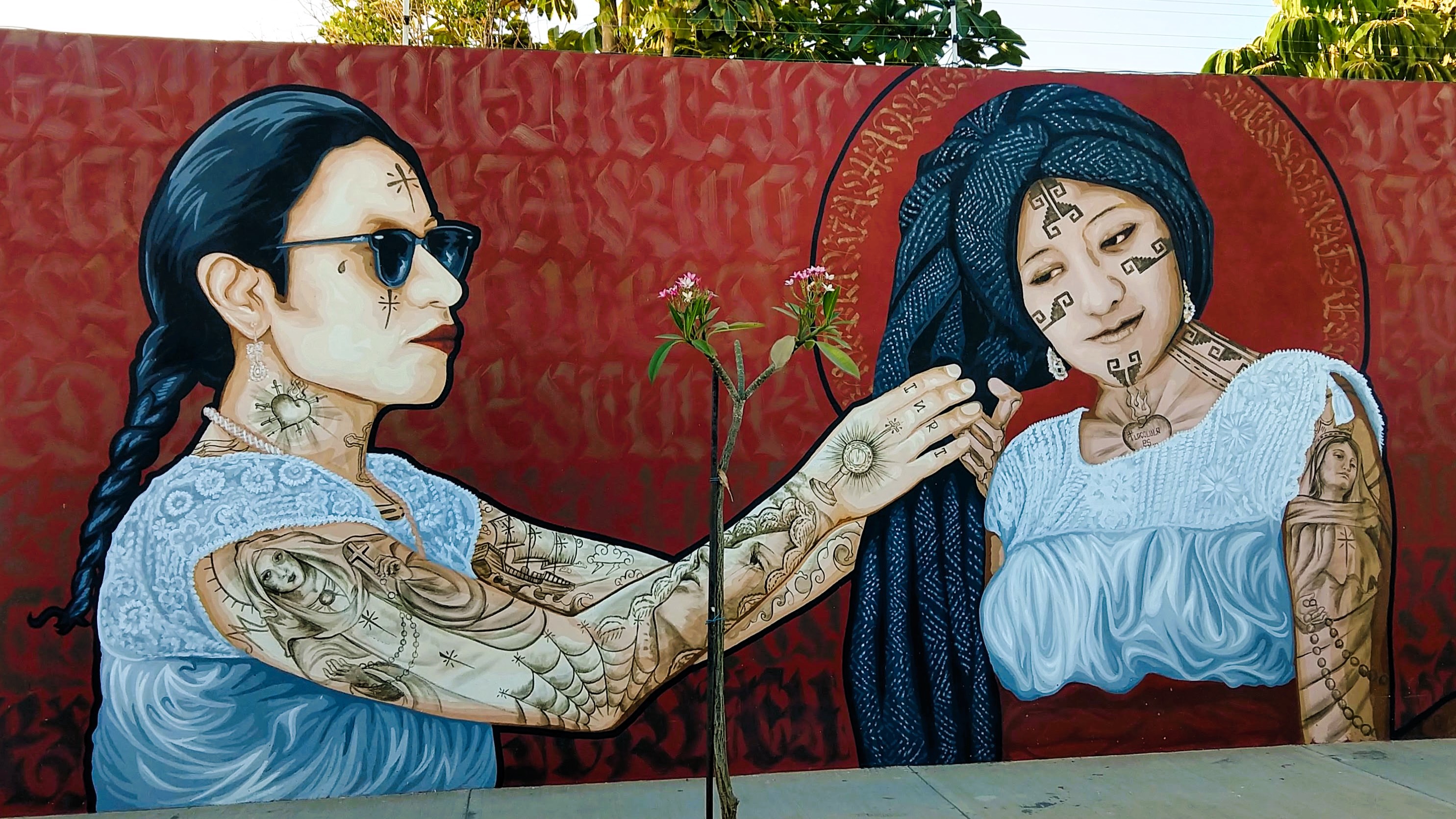
(58:16) Shout out Tlacolulokos, the artists whose artwork covers this episode
(59:53) What it means to me to have a following online (intentionality)
(1:03:31) On cultural appropriation of the Oaxacan culture
(1:08:01) On Oaxacalifornia, the legacy
(1:09:54) Connecting back with the pueblo
(1:13:53) FIN.
Speaking of Oaxaqueñas, please also check out Areli Morales Lopez’s latest for Making a Neighborhood, “The Last Laundromat by Venice Beach,” here. Also remember that Making Our Neighborhood: Redlining, Gentrification and Housing (2021), the magazine, is once again available for purchase. Grab your copy for you and your neighborhood, here.
Last but certainly not least, to make a one-time donation to my nonprofit work for working-class communities in Los Angeles, please do so here. To support the production of J.T. the L.A. Storyteller Podcast for as little as $5 a month, check out my page at patreon.com/jimbotimes.
J.T.

On this special anniversary day, yours truly marvels at how far JIMBO TIMES: The L.A. Storyteller has come, as well as at how far there still is to go.
When I first brought the site into existence seven years ago, I set out to achieve great things with the unique perspective that I’ve constantly sought to bring to the communities I’ve been a part of. But over the last year especially, as the world shifted to meet the challenges of an unpredictable pandemic, ‘JMB TMS’ showed up to serve Los Angeles by writing, photographing, and organizing for our neighborhoods.
The site served as a basis for people all around the world to learn about inequity in Los Angeles, while “behind the scenes,” along with fellow L.A. Storytellers, our organizing provided communities with an immersive experience learning about the urban environments so many of us have called home for generations.
In turn, when readers consider Redlining, Gentrification and Housing in East Hollywood—the magazine of which is soon to be digitized on the site–the fact of the matter is that it took more than some months or even a few years to be ready for. In actuality, the contributions yours truly made to this extraordinary effort took at least seven years of ‘background’ through the throes of this city and then some.
So let this be a consideration for any aspiring young storyteller in Los Angeles: When you take an idea based strictly in your mind, and give it a body, and then a mechanism, you give it a life of its own, hence JIMBO TIMES: The L.A. Storyteller.
Now, it’s time to remake even more of ‘J.T.’ to give Los Angeles only larger scales of perspective from the city’s most passionate hearts and minds. I am grateful for the opportunity to be of such support.
This is JIMBO TIMES: The L.A. Storyteller.
J.T.

In our 36th episode, listeners meet Lettwrs, a graphic designer based in Koreatown who just helped launch Garcettiville, a new website and initiative documenting Eric Garcetti’s broken promises as mayor of Los Angeles over the last seven years. We talk about how social media has utterly transformed the way in which communities engage with politics, especially in forms and on a scale that the political establishment couldn’t ever have anticipated, as well as mutual aid work for unhoused folks with and by Ktown For All, and how listeners can support such work or related initiatives in Los Angeles. Follow Ktown For All at @KtownforAll. And find Lettwrs’ graphic design work at @cantypelettwrs.
J.T.

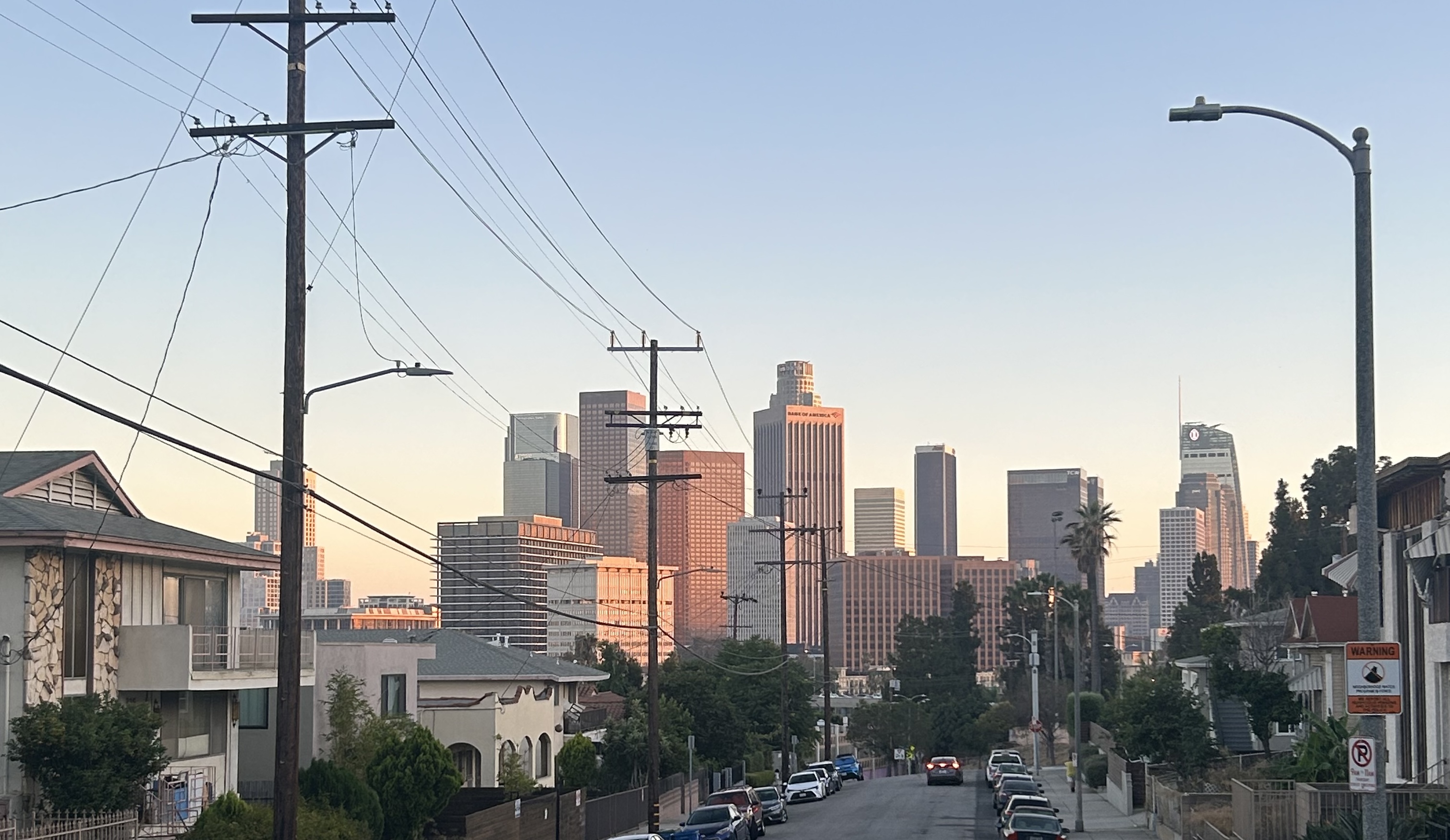
How could I ever forget, the magnificent breeze brought by the wind when roaring heat passes, or the way my whole body galvanizes at the start of another golden morning.
Even if I’m just like a bird passing through a chasm of time and space amid dry earth, I treasure the opening for another flight through. I love its span of daydreams and jamming; together we’re reflections of each other, bound for glowing warm hues, each filled with a light of our own to make even more colors as one.
And how could I ever forget, a place where I can lose myself only to recover more of myself later. Each part I leave at every intersection is not just the same when I recover it, it’s more; it’s born again, wrapped up in the old days as much as it’s open towards new days. I can be a million bodies in this way, like any one of the strangers who color the crosswalks.
I am the helicopter pilot churning through the sky, searching frantically to ground myself. And I am the motorcyclist, racing out of wrecked road to make my own way.
I am the writer who is celebrating at the sight of another vision brought to life on the screen. And I am the student, whose backpack is a time capsule destined to save the world, or at least to give it more time.
I am the ice cream man, playing my song to the avenues no matter how heavy their silence weighs on me. And I am the store owner along the boulevard, opening my doors for yet another miracle to waltz in.
All of it is only the traffic of myself, soaring or slugging forward to finish what’s started. It is the pueblo of the people of Los Angeles, from every part and parcel of the world. We dream and daydream and live in these dreams, together.
J.T.