THE TENANT ASSOCIATION WITH PHOENIX TSO


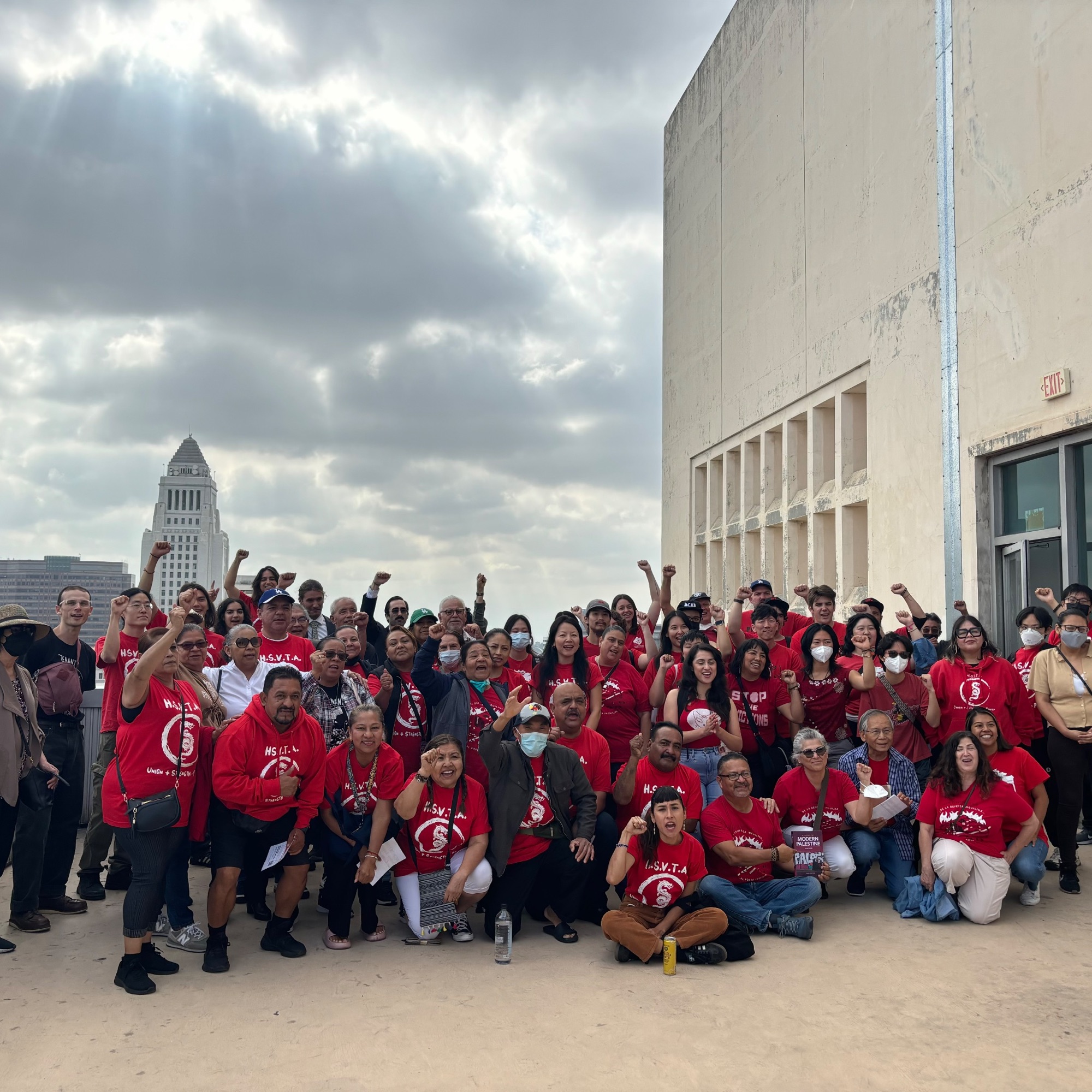
On this installment of J.T. the L.A. Storyteller Podcast we’re joined by Phoenix Tso, who chats with us about The Tenant Association, a new podcast on the Chinatown Hillside Villa Tenant Association, which formed in 2018 after residents there received a 300% Rent Increase without any prior notice from their landlord; in addition to the origins of the podcast and Tso’s investigative work, we consider the terms “affordable housing” and “eminent domain.” Tso notes that across the U.S., approximately 800,000 currently affordable units will lose their affordability within the next decade due to expiration dates for rent prices set in their housing covenants. Last but not least, Tso reveals the host of The Tenant Association to quite some cheer and even chuckling; it’s another can’t miss episode and you can also keep up with The Tenant Association here.

(1:07) Introducing The Tenant Association Podcast by the Los Angeles Public Press
(5:41) Outlining the story of the Hillside Villa Tenant Association
(13:30) “Affordable Housing” on a timer, not indefinitely affordable
(19:41) 800,000 “Affordable Housing” units in the U.S. are expiring within the next decade
(23:29) The use of “Eminent Domain” historically to rob communities of their right to housing
(30:25) How the Hillside Villa Tenant Association organized the fight against their landlord
(41:08) Final notes on the new podcast, as well as the HOST REVEAL!

To make a one-time donation to my nonprofit work for working-class communities in The City, do so here. To support the production of J.T. the L.A. Storyteller Podcast for as little as $5 a month, check out my page at Patreon.

Until the next time, stay vigilant and stay tuned!

J.T.

Btw L.A., did you know…?

Did you know that on L.A. Metro’s A Line, formerly known to a generation as “The Gold Line,” the dilapidated, creaky building you can see from the Chinatown to Lincoln Heights/Cypress station, is actually the former Lincoln Heights jail?

In 2016, the L.A. Times noted that: “In the early years of the jail, which opened in 1931, some people were hauled to the building along the concrete-lined L.A. River because they were gay, leading to the creation of a separate wing, according to the Los Angeles Conservancy. Many of those arrested during the 1943 Zoot Suit riots, in which [white] servicemen targeted young Mexican Americans, were taken to the Lincoln Heights Jail on North Avenue 19.”

Young, mostly Mexican American men jailed in Lincoln Heights in the late 1930s. Photo courtesy of the L.A. Public Library.

The jail was also used for the federal government’s efforts against labor-organizing across the nation during the 1930s. One prisoner, E. Yagamuchi, was taken by authorities from the Imperial Valley and jailed for two years there, presumably for involvement with local labor organizing. Yagamuchi faced deportation to Japan before the International Labor Defense (ILD) organization rallied to his defense. In August 1932, the ILD’s efforts won him and another Japanese-American, Tetsui Horiyuchi, a “voluntary departure” to the U.S.S.R. instead.

The Lincoln Heights jail was officially closed in 1965, including because of overcrowding conditions that became well too apparent when residents taken from the Watts neighborhood were booked there during the Watts Rebellion in August 1965.

Lincoln Heights jail photograped in 1936. Photo courtesy of the L.A. Public Library.

Now, 58 years after the fact, the youngest member of L.A. City Council, who also just completed her first year in office, is looking to transform the former jail into social housing for the Lincoln Heights community. Think it can’t be done? Hear about it and more through our latest podcast with Council Member for L.A.’s 1st District, Eunisses Hernandez.

View of Downtown Los Angeles from Lincoln Heights in 2014. Photo courtesy of Wiki Commons.

And subscribe for more Cuentos soon!

J.T.

P.S. JIMBO TIMES has now officially published more than 300,000 words for working-class communities in Los Angeles. Let the city know!

Our Community is Getting Stronger, Este Hollywood

From the words of Dr. Mary Gallagher, President of Los Angeles City College:

“On Saturday, August 24th from 4 to 8 PM, staff from the non-credit department of LACC participated in a great local community event called Back 2 School 2, marking the second year of this event. I was able to attend and hear all of the things going on at the ‘grass roots’ level of our community. LACC was included because of the GED preparation and testing we do. We also provided information from some of our students currently attending non-credit classes. It was a fabulous event. I look forward to next year.”

Dr. Gallagher’s recognition of BTS 2 is a milestone achievement for the work to uplift more vecindades in East Hollywood and throughout Los Angeles. In the days ahead, the work to keep strengthening our community will remain challenging, but I also believe that as our special event showed this past Saturday–and last year–the promise of the work will remain bright and full of encouragement. There will be more following up on the success of BTS 2, but for now, I’d like to express my deepest thanks to each supporter, close and afar, who took a moment to contribute to this critical day for our neighborhood and families all throughout this great city.

J.T.

We Will Not be Erased: How Open Mics in Our Community Uplift Our Cultural Heritage

Our second annual Open Mic was a second-annual success, featuring 10 different poets, speakers and other members of the community who spoke in front of up to 25 guests throughout the evening. Our guest list was diverse, with attendants as young as 11 years old and as mature as 60.

In my own experience, after more than 25 years of living in this parcel of Los Angeles, I never knew of an open “forum” in the community like those created by the three different Open Mics held in the area over the last calendar year; first at Cahuenga Public Library last April, then at El Gran Burrito in August 2018, and now, for the second year in a row, once again at Cahuenga Public Library.

I view each of these events, both individually and collectively, as achievements for a demographic in East Hollywood increasingly facing displacement from L.A.’s collective memory vis-a-vis gentrification, or the process known for “cleaning up” [ethnic] spaces for whiter, wealthier living.

In her photographic exhibit at the Armory for the Arts, Los Angeles based artist Sandra de La Loza describes her experience living in a city that constantly denies people such as herself, her family–and their neighborhoods–of space for their history.

For the dispossessed whose stories are not memorialized or recorded, memory becomes a vital space in resisting erasure, silence and invisibility.


With this in mind, by “holding space” for others such as the youth, families, elders and others who’ve attended our Open Mic events this past year to share their memories with the local community, and by attempting to normalize such spaces and activities on a consistent basis, my peers and I are taking a stand for a collective cultural history; for a present and future in the same vein of resistance against the erasure described by de La Loza.

In a commentary on de la Loza’s artwork as a “Field Guide” for others, UCLA Digital Media Professor Chon A. Noriega recognizes de la Loza’s installation and photographing of thought-provoking, albeit temporary ‘invisible monuments’ in Los Angeles as the work of a “guerilla historian”:

…its method is concrete and practical: do the research, engage a site, document the action, and communicate to others.


In other words, holding space for the memories of ethnic communities is not just an act of preservation, but also ‘a model’ to show others how they can excavate local histories for and about themselves too. Here, I think of the Filipino woman from last year’s first-ever Open Mic at Cahuenga who had “lived here for over 35 years” before taking up the microphone to share her story. And I think of Alfredo, the 10 year old boy who arrived to the Back to School Party at El Gran Burrito in August initially rolling his eyes at the workshops being offered, only to find through the course of the event that he was exactly the kind of youth our team had been looking for. Alfredo needed a space that recognized and uplifted his giftedness, and once he could see that our Party was just that, he transformed into one of our foremost little helpers, announcing the raffle and handing out prizes to the community as one of our team.

Lastly, I think of William Taylor III, who made his way to last Thursday’s Open Mic with stories about his time along Downtown Los Angeles’s Skid Row area. Taylor III graced the microphone with an ode to the recently passed Nipsey Hussle, statements of resistance to Donald Trump’s “zero tolerance” policy, and more letters of love for the community. These are just a few of the people who’ve been moved by our work, and there will be more.

In this respect, I’m excited to see what else my team and I will accomplish with more Open Mics, Back to School Parties, and other monuments for uplifting our communities. Because yes, of course there will be more soon. We’ve just gotten started!


J.T.