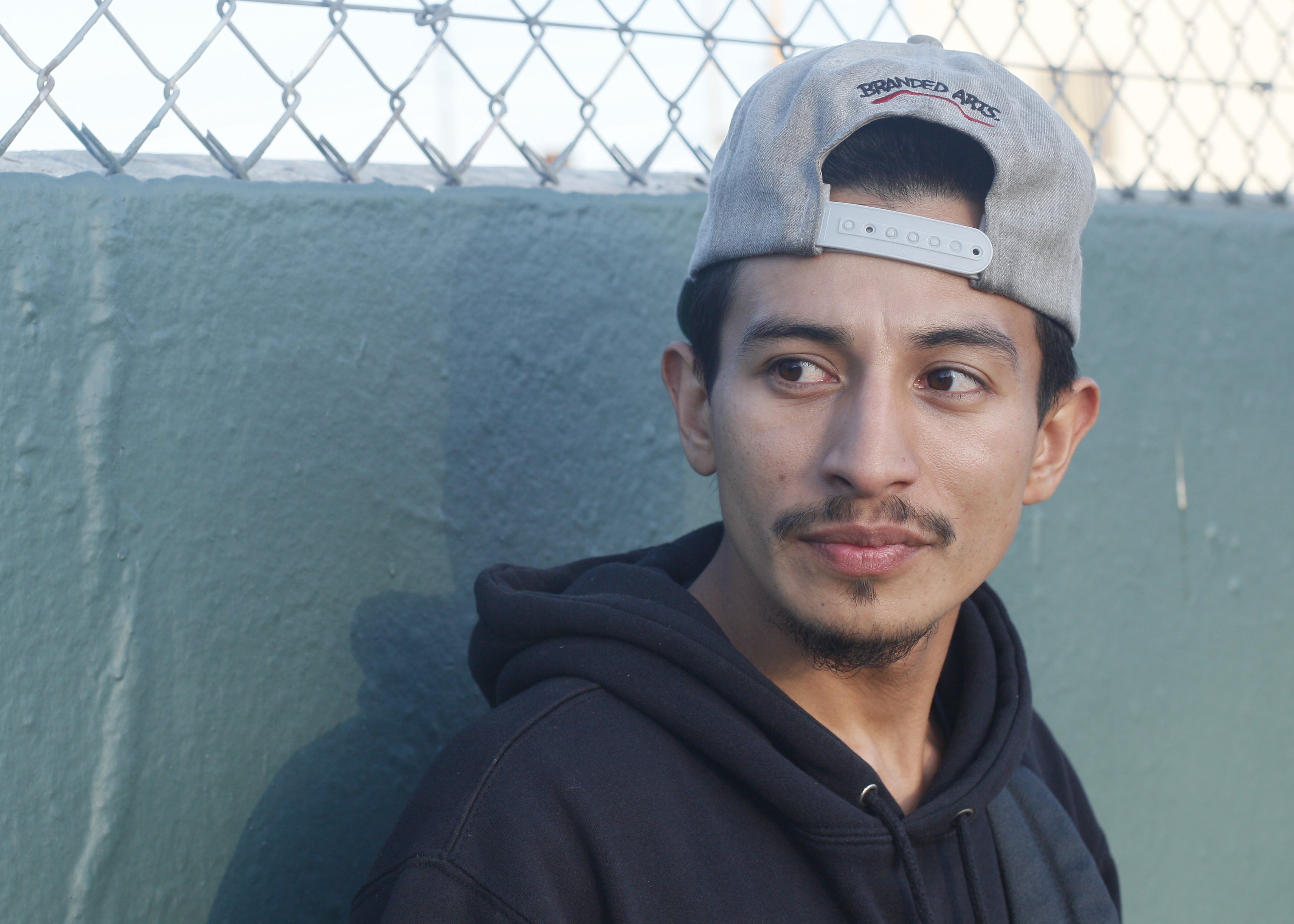
Coronavirus Lands in East Hollywood, Silver Lake

It’s official. According to the L.A. Times tracker, which began releasing known information about infected areas as recently as a day ago, and which at the time of this writing was last updated at 1:32 PM PST this March 29th, there are now five (5) recorded cases of patients who’ve tested positive for COVID-19 in East Hollywood.

In the adjacent neighborhood of Silver Lake, there are fourteen (14) recorded cases of patients who’ve tested positive.

Nearby, Hollywood has thirty-eight (38) recorded cases of patients who’ve tested positive for the novel coronavirus, while West Hollywood next door has fifty (50) caseloads on its records. According to the L.A. County Department of Health–last updated at noon this previous March 28th–L.A. County now has a total of at least 1,809 known cases of the virus.

Even these numbers, however, should be considered an under-count. Despite two weeks of the stay-at-home-orders in Los Angeles, the fact is that widespread testing for COVID-19 is still out of the picture for the foreseeable future. According to L.A. County’s leader in charge of testing, Clayton Kazan, a major hindrance has been waiting for test results to get back from out of state:

We need a massive scaling locally. As long as we’re having to ship our labs out of state, and we’re having to compete with all the other states that are struggling with their own outbreaks, then we’re going to be struggling.”

An additional problem, of course, is simply whether you have adequate access to healthcare at your fingertips; of the people who have been tested, reports do not show which are insured. In East Hollywood, made up predominantly of Latino and Asian communities, but also Armenian, Black, White and others, the median household income is estimated by Census Tracker as in the range of $39,562 USD, substantially less than the “average” of $69,138 for families of the same size in L.A. County.

While I’m not aware of specific data showing how many of the neighborhood’s residents are insured or not, it’s safe to infer from other available data that the majority of them–surviving on the minimum wages (and below) typically paid to their demographics–do not have adequate coverage at their fingertips.

Here, the words of Dr. Barbara Ferrer, the director of L.A.’s public health department, resonate loudly:

“There are thousands of people in our communities who are positive but who have not been tested.”

Readers are advised to increase their level of precautions, and to reach out to loved ones–safely–on further steps to ensure and maintain their health and well-being in the upcoming weeks with this public health threat.

J.T.

Pandemic in Los Angeles: Day 05

Is it still safe for my mother to go out to open her newsstand? Should I continue to walk alongside her when I’m able to make it to her right as she closes shop? If I do, what are the odds of our walking home safely at this point? Is our community more at risk because of Coronavirus, or because of gun violence on our streets? These are questions I ask myself in the wake of another shooting in the neighborhood which has unnecessarily taken yet another life from our community.

Does poverty meet the definition of a disease? It’s certainly been passed down by many generations and is spreading throughout our country. In Los Angeles, this has become ever clearer with the rising number of tents erected by young, old, Black, White, Asian and more people locked out of housing in an increasingly wealth-driven city. But unlike encampments, shootings in our neighborhood take place more covertly. While they cost families and neighborhoods far more than makeshift tent cities, their scene is registered quickly before vanishing into our memory banks. But we do not forget these terrors once we’ve seen them up close. Death sprawled on the street casts a shadow nearly as long as the night.

A quick search through the L.A. Times HOMICIDE REPORT will show that the overwhelming majority of fatalities in Los Angeles are of Black and Latino males.

It will also show that in the last twelve months, 510 people in L.A. lost their lives due to armed violence, which is a preventable crime. The majority of these deaths don’t make the daily paper anymore, but Fernie’s shooting was the third fatality in less than six months within a 1.5 mile radius for my neighborhood, and the the sixth fatality in twelve months for the East Hollywood area overall.

Are we able to call an intervention with our L.A. city councilmember and other leaders on this situation over Zoom, or does that remain impractical? On the list of priorities for the city in lieu of COVID-19, just where does gun violence inflicted on our young men rank for our city? I know I’m not the only one asking these questions, but if COVID-19 has shown anything, it’s that a community’s net health is determined by every single person who comprises that community. Here is to lifting up once again our call for a better way.

J.T.

Super Pan Bakery Has Gotten An Extension

Super Pan Panaderia with 'Matriarch' by Cesar Tepeku at Virgil and Monroe, Los Angeles
Super Pan Panadería covered by ‘Matriarch’ at Virgil and Monroe, Los Angeles

The 20 year old Panadería in the “Virgil Village” community has now gotten an extension for its relocation. At least until December, families in our community can continue to quench their appetites with Doña Elvia’s fresh pan dulce, hot tamales, and bolillos con huevos.

It’s a key victory for the pueblo that comprises the ole neighborhood, but now with the extension secured, some of us are left wondering: might the Panadería be able to simply stay after all?

The fact of the matter is that maintaining a small business like Super Pan in cities like Los Angeles is increasingly difficult. While gentrification in the community compounds the trouble involved in maintaining the bakery’s “appeal” over the years, even if the buzz-word was removed from the equation, rising inflation and the cost of living since the bakery’s opening in the early 2000’s without an increase in backing or security for its services continue to undermine any effort to keep its place in the community.

I think of another small place close to heart, in Mama’s caseta, which is less than four blocks north of Super Pan on Santa Monica boulevard. In over sixteen years in the vecindad, regardless of whether the stand’s revistas and literatura turn a profit or not, mom is required to pay insurance fees for the stand’s footing before we can even submit a reapplication for permission from the city to maintain its location on the boulevard.

Once the stand clears the permitting process, as with most other things in life, taxes apply, but at no point in the process is there an accounting for the stand’s aggregate time in the community, or for its ability to make ends meet despite market ‘trends,’ health or other issues which can impact the owners’ ability to stay in business, such as increasing homelessness in the area; the stand is thus locked in a tax system which never offsets the burdens it places on small business with anything other than permission to keep operating.

Is it any wonder why mujeres like like Doña Elvia and Mama have such a mystical air about their place in the community, then?

Each year, new hurdles are placed in front of working class families as small businesses owners, but they continue to rise with their small places to claim their time under the sun. With their heads up high, they greet their customers loyally, serving each of them with gratitude in their gestures, and placing their faiths in the forces beyond them to continue with all of it through another day–and if they’re bendecidas enough–through another year.

The extension of the deadline for Super Pan is thus a sign of good faith for what lies ahead, but there is in fact much more work left to do for the pueblo. For now, please visit a small mom and pop shop near you with while it’s still feasible. Those small businesses are dreams come true for many families, and with them we move onto yet more dreams, for tomorrow.

J.T.

Fundraising for Our Party Begins Today Los Angeles

Greetings,

I hope this note finds you well. Today it’s a tremendous pleasure to share a monumental development in my work as a community writer, photographer, and organizer in Los Angeles.

On Saturday, August 25, 2018, along with a team of my peers, I’m overseeing a community gathering at El Gran Burrito restaurant. El Gran Burrito been owned by the same immigrant family for nearly 30 years, standing at at the intersection of Vermont Avenue and Santa Monica in East Hollywood.

The event will be a day of workshops, music, and dialogue for the local families of my neighborhood.

For parents, workshops will touch on local issues such as Renter’s Rights, Women’s Self-Defense, and Youth Crisis/Intervention programs. For teens, workshops will feature live art sessions, writing groups, sample book-making, and more. All of the facilitators for our workshops, like us, the organizers, will be volunteering their time for the day. And all parents and students attending our workshops will be given one raffle ticket each for a big show at the end.

Following workshop, our guests will be treated to lunch, that is, ‘GRAN’ burritos, as well as an Open Mic or open performance session, and of course, the MAJOR “Back to School” raffle. Items we look to hand out through the raffle include backpacks, Metro TAP cards, a skateboard, a bicycle, a scooter, helmets, and more. The goal is to have 50 people take part in this experience.

The event is unlike anything I’ve ever seen in my neighborhood before, and I’m exceptionally proud to be designing it alongside my peers, who are fellow locals and people raised in the community here like myself. I’m also in a slight crisis due to the event, however, as I now need to reach out to the larger community for support.

I am fundraising for this event on behalf of my community because it is the great gift of this country that such a thing is even possible. I think of the 13 year old and his or her mother, who will walk into El Gran Burrito on August 25 simply to get lunch, only to hear the music outside and walk on over to give it a chance. My great obsessive dream is to show these folks that they are magnanimously valued, by providing them with a day of resources and activities designed to uplift their social and creative spirits. I want to then call the raffle ticket number that’s going to gift a scooter or even a bicycle to one of these families for them to take home that day, because I believe such ‘little things’ can go quite a long way. I know that it’s somewhat absurd to visualize things so charitably, but I also remind myself that it’s instances like these when I was a youth which filled me with hope about some future. Now, I believe it’s my great responsibility as a young professional to give that feeling right back to the next generations of my community. Below is the outline for the fundraising I hope to do:

Lunch: $300

Printing Materials (flyers, wide paper for drawing, printed J.T. photography for raffle, and more): $300

4 Metro TAP cards with $25 fares loaded: $104

Backpacks, 1 Scooter & 1 Bicycle, 1 Skateboard and 3 helmets: $500

Extra materials to support facilitators: $300

Promotional Budget: $100

Total: $1,604

The truth is that I’ve never raised so much money for a single event before. But what’s also true is that I have an immense belief in the importance of this event for me and my peers, and for the families who we’re trying to put this together for. I believe enough in this collective moment for us to make this call, asking once again, for the support of an even larger community than the one through these streets; to the ones out there.

To donate, you can click the following: DONATE.

And to learn more about the special day, supporters can visit our facebook page HERE, where we’re also posting video updates for the event:

Thank you for your time, and please expect to hear from me sometime next week with an update on this crazy campaign! We are eighteen days away.

As always: with heart, honor, and respect,

J.T.