Dear Honorable Congressman Schiff,
I hope this letter finds you well. I am writing to you today to express my support for the Little Tokyo Service Center’s (LTSC) transformative housing project in partnership with L.A. Metro at the Vermont/Santa Monica intersection in East Hollywood.
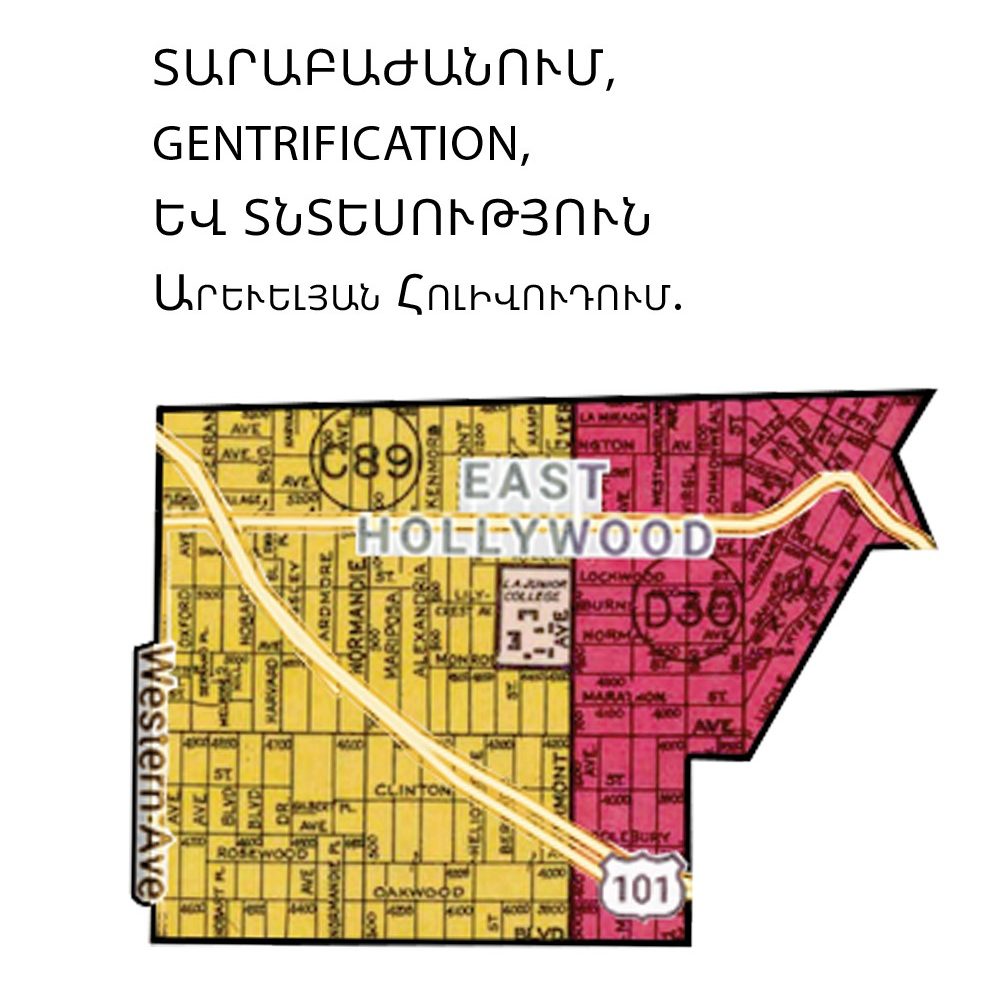
This past March, along with members of the East Hollywood Neighborhood Council and a coalition of storytellers, scholars, and other community members, I discussed historic redlining practices affecting East Hollywood in the critical years before the onset of WWII. You may or may not know that East Hollywood, along with a number of other neighborhoods in the Central L.A. area, was historically redlined by federal and municipal government officials who saw Black and immigrant families as “blight” and “too risky” or unworthy of investment.
As offensive as redlining was for racist language that discouraged private banks from lending to working-class families in East Hollywood, what was more consequential was its discouragement of loans for homeownership desperately needed in the community.
This is still relevant today. The World War II era, for its myriad of unique particularities, continues bearing key connections to the current housing crisis in Los Angeles. In 1939, the national economy was still emerging from a decade of the Great Depression. Therefore, when the U.S. officially joined the conflict, while California’s ports and aerospace industries began employing masses of new workers, labor shortages threatened to stifle the state’s service and agriculture economies, which could have almost certainly cost the U.S. the war effort.
In bouts of heroism and bravery alike, waves of Black families from the historic U.S. south came to the rescue, especially for the Golden State’s service economies. Simultaneously, Latinx workers from the global south, particularly from Mexico, came to California as the first “Braceros” for the state’s agricultural industry.
Yet while these workers were sure to be hired in Los Angeles, what was entirely uncertain was their housing. After decades of racial covenants, deed restrictions, campaigns against housing for non-whites by an L.A. chapter of the Ku Klux Klan and their collaborators, and homogeneously white city councils, courtrooms, and police, Los Angeles left Black, Latinx and APPI communities with housing conditions that would only worsen with time.
Twenty years after the end of WWII, these conditions erupted in Watts. A generation later, less than twenty years after the world recession of 1973 – 1975, these conditions erupted again in South Central Los Angeles.
And today, even as research shows Black and Latinx people make up to 70% of the unhoused population in Los Angeles, and virtually the same rate of the incarcerated population in the L.A. County Jail and across California prisons, during the “war” against COVID, Black, Latinx and AAPI workers have unflinchingly and resiliently supported L.A.’s service, agricultural and transportation economies, including in East Hollywood. This is why LTSC’s project at Vermont/Santa Monica is as timely as it is appropriate. It is breaking the ground for families needed as early as the years before WWII.
I write in support of Little Tokyo Service Center’s Santa Monica & Vermont Apartments because they will provide 187 units of overdue affordable housing for people of color in the community, as well as permanent supportive housing that communities of color in East Hollywood have missed as the homelessness crisis, which is undoubtedly a humanitarian crisis, has only grown by leaps and bounds.
You are likely aware, Congressman Schiff, that in L.A. City Council’s 13th district, where East Hollywood is based, nearly 4,000 people are unhoused, and also that job losses due to the pandemic threaten to unhouse waves of more families of color in our community.
Therefore, while federal and municipal officials have still yet to officially account for discrimination in housing in East Hollywood due to redlining and related policies, LTSC’s extremely low-income housing is what beginning to “turn the page” looks like.
Congressman Schiff, the current moment for our state and nation calls for both bravery and urgency from our leadership, most of all in regards to historic issues of racial and economic justice in the U.S.
As you can recall, Lyndon B. Johnson was the first in Washington D.C. to officially declare “war” on poverty, but could only see the work unfinished as subsequent, “reactionary,” and corporate-bound leadership jeopardized the effort to bridge the wealth gap in our country. The moment now calls for that unfinished work to be resumed with utmost haste, and so we await your affirmation of this through your urgent support for LTSC’s housing work in East Hollywood.
Sincerely, and in community, always
J.T.