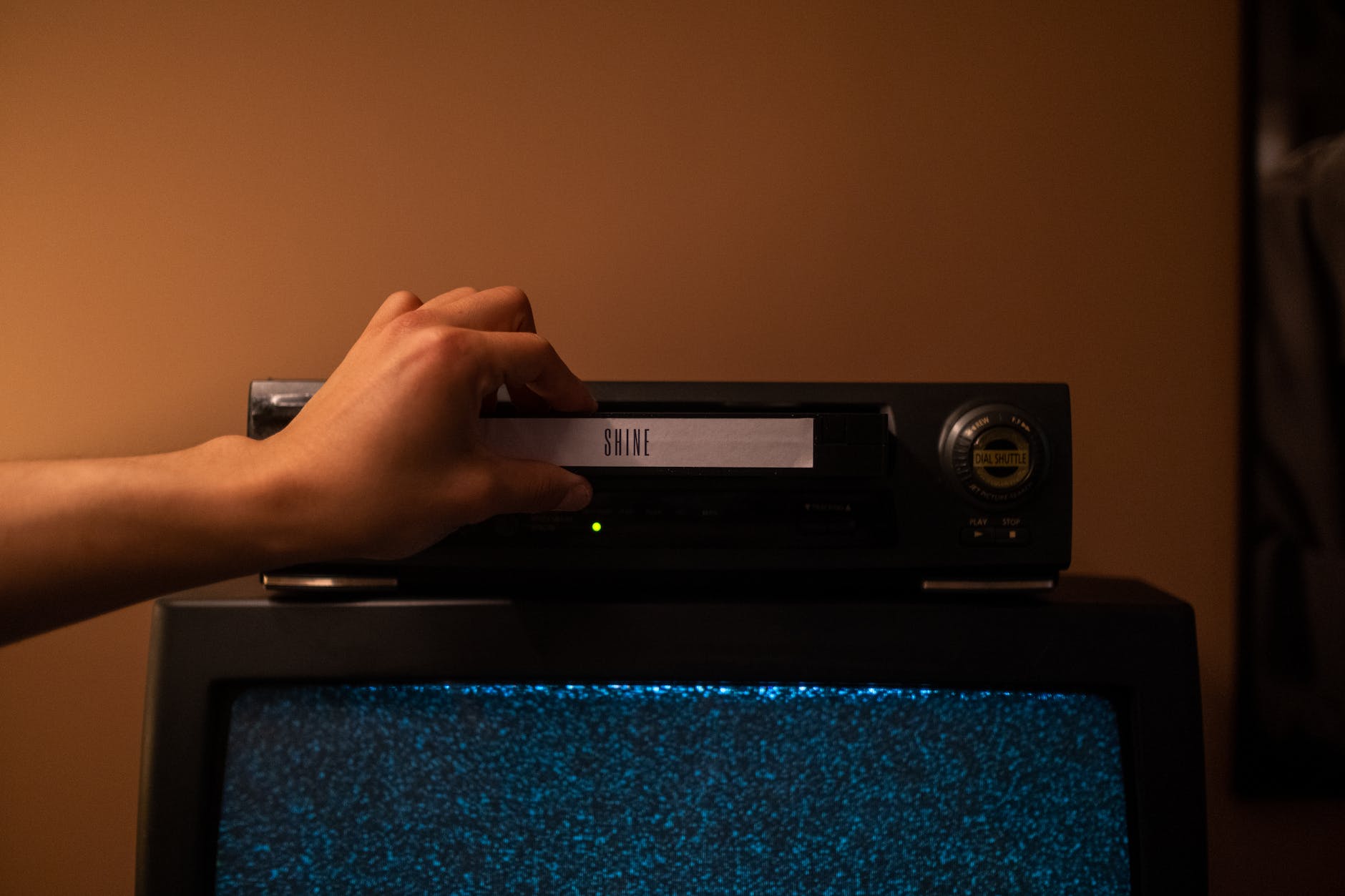
person inserting a videotape into the video player

You are invited to a special screening of Maria’s Story

This January 16th marked 32 years since El Salvador’s 1992 peace treaty, also known as the Chapultepec Peace Accords, which were signed between the Frente Farabundo Martí para la Liberación Nacional (FMLN) and the U.S. backed right-wing government of El Salvador, ending a 12 year war in the Central American Nation which killed at least 75,000 Salvadorans, disappeared 8,000 others, and displaced at least a million more.

By the early 1980s the U.S. had its hands in conflicts across the globe, from the mountains of Afghanistan to the coasts of Nicaragua and the forests of El Salvador; former president Ronald Reagan made his commitment to this modus operandi clear as soon as he was elected in 1980, moving quickly to establish the “Contras,” or counter-revolutionary death squads against the socialist Sandinista government in Nicaragua. The U.S. dollar’s role on these “Cold War” fronts–as is the case now with its support for Israel against Palestine in the “war on terror”–was an open secret.

In 1985 at the White House, Reagan stood alongside then-Salvadoran president Duarte, whom had only been elected in June 1984, and called him “a close friend.” He then went on to claim that “elections, economic reforms and communist guerillas losing ground [in El Salvador] would [not] have been possible without the economic assistance and military training and equipment that [the U.S.] provided.” The U.S. government would send between $4.5 – 6 billion in economic and military aid to El Salvador over the 1980s, though not without loopholes and controversy, including the Iran-Contra affair.

President Reagan’s and President Jose Napoleon Duarte’s of El Salvador Remarks during his Working Visit in the Rose Garden on May 16, 1985. Courtesy of Ronald Reagan Library.

This is all the more reason why it’s stunning that the war in El Salvador outlasted even Reagan’s tenure. In 1987, 37 year old Maria Serrano lost one of her three daughters, Ceci Serrano, to an ambush by the Salvadoran army on her pueblo. While Maria didn’t mention Reagan by name as she discussed “the enemy,” or those responsible for the attack, she did note that losing her daughter in a particularly ruthless and dehumanizing fashion to an army Reagan had so much praise for was a major factor in her decision to become a guerilla fighter and organizer with the FMLN.

Save the date! For next Thursday, January 25th at 7:30 PM in Boyle Heights, Los Angeles.

In Maria’s Story, using solar-powered batteries, film-makers shadow Maria on-the-run” for two months through highlands and waterfalls as she and fellow farmer communities devise a major offensive against the Salvadoran army, an offensive so effective it ultimately spurs both the FMLN and the U.S. backed Salvadoran government to sign the Peace Accords; weaving together the different moments which led Maria into such a precarious position to begin with, the film captures the undeniable humility of a people simply struggling to live free from the grip of empire in the late 20th century.

I’m now honored to present a screening of Maria’s Story at none other than the Re/Arte (medianoche) bookstore in Boyle Heights. Proceeds from the event will go towards supporting my upcoming visit to El Salvador as an Election Observer, and attendees will also get to check out all of the amazing libros–many of which are no longer in print or just anywhere else–at Re/Arte.

Tell a friend, bring your own concha–available nearby on E. Cesar Chavez Ave–and enjoy! It’s going to be an unforgettable time.

J.T.

From Los Angeles to Gaza, Resist

Today in Gaza the U.S. and Israeli governments stole the life out of yet another generation of Palestinians, adding to the banks of lives they’ve taken in their bid to control the fate of yet another terrain through sheer violence, one funded by billions of U.S. tax dollars in military aid to Israel each year, implicating every American alongside their government.

This, on the very anniversary of the forceful taking of Palestinian land for the formation of the Israeli state in 1948, or the same year in which racial covenants in the U.S.–which played a huge role in shaping the neighborhoods of Los Angeles now mired in gentrification–were outlawed by the Supreme Court in Shelley v. Kraemer. It’s anyone’s guess whether the irony was lost on the Supreme court then, but it’s certainly lost amid the nation’s highest office now.

No space on the planet forced into being for the sake of capital or the reign of bigotry, and at the expense of life, will ever be legitimate and actually free. Indeed, in stratified Los Angeles and throughout cities in the U.S. and all over the world, capitalism has been undergirded by the backs of millions of history’s ‘otherized’ people since time immemorial. But we do not forget.

We are the land, and from Los Angeles to Gaza we resist occupation by hostile states, their elitist benefactors, and those who would be their imitators. Our only demand is to be free. Until that day arrives, all of our bodies remain on the line.

J.T.

September 11, 2001: 13 Years Later

Los Angeles, Runyon Canyon

Today marks the thirteenth anniversary of the World Trade Center Attacks. I believe that if there’s a single day in modern history that marked the loss of innocence for my generation, the millennial generation, it’s definitely the day now known as ‘9/11’. Or at least, this is what should be clear to most people who consider themselves informed. What’s more true, however, is that everyone has been affected by 9/11; whether we’re aware of it or not, history binds each citizen of the world to another, indefinitely.

In 2014, neither the U.S nor the world is actually any safer following the ‘war on terror’ declared by then President Bush on September 11, 2001. In fact, not only is the U.S still at war in Iraq and Afghanistan (not to mention Pakistan, Yemen, and–in a matter of days–Syria and more), but it is also still mired in a spiritual and political crisis from within, as war abroad is intrinsic with war on a domestic level.

Simply put: as long as unchecked privilege, prejudice, and ignorance continue to inform the decisions made within our governments, and within our schools and universities, and within the work environments that we’re a part of, we will continue to lose our way from the common humanity that brought so many people of this country together on that tragic morning.

Rather than just commemorating 9/11 for the sake of entertaining patriotism, then, we should lend our attention to what is still lacking in our policies toward human rights both in the U.S. and around the world. In doing so, we can finally move from working against one another to working with one another. This, I believe, is the only true way to honor each life lost since that day, and each life that’s still being lost to war, bigotry, and the countless other brutalities we inflict on one another in the name of civilization.

We can do it. If we are honest enough with ourselves about how far we’ve come and how far we’ve still got to go as a nation and global community, we can still be more civilized, righteous, and whole. Of course, it’s not just difficult to take a critical look at ourselves and one another, it can be one of the most difficult things of all.

But if on the morning of that terrible September day there were enough heroes who gave their lives to help their fellow men and women in need, surely there are still enough of them left to take a moment for others today, none of whom are tougher, nor smarter, nor better in any way than those before them, but whom instead are just as human.