“I’M HERE BECAUSE I CANNOT PRAY”

This is a special rebroadcast episode outside of J.T. the L.A. Storyteller Podcast’s regular schedule.

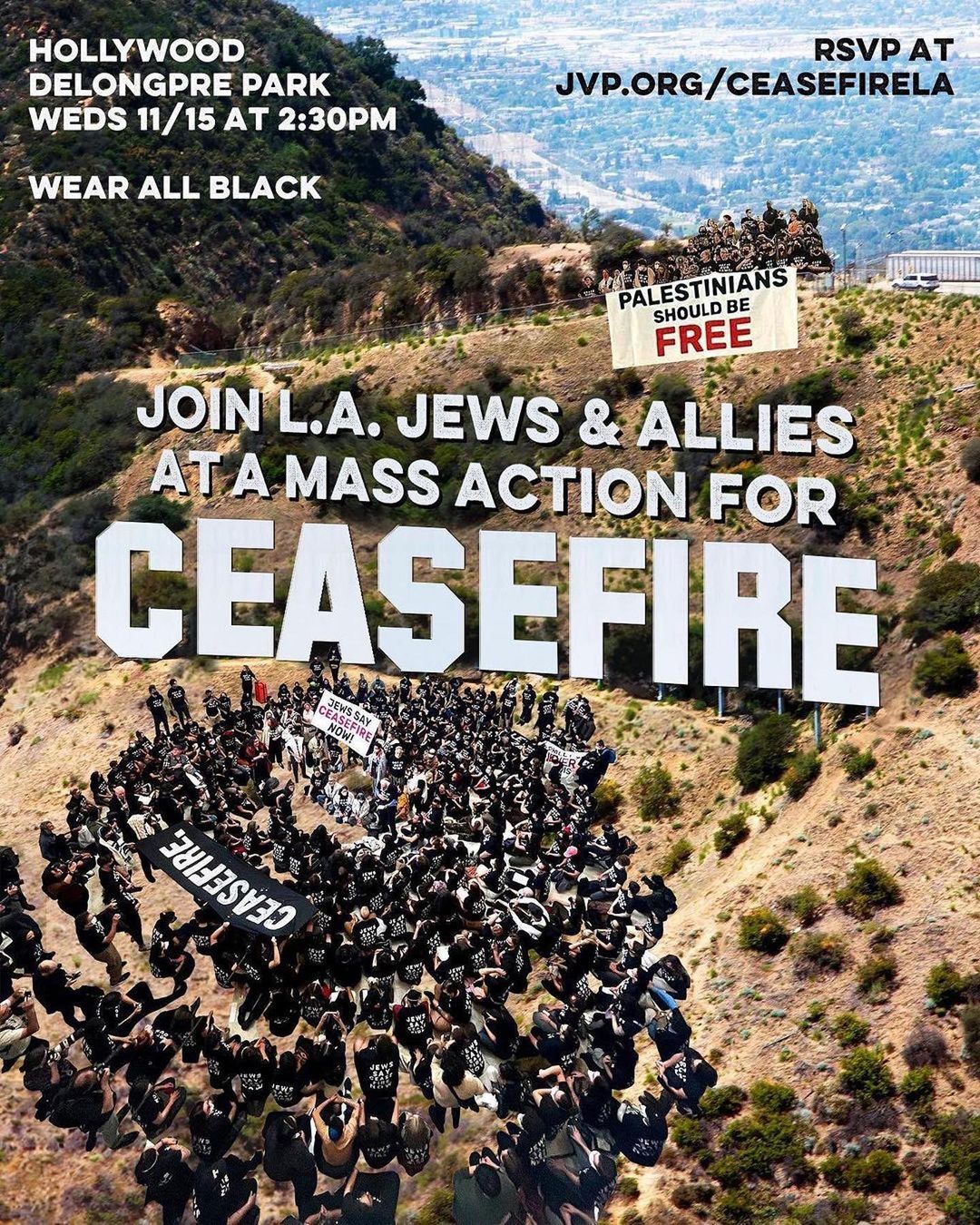
Today in Washington D.C. U.S. House Representative Rashida Tlaib (Democrat, Michigan), the sole Palestinian-American member of Congress, held a news conference alongside Rabbis for Ceasefire and fellow Congress members calling for an immediate ceasefire in Gaza, where the state of Israel, supported by billions in U.S. military funding, has killed more than 11,000 people and displaced at least 1.4 million others. According to Tlaib, over 65% of Americans now support a ceasefire, and every moment the U.S. fails to halt Israel only leads to more lives lost and irreparable damage for the Palestinian people. On Wednesday, November 15th, Jewish Voices for Peace is staging a Mass Action in Hollywood also calling for an immediate ceasefire.

(2:42) Rabbi Brian Walt: Most Jews and nearly all Israelis know someone whose family member is held hostage
(8:45) Representative Rashida Tlaib (Michigan), the only Palestinian-American Congressmember who was also recently censured in the U.S. House of Representatives
(13:11) There is nothing humanitarian about a “humanitarian pause” that still leads to bombing innocent civilians
(15:21) Representative Cori Bush (Missouri), a St. Louis native and the first Black Congresswoman from Missouri
(18:05) Bush describes giving birth to her premature baby and grieving for the lives of families and their loved ones in Gaza
(19:41) On evoking the message of Dr. Martin Luther King in Congress and how he would have stood on the side of peace today
(21:10) Representative Alexandria Ocasion-Cortez (New York)
(22:54) On how unconscionable it is to call the killing of innocent civilians “collateral damage”
(24:26) How to define “ceasefire” for those asking what this demand means
(28:17) Representative Jonathan Jackson (Illinois)
(29:16) Gazans now make up the largest refugee crisis in the world; rebuilding will be difficult because of the amount of pollution from bombing
(29:57) In 1993, in Rwanda, 1 million people were killed in 100 days; today, Rwanda found peace and reconciliation and is now one of the most peaceful nations on earth
(31:53) Representative Delia Ramirez (Illinois)
(35:10) Only a week prior, post 9/11 veterans also stood at the U.S. Capitol to call for peace, not war
(35:57) We should not have to justify why we’re calling for a ceasefire; those not doing so should be justifying why they’re not
(38:27) Rabbis Abby Stein and Salem Pearce
(39:10) On echoes of the Vietnam war in Gaza today; I’m here because I cannot pray
(41:08) Can any of us say that we don’t have blood on our hands? Because none of us can say that we did not see
(43:58) Neither Jewish nor Muslim-Americans can feel safe in the U.S. as long as this war continues
(45:39) Representative Nydia M. Velazquez (New York)
(46:23) On Puerto-Rican American solidarity with all people seeking the right to self-determination
(47:27) For Velazquez, calling for a ceasefire is not about the next election
(50:01) Representative Jamaal Bowman (New York)
(52:13) The United States has a history of bombing people all over the world; are we corrupted by violence?
(53:28) As a school principal for ten years, Bowman mourns for children killed in Gaza
(56:13) A coalition of faith and elected officials; we have Jews, we have Christians, we have Muslims
(57:28) The bible tells all of us: Love thy neighbor
(58:12) Representative Summer Lee (Pennsylvania)
(1:01:09) Whole bloodlines have been erased in Gaza over the last five weeks; and there are no universities left
(1:02:45) Our movement is the new pro-peace movement, locking arms with people all over the world
(1:03:45) Representative Ayanna Pressley (Massachusetts)
(1:05:47) Children in Gaza should not have to hold a press conference asking to live
(1:08:58) Representative Omar Ilhan (Minnesota)
(1:12:01) Even children in Somalia can see the unfolding genocide of Palestinians in Gaza
(1:14:50) Deaf couple in Gaza is terrified of being unable to hear the bombs or anything during this siege
(1:15:21) Ilhan’s colleagues were quick to sympathize with Ukraine was getting bombed
(1:18:59) Rabbi Yosef Berman closes out the press conference with a prayer; am I my brother’s keeper?

This rebroadcast would not exist without the tremendous efforts of Rabbis for Ceasefire to let the nation know. Please consider making a donation to the organization for more independent media through our communities. To support the production of J.T. the L.A. Storyteller Podcast, please check out my PATREON.

J.T.

L.A. Mayors Ball: 1913 – 2022

How time flies. Below, from left to right, are 15 L.A. mayors over a 100 years and then some.

Henry Rose, 1913 – 1915. Charles Sebastian, 1915 – 1916. Frederick Woodman, 1916 – 1919. Meredith Snyder, 1919 – 1921. George Cryer, 1921 – 1929. John Porter, 1929 – 1933. Frank Shaw, 1933 – 1938. Fletcher Bowron, 1938 – 1953. Norris Poulson, 1953 – 1961. Sam Yorty, 1961 – 1973. Thomas Bradley, 1973 – 1993. Richard Riordan, 1993 – 2001. James Hahn, 2001 – 2005. Antonio Villaraigosa, 2005 – 2013. Eric Garcetti, 2013 – 2022. Gina Viola, 2022 – 2030, perhaps?

And from our latest at Making A Neighborhood: “There’s also no telling just what the city’s first non-male mayor in its nearly 241 years in existence could achieve for voters with a term or two onto 2030, and all the more so given L.A. city hall’s historically inequitable—and often compromised—structure in any case. But given Viola’s strong position on divestment from incarceration for L.A.’s most vulnerable communities—especially Black Lives—a policy that’s also gained increasing momentum at the voting booths over the last decade, it sure is something different for the city and its neighborhoods in generations; in fact, with the data and ground-game in mind, it’s an unprecedented opportunity.”

Mail-in ballots arrive this May 9th, 2022. And Election Day is June 7th, 2022.

J.T.

A line of police officers forms a barrier at L.A. City Hall in downtown Los Angeles

LAPD officers Now Face a Crucial Choice: To stand with policies as they are, or stand for a change, even in their own ranks

(Pandemic in Los Angeles: Day 78)

As of 2018, according to Police Chief Michel Moore, Black, Asian and Latino police officers make up at least 60% of LAPD’s force in Los Angeles.

However, the Board of Directors for the police union, known as the Los Angeles Police Protective League, which works to “protect, promote, and improve the working conditions, legal rights, compensation and benefits of Los Angeles police officers,” is made up of nine officers, including just one Black woman, two white women, and six white men.

In other words, the board is not an accurate representation of what the majority of police officers in L.A. look like, and by extension, what their values are, as well as where they may see room to work along with members of the community in Los Angeles for the betterment of the public good.

The board of police commissioners, on the other hand, which “sets overall policy while the Chief of Police manages the daily operations of the Department and implements the Board’s policies or policy direction and goals,” is slightly more representative, but might be said to still fall short of “a fair share.”

Made up of five mayor-appointed representatives, overseeing a police force where 60% of officers hail from Black, Asian and Latino communities, one could expect these groups to have, say, three out of five seats on the board.

Instead, two white women and one white man take up 60% of the board seats, while one Black man, and one Latina woman account for 40%. In a democratic country, numbers like these suggest we still have a ways to go before achieving an actual functioning democracy.

It’s therefore a good time for every LAPD officer to ask themselves: In the best case scenario, what might the future of policing look like in Los Angeles? For whom should police work, and how?

If there was ever a time for departments, organizations, and individuals everywhere in America to reflect on their own practices and representation, clearly that time has now arrived. And if there’s going to be any meaningful process of change and perhaps even reconciliation, these are just a few key questions to start with.

J.T.

To subscribe to jimbotimes.com, add yourself to the list HERE.

September 11, 2001: 13 Years Later

Los Angeles, Runyon Canyon

Today marks the thirteenth anniversary of the World Trade Center Attacks. I believe that if there’s a single day in modern history that marked the loss of innocence for my generation, the millennial generation, it’s definitely the day now known as ‘9/11’. Or at least, this is what should be clear to most people who consider themselves informed. What’s more true, however, is that everyone has been affected by 9/11; whether we’re aware of it or not, history binds each citizen of the world to another, indefinitely.

In 2014, neither the U.S nor the world is actually any safer following the ‘war on terror’ declared by then President Bush on September 11, 2001. In fact, not only is the U.S still at war in Iraq and Afghanistan (not to mention Pakistan, Yemen, and–in a matter of days–Syria and more), but it is also still mired in a spiritual and political crisis from within, as war abroad is intrinsic with war on a domestic level.

Simply put: as long as unchecked privilege, prejudice, and ignorance continue to inform the decisions made within our governments, and within our schools and universities, and within the work environments that we’re a part of, we will continue to lose our way from the common humanity that brought so many people of this country together on that tragic morning.

Rather than just commemorating 9/11 for the sake of entertaining patriotism, then, we should lend our attention to what is still lacking in our policies toward human rights both in the U.S. and around the world. In doing so, we can finally move from working against one another to working with one another. This, I believe, is the only true way to honor each life lost since that day, and each life that’s still being lost to war, bigotry, and the countless other brutalities we inflict on one another in the name of civilization.

We can do it. If we are honest enough with ourselves about how far we’ve come and how far we’ve still got to go as a nation and global community, we can still be more civilized, righteous, and whole. Of course, it’s not just difficult to take a critical look at ourselves and one another, it can be one of the most difficult things of all.

But if on the morning of that terrible September day there were enough heroes who gave their lives to help their fellow men and women in need, surely there are still enough of them left to take a moment for others today, none of whom are tougher, nor smarter, nor better in any way than those before them, but whom instead are just as human.