TRUMP’S MASS DEPORTATION HITS ITS OWN WALL

LET THE CITY KNOW:

This round-up can also be viewed on YouTube.

So much to read, yet, such little time. This reality notwithstanding, here are four articles I think you should check out this weekend and why.

1. Aryan Brotherhood members found guilty of ordering L.A. County murders from prison – Matthew Ormseth, L.A. Times

2. LADWP paying up to $1,975 an hour to Munger, Tolles & Olson, to defend against lawsuits from the Palisades – Matt Hamilton & David Zahniser, L.A. Times

3. Trump’s Mass Deportation Plan Hits Its Own Wall – Brittany Gibson, Axios

4. Revisiting Obama‘s Presidency and its Impact on the Democratic Party – Yeva Nersisyan, The Hill

Let The City Know!

(And please refer any typos in the captions to your local A.I. committee.)

J.T.

blue white orange and brown container van

Amazon plans to keep Southern California from unionizing and fighting more warehouses in Latinx Communities by placing non-profits and other “Barking Dogs” on a charitable leash

According to AFL-CIO Union Leader and former State Assemblywoman Lorena Gonzalez Fletcher, this leaked document from Amazon shows that the company has invested at least $80 billion in the Southern California region over the last 13 years, where the company maintains “the largest concentration of FCs (Fulfillment Centers) in the country,” and where 40% of Amazon’s packages go through the L.A. and Long Beach ports before reaching the Inland Empire and subsequently the rest of the country.

However, there are just a few “dogs [not] barking” the company is looking to put on a leash before they become larger threats to the bottom line, including growing efforts to halt more warehouse development in communities of color, or a “Warehouse Moratorium,” Labor-Organizing efforts, and a growing number of elected officials steering away from the company’s “charitable contributions.”

Naturally, this is a developing story. Subscribe to J.T. the L.A. Storyteller for more updates soon.

J.T.

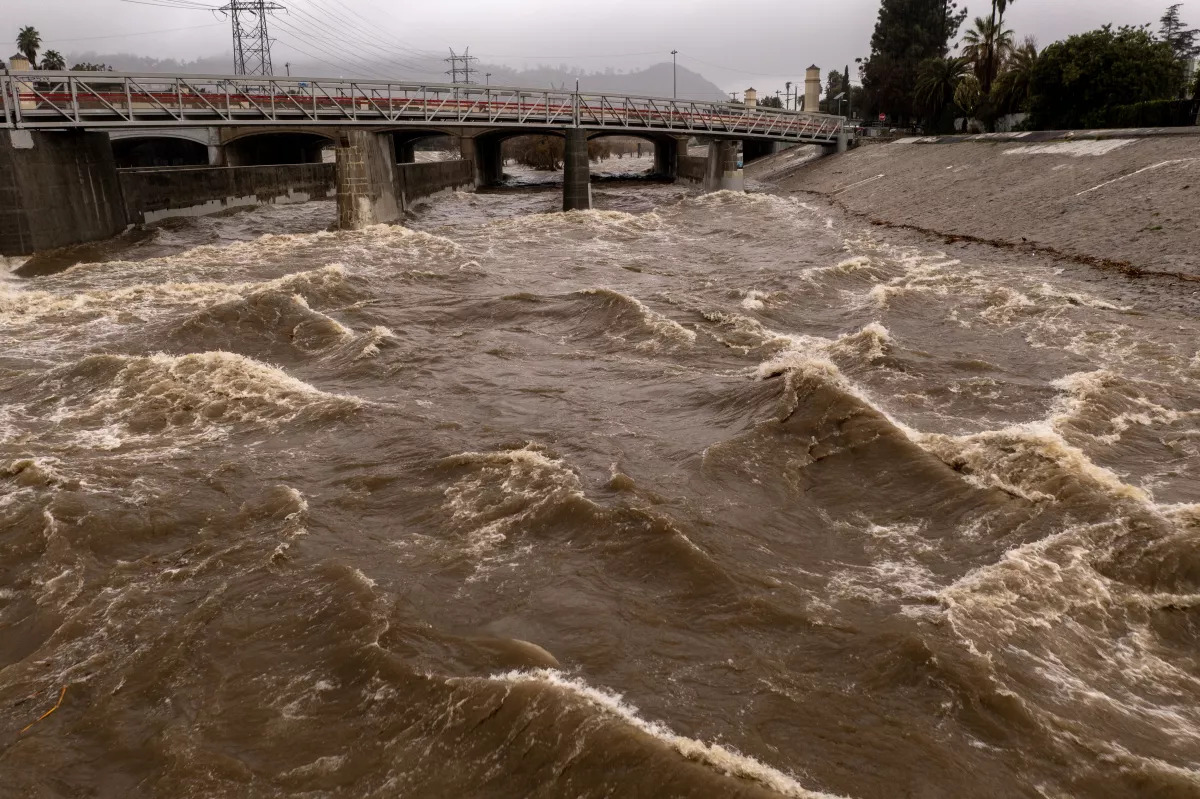
L.A. feels the storm, but Riverside and San Bernardino Counties will sustain the most waterfall

Feature photo courtesy of David McNew/Getty Images.

According to the L.A. Times, the strongest downpours from Hurricane Hilary are from now until about 11 PM PST: “The heaviest rains in Southern California were expected to fall in the mountains and deserts. Riverside and San Bernardino counties, where the worst of the storm was expected to hit, [are] anticipating 5 to 10 inches of rain for their mountains and desert areas.”

In Los Angeles proper, areas to watch for flooding include:

Long Beach, Thousand Oaks, Simi Valley, Malibu, Hollywood, Beverly Hills, Universal City, Downtown Los Angeles, Griffith Park, Culver City, Inglewood, Burbank, North Hollywood, Venice, Santa Monica, Van Nuys, Encino, Manhattan Beach, Alhambra, and Hermosa Beach.

Also keep in mind that in a once-in-a-century flood event, L.A.’s legacy of redlining continues to place Black and Immigrant communities most at risk, as a study conducted by researchers at UC Irvine points out: “Among the areas most at risk are a dense tangle of city neighborhoods intertwined with industrial zones, stretching south of [downtown L.A.] Many of the neighborhoods are clustered around the Los Angeles River, which was excavated and paved decades ago to help prevent flooding.”

A visual of Hurricane Hilary as it made its way to Baja and Southern California. Credit: NBC News.

Additionally, researchers note: “Whose homes would be flooded is only part of the problem. Inequities are critically important because recovery from floods is often prolonged and incomplete among socially marginalized, low-wealth and vulnerable communities.”

Residents in Los Angeles and Ventura County also felt a moderate earthquake at approximately 2:40 PM today, inspiring reports of a “hurriquake” on X. A subsequent tsunami was not expected, and according to Mayor Bass’ office: “LAFD has completed a survey of the City of Los Angeles following the 5.1M earthquake near Ojai. No damage or injuries were reported.”

Mutual Aid groups in Los Angeles have also called on L.A. city and L.A. County officials to open all “public buildings, hotels, libraries, public transportation hubs, parking structures, recreation centers, public school gyms and facilities, universities, council field offices, and Los Angeles City Hall to shelter unhoused people through the duration of the [hurricane].”

CBS News has published this list of Emergency Shelters in Southern California open during the storm.

J.T.

Pandemic in Los Angeles: Day 26

I’ve seen how little by little, people are now are embracing more the isolation that’s been popularized through this public health crisis. This is best demonstrated by the prevalence of the face mask, the new symbol of acceptance for a more precarious reality. I think of people in Beijing, China, who came to terms with precarious conditions years ago once realizing their city’s air was one of the most polluted in the world. 

But it’s now clear that China isn’t the only nation that can act swiftly and with authority towards a serious public health threat. For this reason, climate change, and curbing carbon emissions worldwide, should be a renewed issue that all the nations of the world should pay attention to with refreshed eyes.

After witnessing the quickness and consistency with which the entire globe has treated the threat of COVID-19, can the presidents of the world’s nations, particularly this one, continue insisting to people that climate change is another “hoax” we should pay no mind to, or which at the very least we shouldn’t take some precautions for? 

Throughout this crisis, an abundance of data, from reports of the Black community’s disproportionate death rate in relation to the disease, to reports of the shortage of access to testing in places like South Central Los Angeles and Palmdale, where Latinos make up the majority of the population, demonstrate how existing healthcare inequalities are only exacerbated by public health threats which, income brackets notwithstanding, pose a risk to every member of society. 

If given a true moment to pause, can the president of this nation–in the case he is reelected–genuinely walk away unmoved by what the crisis has revealed about our inertia towards radical changes in society? More importantly, can the president see how despite a response which was globally slower than it should have been, nations everywhere have managed to enact serious policies to curb the damage wrought by this pandemic? 

This leads to another question our elected officials and voters everywhere must ask: how committed are we to the differences that divide us, separating rich from poor?

I think of Mitch McConnell, who in my opinion has been the most dangerous member of Congress for over a decade now, placing the health and well-being of American workers in harm’s way at the mercy of corporate executives and hedge fund managers. Clearly McConnell has not been shaken by this moment in our nation’s history to move in support of transformative and overdue changes to our way of life here–universal healthcare access, a new federal minimum wage, gun safety legislation, student debt forgiveness being a few that come to mind–so we have to ask: what’s left?

Love it or hate it, it appears that all we have now is November. I wish there were a better answer, but for now we’ve got to make do with what’s in front of us. Something I’ve come to know well over the course of time.

Let’s get to it, Los Angeles.

J.T.

To subscribe to jimbotimes.com, add yourself to the list HERE.