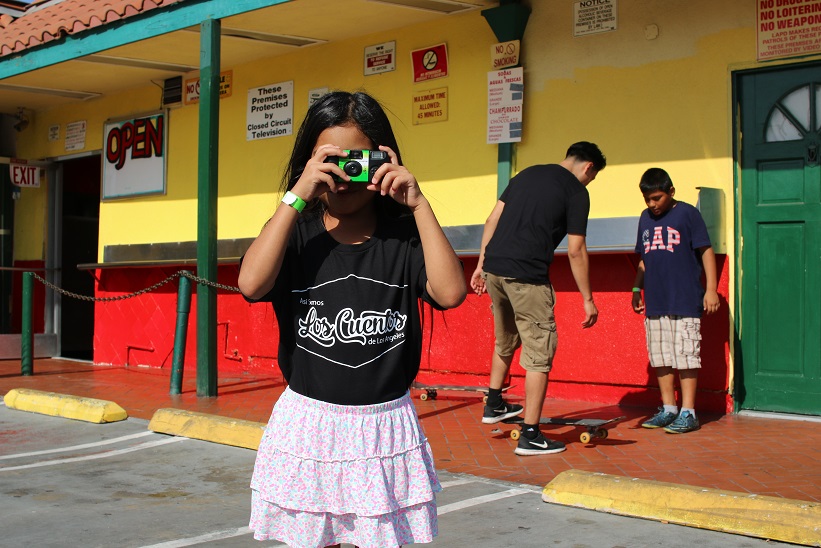
Join Who Is Your Neighborhood at LACC this Saturday, October 12, 2019

That’s right! Los Angeles City College is celebrating the College’s 90th Anniversary in East Hollywood with quite the event: a Community Resource Day this Saturday from 10 AM – 2 PM on the College Campus.

Naturally, the team behind Back 2 School and I have got to be a part of the special day. So we’ll be staffing a table at the event, where we’ll be talking with visitors about our annual Back 2 School Party, our local Neighborhood Survey, and more ways to get involved with our ongoing efforts to uplift this side of Los Angeles. We’ll also be debuting our brand new banner, courtesy of The Think Farm. Come enjoy the festivities with us!

J.T.

close up photo of a volunteer id

EPISODE 5 – THE NON-PROFIT QUESTION

In our fifth episode, Ed and I discuss another tabling session for Who Is Your Neighborhood at Los Angeles City College’s Resource Fair; we also consider the possibility of a non-profit status for our organization and other ways to grow with our work for the community. Plus, some BONUS audio on staying focused.

J.T.

To subscribe to jimbotimes.com, add yourself to the list HERE.

Our 2nd Annual Back to School Party is about Fulfilling a Need, Lunging Forward

It’s exactly two weeks from now that on August 24th, 2019, just after 8:00 PM, a group of twenty-somethings and I will be concluding a special event known as the 2nd Annual Back to School Party at El Gran Burrito in Los Angeles.

It’s going to be a small gathering of people and families in the little vicinity of Los Angeles I call home, but one which will draw many eyes for days after it’s over for being a  demonstration of how to move and shake quickly for communities to educate and organize themselves. I’ve yet to fully come to terms with what the implications may be for my ole neighborhood afterwards, but perhaps I’m not supposed to. Perhaps I’m just supposed to believe, or keep believing, because that’s what so much of this has already been: just belief.

When I stop to think about why this is, however, or just how it is that we got here, how we got ‘so deep in’ to holding events like this for people–particularly youth and families–I have to pause.

My mind thinks back to Pasadena, and I remember the first and only Model United Nations High School conference that I put together at Pasadena City College for Pasadena’s high school students as the President of the Model UN club at the college. It was 2012, and I was 21 years old.

I remember being quite disturbed on the morning of the event, particularly by the stillness of everything, the way it seemed to be just a typical day. It was not. For me personally, the day of that High School Model UN conference was a day I had been waiting and planning for months ahead of time. It was another community gathering: a day when young people were to think critically about the world beyond them in a simulated meeting of nations.

Then, in perfectly ironic fashion, on the morning of the event, when there was supposed to be a microphone and speakers setup for my team and I at the college’s amphitheater, where we’d start our conference, there they were: missing in action, that is.

I had to scramble, and I made my way to the main office. I needed to call the whole world at the college, or whoever it needed to be, to let them know that in case they had forgotten, we’d made an agreement to set up this sound system for our conference to take place.

Finally, I was told by the folks at the main office that the equipment would be arriving. But then, my phone rang.

It was time to greet the students and everyone else who came to participate with a commencement speech. One of my fellow-team members asked if I’d prefer that he give the opening speech instead since we were running late due to the missing sound system.

But there was no chance on earth I would let someone else address the audience in my place. I was the president of the club. And I had spent so long planning this conference for the students that they had to wait. And I to run. So I sprang back across campus in my suit and bow-tie to make the opening speech.

I remember that it started to sprinkle, which made it so that I needed to be even quicker if I wanted to pull it off. In Los Angeles everyone is afraid of a little rain. In Pasadena, we were too.

I lunged forward. When finally I got to the amphitheater, I saw them. A whole swath of heads above shoulders huddled together, just waiting to see what would happen next. Three different high schools at Pasadena City College for the day.

How could a part of me not be afraid then; even if I had something to say, how could I know if they’d hear me?

But the rest of me, the one that would take over, was simply going to finish the job I set out to do.

As I stood before the audience then–all the conference’s high school participants as well as their teachers–looked at me, and I was ready to speak to every one of them; whether they were young or senior citizens, black or white, and regardless of where they came from, I was convinced in my heart that I had something meaningful to say to all.

And I addressed them as their host.

It would turn out to be a beautiful conference. The best High School Model UN conference in five years of being held at PCC.

As I recall that day, I’m nearly set on it as the first occasion or moment in which I showed true love for speaking to the world with some kind of speech.

But then, how can I forget the marches for Immigrant Rights in 2006, through the streets of Los Angeles?

In a world far removed from collegial Pasadena, I was 15 years old, standing at the intersection of Sunset boulevard and Highland avenue when a reporter from the local news approached a group of my peers and I with questions about why we were out of class that day, or why we had walked out. I remember my classmates calling out to me and finding me among the crowd. They wanted me to speak with the reporters.

I didn’t quite know how they all reasoned this out, but what I did know is that I wouldn’t refuse their request. Not with all the emotions on that day, which was the first of three days of marching through Los Angeles and cities all over America in solidarity with immigrants.

I answered the reporters’ questions then, only half-knowing what I was doing as I explained to the woman and her cameraman that marching for immigrant rights was about showing deep love for immigrant people and culture despite any legislation to the contrary–it was House Resolution 4437, or a bill set out to erase immigrants by way of extinction–that spurred us into action. When the reporter asked if I had any last words to say, I remember plucking, from somewhere out of the sky, the most energizing phrase I could recall at the moment:

“Que viva la raza!”

My classmates roared just after me, shouting out for themselves, but all at once in a unity that would reverberate with me always:

“Que viva la raza!” they said.

I wouldn’t even see the news clip until some seven years later. But it spoke. I was ready to speak up. I wanted to. My community at the time could see it. A lifetime later, I can see it now too.

Today, on the brink of the Second Annual Back to School Party in East Hollywood, I’m prepared to speak with whoever I can and must once again.

But I’ve already traveled far and wide for this event, raised my chin up high despite exhaustion from a world of other commitments, and stood tall to speak despite any air of hostility or indifference that could be thrown my way as another advocate haranguing leaders or their representatives to “do the right thing.” In any case, each time I’ve had the chance, I’ve advocated fiercely for my cause.

I’ve been brave, even when it wasn’t expected of me. And when no one asked it of me. But I’ve known for a long time I would have to be brave, just in case. My community taught me that. With BTS 2, I haven’t forgotten for one second. We will continue lunging forward.

J.T.

We Will Not be Erased: How Open Mics in Our Community Uplift Our Cultural Heritage

Our second annual Open Mic was a second-annual success, featuring 10 different poets, speakers and other members of the community who spoke in front of up to 25 guests throughout the evening. Our guest list was diverse, with attendants as young as 11 years old and as mature as 60.

In my own experience, after more than 25 years of living in this parcel of Los Angeles, I never knew of an open “forum” in the community like those created by the three different Open Mics held in the area over the last calendar year; first at Cahuenga Public Library last April, then at El Gran Burrito in August 2018, and now, for the second year in a row, once again at Cahuenga Public Library.

I view each of these events, both individually and collectively, as achievements for a demographic in East Hollywood increasingly facing displacement from L.A.’s collective memory vis-a-vis gentrification, or the process known for “cleaning up” [ethnic] spaces for whiter, wealthier living.

In her photographic exhibit at the Armory for the Arts, Los Angeles based artist Sandra de La Loza describes her experience living in a city that constantly denies people such as herself, her family–and their neighborhoods–of space for their history.

For the dispossessed whose stories are not memorialized or recorded, memory becomes a vital space in resisting erasure, silence and invisibility.


With this in mind, by “holding space” for others such as the youth, families, elders and others who’ve attended our Open Mic events this past year to share their memories with the local community, and by attempting to normalize such spaces and activities on a consistent basis, my peers and I are taking a stand for a collective cultural history; for a present and future in the same vein of resistance against the erasure described by de La Loza.

In a commentary on de la Loza’s artwork as a “Field Guide” for others, UCLA Digital Media Professor Chon A. Noriega recognizes de la Loza’s installation and photographing of thought-provoking, albeit temporary ‘invisible monuments’ in Los Angeles as the work of a “guerilla historian”:

…its method is concrete and practical: do the research, engage a site, document the action, and communicate to others.


In other words, holding space for the memories of ethnic communities is not just an act of preservation, but also ‘a model’ to show others how they can excavate local histories for and about themselves too. Here, I think of the Filipino woman from last year’s first-ever Open Mic at Cahuenga who had “lived here for over 35 years” before taking up the microphone to share her story. And I think of Alfredo, the 10 year old boy who arrived to the Back to School Party at El Gran Burrito in August initially rolling his eyes at the workshops being offered, only to find through the course of the event that he was exactly the kind of youth our team had been looking for. Alfredo needed a space that recognized and uplifted his giftedness, and once he could see that our Party was just that, he transformed into one of our foremost little helpers, announcing the raffle and handing out prizes to the community as one of our team.

Lastly, I think of William Taylor III, who made his way to last Thursday’s Open Mic with stories about his time along Downtown Los Angeles’s Skid Row area. Taylor III graced the microphone with an ode to the recently passed Nipsey Hussle, statements of resistance to Donald Trump’s “zero tolerance” policy, and more letters of love for the community. These are just a few of the people who’ve been moved by our work, and there will be more.

In this respect, I’m excited to see what else my team and I will accomplish with more Open Mics, Back to School Parties, and other monuments for uplifting our communities. Because yes, of course there will be more soon. We’ve just gotten started!


J.T.