L.A. MARCH 2024 PRIMARIES: RECAP

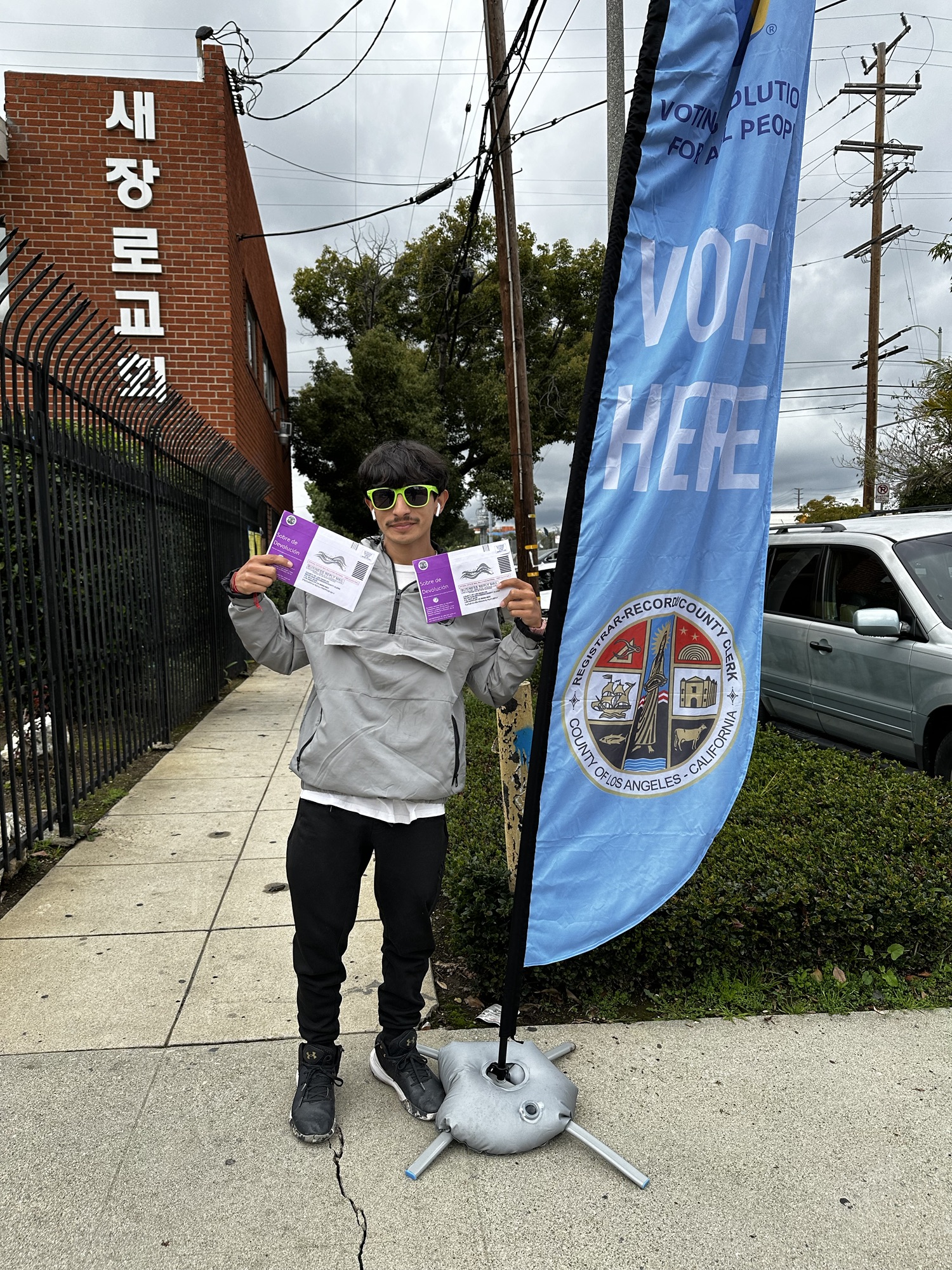
It’s official! There are now just 136 days before it’s “high-key” time for elections again. This is because in California ballots for the election are sent to voters some 29 days before Election Day. So then, even if Election Day is on November 5th, many of us will have the opportunity to vote on L.A. City, LAUSD, L.A. County, and even California elections as soon as October 7th, or 136 days out. In this installment we go over certified L.A. City elections to see who won, who lost out, and what you can expect this Fall if you live and vote in Los Angeles. You can also see the graphics used in this recap here. And you can watch this podcast on YouTube. Be sure to subscribe to the podcast on YouTube so you don’t miss our recap for LAUSD and L.A. County elections.

(1:48) Council District 2: Adrian Nazarian vs Jillian Burgos
(6:06) Council District 4: Nithya Raman
(11:36) Council District 6: Imelda Padilla
(14:56) Council District 8: Marqueece Harris-Dawson
(19:54) Council District 10: Heather Hutt vs Grace Yoo (K-Town Is Oaxacan Korean)
(24:16) Council District 12: John Lee
(29:25) Council District 14: Ysabel Jurado vs Kevin De Leon
(38:20) Patreon Shout Out!

And remember, if you’re able to, you can make a one-time donation to my nonprofit work for working-class communities in The City here.

You can also check out my Patreon page at https://patreon.com/jimbotimes; each subscription plays a real part in supporting my independent research and journalism for the nearly 10 million people who make up L.A. County. Because yes, I am in fact doing it for every last one of you!

With that said, let the city know. This is 2024’s official Primary Election RECAP by JIMBO TIMES, the L.A. Storyteller.

J.T.
THE DODGERS: COLLEAGUES, OR COLONIZERS?

Today the Los Angeles Dodgers are worth $5.4 billion. But for the land they took to play ball, Vincent “Chente” Montalvo’s family received what his grandfather John De Nava called peanuts. His grandmother, Adela De Nava–now 91 years old(!)–also continues to stand by this claim. It’s not just about the money, though. Earlier this year, California Assemblywoman Wendy Carrillo introduced AB 1950, or the Chavez Ravine Accountability Act, which would order the city of Los Angeles to atone for its part in evicting nearly 1,400 Mexican-American families in the Bishop, La Loma, and Palo Verde communities to place Dodger stadium on top. Vincent and yours truly discuss AB 1950, as well as the meaning of “reparations” in the current political environment. To follow Vincent and his work at Buried Under the Blue, do so here. You can also watch this episode on YouTube.

(1:01) Welcome Vincent “Chente Montalvo” to J.T. the L.A. Storyteller Podcast, also known as Los Cuentos De Los Ángeles
(3:43) Vincent is a founding member of Buried Under the Blue, which seeks to hold the city of Los Angeles and the Dodgers responsible for evicting his grandparents and thousands more in “Chavez Ravine”
(6:35) Vincent acknowledges the Kizh nation as the aboriginal people in Los Angeles and discerns between claims of land back for his family and land back for First Peoples
(11:38) Approximately how many people were in Bishop, La Loma, and Palo Verde, called “Chavez Ravine”?
(22:29) Vincent himself grew up in Echo Park, and also went to nearby Belmont High School, for the record
(30:34) The communities of Bishop, La Loma and Palo Verde were self-reliant and even organized their own Little League
(35:25) Private property was the fulfillment of the American Dream for Vincent’s family, until a constitutional amendment robbed them of it for the sake of the Dodgers
(40:24) Assembly Bill 1950 by Wendy Carrillo, also known as the Chavez Ravine Accountability Act, was introduced in the California legislature’s Judiciary Committee just this past March 2024
(42:13) Why Buried Under the Blue is not on board with AB 1950 in its current form
(47:51) Vincent and his family are not simply seeking financial compensation but an official apology from the Dodgers
(50:54) Due to his work Vincent has heard increasingly from Dodger fans who connect with his story
(55:55) AB 1950 in its current form does not identify the Dodgers for their instrumental role in the eviction of Vincent’s grandparents and their more than 1,000 neighbors
(59:26) How to support Vincent and his work with Buried Under the Blue

Speaking of standing atop a piece of history, please also check out Areli Morales Lopez’s latest for Making a Neighborhood, “The Last Laundromat by Venice Beach,” here. And remember that Making Our Neighborhood: Redlining, Gentrification and Housing (2021), the magazine, is once again available for purchase. Grab your copy for you and your neighborhood, here.

Last but certainly not least, to make a one-time donation to my nonprofit work for working-class communities in Los Angeles, please do so here. To support the production of J.T. the L.A. Storyteller Podcast for as little as $5 a month, check out my page at patreon.com/jimbotimes.

J.T.

P.S. I will for sure have a March Primary Elections recap before our next podcast episode on May 24th. You can quote me on that!

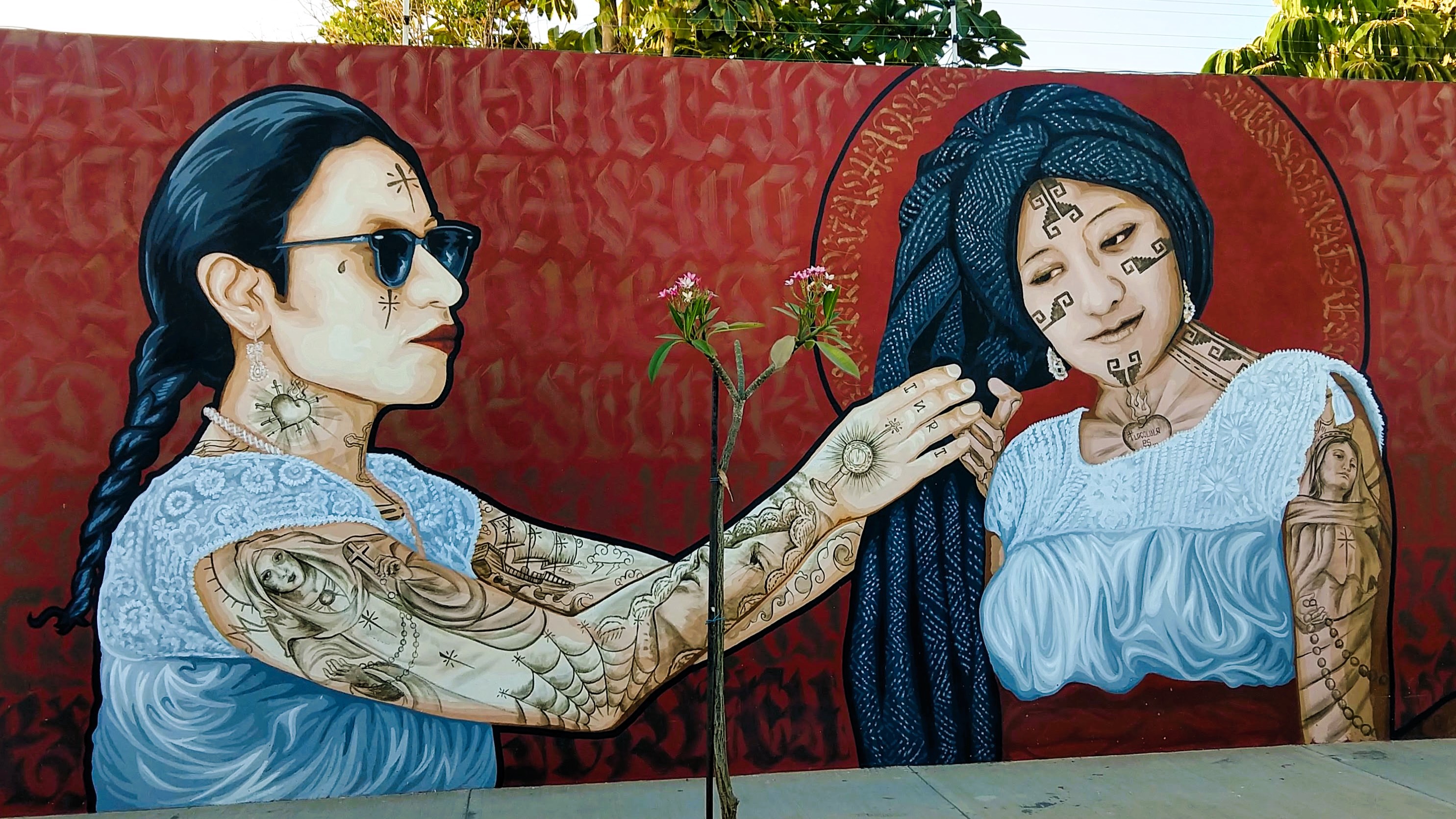
OAXACALIFORNIA: OAXACAN AMERICANS IN L.A.

First up, enjoy a new Intro for the podcast! Followed by a few notes on the week from yours truly, including on the tragic passing of Mirna Soza while boarding L.A. Metro’s B Line on Monday, April 22nd, as well as on the Armenian Genocide of 1915, commemorated every year on April 24th.

Then, from Columbia University to USC, this week belonged to Students for Palestine! In this spirit, this episode of J.T. the L.A. Storyteller Podcast features Sarah Orozco, a 1st-generation, low-income, Oaxaqueña at UC Berkeley, class of ’24; earlier this year, Sarah actually interviewed yours truly on what it means to be Oaxacan-American in the current media landscape, the Bracero program of World War II, which brought many Oaxaqueños to the U.S. for the first time during the 1940s and 1950s, and much more!

(0:01) New intro song!
(1:18) Be sure to follow the podcast on YouTube as well!
(1:56) You can also support the podcast via Patreon
(2:29) Updates for the week of April 21st, starting with Earth Day 2024
(3:37) Shout out Mirna Soza, who was fatally attacked on L.A. Metro’s B Line on Monday
(5:34) Shout out Students for Palestine! From USC to Columbia and beyond
(6:49) Shout out the Armenian Genocide, commemorated each year on April 24th
(8:17) This week also saw both L.A. City and L.A. County present budgets for fiscal years 2024 – 2025
(9:12) At least 4 out of 10 people living in L.A. now seriously fear becoming homeless in the foreseeable future
(10:03) Remember to subscribe via YouTube, or wherever you keep up with yours truly
(11:31) With that said, this installment of JT the LA Storyteller podcast is brought to you in particular by South Central L.A. and UC Berkeley’s Sarah Michelle Orozco
(13:41) Our first question: On identities
(17:50) Challenges when it comes to identity or identities growing up
(22:37) On the question of pride for indigeneity and being Oaxacan
(25:32) On the question of remixing identities in L.A. (K-Town is Oaxacan Korean)
(28:14) How age plays a part in the work one’s involved in
(29:56) Seasonal Oaxacan Migration to the U.S. going back to the 1940s Bracero Program
(34:46) Sarah’s grandpa was also in the Bracero Program
(36:13) Gender’s influence on what one’s involved in
(41:43) The first time I saw a Oaxacan American presence online (Shout out the L.A. Public Library!)
(45:30) Oaxacan Twitter
(47:59) Oaxaqueño and Oaxaqueña Americans to follow on Instagram
(55:14) Trends and social movements among Oaxacan Americans online (Viva Palestina!)
(58:16) Shout out Tlacolulokos, the artists whose artwork covers this episode
(59:53) What it means to me to have a following online (intentionality)
(1:03:31) On cultural appropriation of the Oaxacan culture
(1:08:01) On Oaxacalifornia, the legacy
(1:09:54) Connecting back with the pueblo
(1:13:53) FIN.

Speaking of Oaxaqueñas, please also check out Areli Morales Lopez’s latest for Making a Neighborhood, “The Last Laundromat by Venice Beach,” here. Also remember that Making Our Neighborhood: Redlining, Gentrification and Housing (2021), the magazine, is once again available for purchase. Grab your copy for you and your neighborhood, here.

Last but certainly not least, to make a one-time donation to my nonprofit work for working-class communities in Los Angeles, please do so here. To support the production of J.T. the L.A. Storyteller Podcast for as little as $5 a month, check out my page at patreon.com/jimbotimes.

J.T.

DOWNTOWN L.A.’s GRAFFITI TOWERS

In this installment of J.T. the L.A. Storyteller Podcast yours truly sits down with P, the horrible vandal, to discuss L.A. City Council’s recent approval of over $4 million to “remove graffiti covering three abandoned skyscrapers in downtown L.A., secure the site, and restore the public right of way on the adjacent sidewalks.” We also go over the state of L.A. graff’ in the era of TikTok, and how it just may dove-tail with the [2028] Olympics scheduled to come back to town soon. It’s a truly can’t-miss episode and we salute @therobinsonspace for our special studio-time!

Find our latest for Making a Neighborhood, “The Eviction Machine of Los Angeles,” here. Also, did you know that Making Our Neighborhood: Redlining, Gentrification and Housing (2021), the magazine, is once again available for purchase? Grab your copy today, which supports only more storytelling and documenting for our communities, here.

(0:01) Hey, what’s going on Los Angeles? It’s J.T. and it’s Friday, April 12th, 2024
(0:25) Before we get started, a slight correction for the record
(0:44) Re: the marches for Immigrant Rights in the United States…
(1:05) Let’s take this opportunity to go through a brief list of the largest marches ever? THE TOP 5, historically, are…
(3:48) These were definitely larger marches than the March for the Great American Boycott, or the March for A Day Without an Immigrant, but it does still stand that in Los Angeles the Day Without an Immigrant March of 2006 remains the biggest in L.A. history
(4:20) With that said, here’s yours truly along with P, the Horrible Vandal, on graffiti in L.A.
(5:07) Introductions, and a shout out to the Robinson Space for Los Cuentos de Los Ángeles
(5:32) Welcome P, the Horrible Vandal
(7:06) Shout out Koreatown since if you know, you know
(7:47) The state of graffiti today with respect to the gentrification in L.A.
(9:33) Business Insider on Oceanside Plaza, now better known as the site of the Graffiti Towers
(11:20) Is LAPD still arresting people for graffiti given all of the homelessness on the streets?
(14:28) The Broken Window Theory
(20:20) Like other subcultures, graffiti has also grown into a major industry
(25:33) To be sure though, how do we engage the youth on graffiti?
(28:41) Regulating Social Media corporations vs regulating graffiti
(32:26) Looking into muralism and other “responsible” art-making for P
(36:04) If so many outsiders can make a living off L.A., why can’t artists from here make a living too?
(38:34) At the end of the day, graffiti is for everyone
(41:19) Shout out to the Horrible Vandal for the time, and all the writers. 100 percent

To make a one-time donation to my nonprofit work for working-class communities in Los Angeles, please do so here. To support the production of J.T. the L.A. Storyteller Podcast for as little as $5 a month, check out my page at patreon.com/jimbotimes.

J.T.

A DAY WITHOUT AN IMMIGRANT IN LOS ANGELES (’06 EDITION)

In this update for J.T. the L.A. Storyteller Podcast we reflect on our two year Anniversary Party for the Making a Neighborhood newsletter at local Bellevue Park, which included a dazzling Healing Circle by Koreatown and Pico-Union’s very own Monica Garcia, MFT. To subscribe to Making a Neighborhood for free, please do so here.

Also, did you know that Making Our Neighborhood: Redlining, Gentrification and Housing (2021), the magazine, is once again available for purchase? Grab your copy today, which supports only more storytelling and documenting for our communities, here.

Last but certainly not least, in a debut “segment” tidbit for the podcast, I take a look back at the largest marches in L.A. history, which took place during March and May 2006 in fierce opposition to House Resolution 4437. It was quite the time to be a teenager, and now looking back at the political landscape of the time invokes memories of a distant yet still too-familiar past still reverberating today. Audio for this segment is also provided by the Korean Resource Center (KRC); to see and hear the entire compilation of news coverage of May Day 2006, do so via KRC’s YouTube channel.

(0:31) Hey, what’s going on Los Angeles? It’s J.T. and I hope that you are very well; today is March 29th, 2024 and almost time to pay that rent again
(1:34) First up, some housekeeping, including for Making a Neighborhood’s 2 Year Anniversary Party!
(2:29) Shout out to all who attended, especially Monica Garcia, MFT, who led us in a special Healing Circle
(3:30) Also, did you know that Redlining, Gentrification and Housing is available for purchase again?
(4:51) A brief set of takeaways from March’s Primary Elections; we spoke with some winners!
(7:33) Speaking of March, let’s take a glance back at March 2006 in L.A., actually
(11:31) Even if you weren’t there, you have to know that this took place
(13:40) These were some of the largest marches in U.S. history, probably in the top 5
(15:53) Let’s tune into some media reports of the marches at the time to place them into even more perspective…
(17:11) These kinds of marches are for everyone, including for today’s generation of organizers!
(18:21) Now, are you ready to go back in time??
(18:36) “Illegal immigrants and their supporters, the big question,” MSNBC
(19:32) “70% of the people watching say that illegal immigrants should be arrested at these rallies”
(22:29) Downtown Los Angeles, across the street from City Hall
(23:11) L.A. mayor Antonio Villaraigosa did not plan to attend any of the demonstrations
(24:07) Business owners closed their doors in solidarity and also out of caution
(25:23) Many of L.A.’s construction workers are undocumented as well
(27:22) A Day Without an Immigrant
(27:53) “It wasn’t supposed to be this way after amnesty in 1986”
(29:08) The L.A. and Long Beach ports’ dependence on immigrants; “if all undocumented workers disappeared, the economy would grind to a halt”
(32:37) May Day protests, including students and more
(35:03) Farmworkers in solidarity with workers in the cities
(39:01) Christine Chavez, the granddaughter of labor leader Cesar Chavez, calls the immigration system “broken”
(43:47) L.A. Mayor Antonio Villaraigosa on the demonstrations
(45:10) Despite concerns, the marches were pretty much entirely peaceful
(49:07) On the question of amnesty and/or other immigration reform
(51:50) In any case, republicans across the nation should recognize the contributions of immigrants to cities like Los Angeles and take note
(53:04) Countless protesters across the streets of L.A., and also home from school and work in solidarity

To make a one-time donation to my nonprofit work for working-class communities in Los Angeles, please do so here. To support the production of J.T. the L.A. Storyteller Podcast for as little as $5 a month, check out my page at patreon.com/jimbotimes.

J.T.