Helena Maria Viramontes: Their Dogs Came With Them (2006)

‘L.A.’ in 2018 is a city of over 10 million people by the last estimate, and in several other ways significantly bigger than what it was in the 1970s, when Viramontes was a teenager through its avenues and boulevards picking up the fulcrum on which her novel rests.

Yet a glance at L.A. then reveals a world not radically different from the one which appears to be on the brink of collapse today, particularly for urban youth in the city: the Vietnam war raged on, while at the same time the 1965 Watts Riots left the city in a state of racial insecurity and opposition to the police state; simultaneously, Black and Brown communities increasingly found heroin and other drugs infiltrating their neighborhoods, while at L.A.’s schools and California’s universities, institutional racism spawned further battle lines for the sunshine state; on the east sides of Los Angeles especially, bitter memories of the erection of L.A.’s freeways in the early 1960s left communities there weary of the city’s urban development; and not far along, youth ‘delinquency’ and incarceration marked the outset of a prison industrial complex that nearly fifty years later our communities are still mired in.

These are the living nightmares of what was then still a newly modernizing world which inspired the heroine that is the amazing Viramontes. Her literary gifts unwind similarly to a nightmare, or as genuine superpowers around the mind of the reader for immersing us like veins into bodies of suffering deviating from the wake of an uprooted Los Angeles. In Their Dogs Came With Them, the micro-histories that make up the city are given life on the literary big screen, where they shine like a golden Pontiac, roaring with desire and pulling all in their midst to the edge of what might be possible with just enough forgetting, even as total forgetting is never quite possible.

In the opening chapters of the book, we meet Ermila, along with her Grandmother, the latter of whom is haunted by memories of a life in fear, anxiety, and racial hostility in L.A.:

“A bespectacled Grandmother didn’t see the child lift the box to show off her award. The sunlight scarred her vision, and Grandmother couldn’t quite discern the child holding on to Miss Eastman except for the white teeth of the teacher talking to the child as they walked the dark corridor to meet her. Grandmother had watched the escalating heat rising each and every day, the glass thermometer bursting, its red mercury spreading infectious green-tinted rage. Miss Eastman grew larger and darker, and the child swung her pink gift in the shaded hollowness of the corridor. No longer immunized, Grandmother knew it was only a matter of time before the roaming packs of Negroes would claw out of the television’s own green guts, riot-rushing to lift and overturn cars and set fire to all the neighborhood had worked for, to anything flammable on the living side of First Street. Though the teacher passed the child over to Grandmother tenderly, Miss Eastman appeared so black, she was green.”

Grandmother, who is the only caretaker in her granddaughter’s life, also speaks to the apprehension–or Americanization–of the time, which, much like today, was dominated by the mystical spell of late night news, albeit through the color or green televisions that were just making their way into so many living rooms. And while we never learn much about Grandmother’s own childhood, she’s a woman many readers will recognize right away, as are each of the novel’s figures in its surreal sequence of events.

Memory ‘lapses’ form major parts of each character’s time with us, making for a surreal timeline that moves through Their Dogs, but a few themes stand out most consistently for this reader: Viramontes’s work is deeply concerned with upbringing and the burdens placed on youth coming of age in a world that at many turns appears to be dis-invested in their humanity, and which at others appears to be teeming with life so palpable it can’t simply be passed over as anything but extraordinary. Ermila, who is probably the novel’s second most rebellious figure, carries this most naturally:

“She collected observations as one would collect ice-cream sticks: a youth riding a wobbly bike on the muddy shoulders of the street; a skinny cat roaming through the tall bird-of-paradise stalks; two comadres chatting between a fence; an old crooked bird man who fed his flock of pigeons daily. The desire to be on the other side of the fence, to run away and join them, was so strong, it startled her.”

There is also, no matter how much a reader might hope for the novel to do otherwise, a refusal to let go of the traumas which turn youth from hand-held creatures brimming with the future in their eyes into unintelligible monsters weighed down by their pasts, depending on which side we meet their glances from; a heartbreaking memory from arguably the novel’s most compelling figure, “Turtle,” demonstrates this clearly:

“Tio Angel lunged at his brother Frank, and after the bump and break of furniture, the fall and jingle of Christmas tree, the grind and gravel of glass shards, Turtle heard the screen door screech open. Turtle dug her fingertips underneath some shingles, terrified of falling, and she peered over the roof’s edge and saw how awkwardly the scuffling shadows flew into the nopales.”

Each page through the novel is filled with piercing uses of language such as this, at times nearly unbearable to digest. But just when violence threatens to steal the show, Viramontes follows with paragraphs that are simply mystical and delicious concoctions of sounds for readers to sift through, reminiscent of the late great Gabriel Garcia-Marquez’s 100 Years of Solitude, though with a voice distinguished by the duality of a young woman both trapped and liberated by femininity and age. When Ermila and her girlfriends mightily get back at an ex of hers after their recent breakup, for example, they smuggle their teenage glee for the more adult-like professionalism over the affair, driving the sequence through with a galvanizing energy to dwell in:

“And just as they had converged, they pulled away in opposite directions slowly, sluggishly lest they call attention to themselves, not rushing to leave the scene of the crime, though it was a difficult task not to explode adrenaline all over the place. They had to silence the forcefulness of their delight, hesitating to acknowledge one another’s glances. They strolled away in separate directions, carrying the flakes of metallic paint, bluish palms, the color of yams on their hands, barely containing their collective sense of invincibility. Whatever laughter or disbelief, whatever overblown nerves Ermila had suppressed, now raised her spirit to the point that her steps felt buoyant and she felt an enormous craving for adventure.”

These are the lines which make the novel not just a reflection on childhood, but a dream through the thin space between actuality and imagination, like the gravity that separates us from the stars only physically, but not in our fantasies. And they are the micro-histories and maybe even sub-atomic histories that Viramontes unravels with such mastery for a novel so gorgeous it contains something for everyone. What is the best literature, after all, if not an expression for the whole world and all of humanity to observe together, opposite of one another, and more. In Ben, whose character haunts the novel’s trajectory more than engaging with it directly, any reader who’s ever felt a tinge of uncertainty at simply “going with the flow” will relate:

“Thank you, he said. Being late for class, Ben said he’d better get going because seats became scarce in his Intro Soc class. But the young woman shouted to his back, A gift for you, hermano. And then ran up to him, removed her beret and placed it on his head. And at that instance when he looked directly into her eyes, Ben would’ve given his life to walk upright without hobbling, to push his chest out, to brave the mental eye of the tornado and be absorbed by something larger. The woman cocked her head to read his stunned expression, and he turned to mask it. His leg plagued him like his fear. He resisted being lifted up into a gathering mass of swirling political storms. He refused to be clearly defined as Chicano, and for that, he refused to belong to a fluid movement, joining her, joining them, joining other Chicanos to become a part, to become a whole and not just stay forever in between.”

I am unmistakably shaken by Viramontes’s astounding historical prose and document, which ultimately erupts into a brilliant crescendo or joyride through Los Angeles with her characters no matter how dark the space. Even before the uncanny finale, however, each moment in the novel is a memory mixed with a wish, an ode to friends and members of her community across the ages; our people thus become one and the same; and our struggle to look beyond Los Angeles’s smog and out towards the night sky in hopes of better days, a ritual encompassing every last one of us.

Their Dogs Came With Them is an achievement for literary aficionados, artists, scholars, and witnesses of all kinds everywhere. And from this day forward, the book is not just with JIMBO TIMES, but it’s embedded into our reading’s subatomic consciousness. With each new young reader we get to meet, then, we’ll be sending this book their way. Nuestro Pueblo will know Viramontes’s name.

J.T.

Ver, oír y callar (2015)

Aunque solo tiene 128 páginas, Ver, oír y callar es un libro demasiado importante para reflejar en la guerra a muerte entre jóvenes y adolescentes en El Salvador durante las ultimas tres decadas. Juan José Martínez es un escritor de altas calificaciones, y sus historias dejan a uno marcado con la urgencia de la situación.

Sin embargo, hay más detalles que el autor necesita contar, especialmente sobre las mujeres del país, incluso a las voces de madres, esposas y otras mujeres que siguen siendo parte de esta historia. Pero todo con tiempo. Mientras tanto, el libro es un buen lugar para iniciar un diálogo tan necesario sobre como cambiar el curso del país centroamericano para los jóvenes y adolescentes ahí que merecen mejor.

J.T.

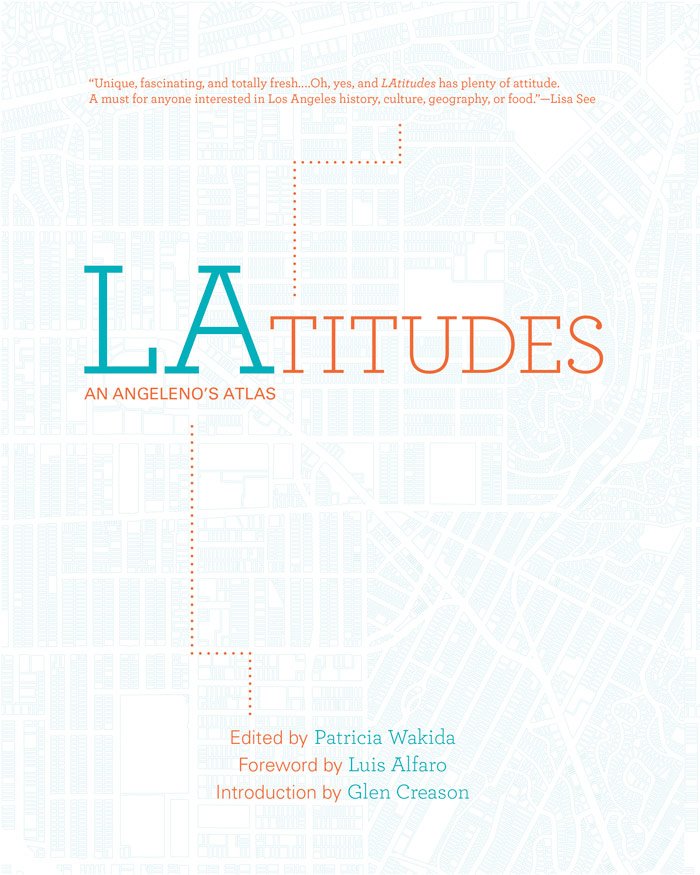
LAtitudes: An Angeleno’s Atlas (2015)

I’ve been reading voraciously over the last few weeks! Ever since I got back from Chicago, one thing has been clear: there’s only so much time to research my passion for what makes up a great city, and I absolutely do want to take advantage of every minute of it. For August’s book review, I’m excited to feature LAtitudes: An Angeleno’s Atlas, edited by Patricia Wakida, in which L.A. aficionados can find one another through a stream of pages dedicated to uncovering the roots of this place we call home.

With over nineteen different authors from all across the L.A. spectrum, the writing in LAtitudes is highly aware of the multiplicity which makes up The City. As Luis Alfaro notes at the outset, there is no ‘one L.A.,’ but over 18 million of them.

And as Anthea Hartig and Josh Sides point out, L.A. is not just in downtown or Hollywood, or in the east or south sides, but it’s in the pedestrian friendliness of Burbank, and the vastness of Sunland-Tujunga, and in sun-baked Sylmar. It’s also in the historic city of Inglewood, as well as in lesser known Hawthorne, and the laid back South Bay. Los Angeles is also in San Pedro, as well as in Long Beach, and Norwalk and Cerritos! The list goes on, as 60% of The City is actually outside of The City.

Of course, anyone browsing through the web can tell you that L.A.’s made up of 88 different “communities,” but what’s special about LAtitudes is that it won’t just take you through the hard facts of the land, but also through the stories attached to it.

For example, did you know that L.A. was once little more than a string of cattle ranches across a couple of dozen prairies? I sure didn’t, but Teddy Varno’s essay makes it a live experience.

And did you know that L.A. was attacked one early February morning during World War 2, though not by the Axis powers, but by a UFO?! Yes, it sounds like the stuff of movies, but Jason Brown’s essay places readers right in the middle of the incredible sequence for an unforgettable ride.

LAtitudes goes beyond the wild and quirky, however, and features truly historical work. Cindi Alvitre’s Coyote Tour describes the Tongva and Yaangna tribes who trailed through the land before the Spanish crown decimated or acculturated their people, while Nathan Masters’s Gridding the City identifies the true genius of the grid masters who gave The City its ‘sprawling’ form.

Laura Pulido’s Landscapes of Racial Violence moved me so much that I’ll have a separate review for it later, and David Ulin’s Freeway Jam left me with a vivid image of the beautiful if broken promise of L.A.’s freeways.

From there, it continues! Angelenos will get a taste of life in the L.A. River from Andrew Wilcox’s Stalking Carp, while historians will be unable to deny the power of the legendary Luis Rodriguez’s How Xican@s Are the Makeweight of Los Angeles’s Past, Present, and Future.

So, what are you waiting for? If you want to have some fun with L.A. in the comfort of home on the couch or underneath the breeze and shade of its palm trees, LAtitudes will not let you down.

In true L.A. fashion, the book will refresh the reader’s imagination of the metropolis, one fantastic intersection at a time. For this, it gets The L.A. Storyteller’s full approval.

J.T.

guajolote

Teaching Rebellion (2008)

A book is like a grand vision, and every now and then we have the fortune to come across one so rich with life that it seems to flow right off the page and into our own world. Diana Denham and the C.A.S.A. collective’s Teaching Rebellion – Stories from the Grassroots Mobilization is one such book.

In 2006, over 20,000 educators in Oaxaca, Mexico waged an annual strike for better schools and working conditions, erecting a planton or camp at the zocalo, i.e. the center of the city, to make their demands heard.

At dawn on June 14, 2006, on the orders of then-Governor Ulises Ruiz, police helicopters riddled the camp with teargas from above, while officers on the ground assaulted protesters in mass. The message was clear: there were to be no more protests in the zocalo.

But the teachers resisted, and refused to abandon their planton. They gathered rocks where they could, and fought off the police for over two hours into the morning sunshine.

Ultimately, the police ran out of teargas, and while they inflicted considerable damage to the planton, the protesters successfully defended themselves. In the hours that followed, a myriad of previously passive observers of the strike showed up to the camp, bringing with them food and blankets to show their support.

It would be a victory for the union and its allies, but only the first in a long string of battles with government forces over the next year into circa July 2007.

Teaching Rebellion honors this time, providing readers with coverage of the teacher’s movement through its growth and evolution into the Popular People’s Assembly of Oaxaca or APPO, which would serve as the coalition of many different teachers, workers, and other allies, and which would accumulate many more challenges as a result.

In revolutionary tradition, the book lends its pages to the voices of The People who formed the APPO, including women, elders, students, children, and even the imprisoned. Each one of them is real, and could be anyone of the millions of people who make up Los Angeles today, including yours truly.

I first gained interest in Teaching Rebellion following news of the recent events in Nochixtlán, Oaxaca this past June. Similar to their counterparts from ten years ago, the latest generation of educators in Oaxaca are standing up against government reforms which only cheapen and constrict their labor in the classroom.

As before, the battle taking place in Nochixtlan is as difficult as that of Oaxaca’s in 2006, and an understanding of it requires more than what one pair of eyes can give. It is a class struggle as much as it is a struggle for indigenous rights, but it goes back not just to Spanish colonialism 500 years ago, but even beyond then to pre-Columbian systems of power in the Americas.

Still, Teaching Rebellion is a collection of some of the latest developments of this struggle today, showing those of us who want to be allies of the disenfranchised in our own communities just how our support can develop.

At the end of the narrative section, the book offers a study guide for readers who want to take their knowledge further, including both individual and group activities for reflection.

It is a true revolutionary spirit, and as such, gains full approval and support from The L.A. Storyteller. Any reader will find themselves much closer to Oaxaca than what the web offers today, and will be more empowered for doing so.

With more soon,

J.T.

Two Badges: The Lives of Mona Ruiz (1997)

I’m a child of the nineties, so maybe that explains why I seem to be so fascinated with so much of the literature from the period.

Or maybe it’s just that what so many writers published during the nineties comes off the pages as being directly related to general discussions about law and order today.

To be sure, Mona Ruiz’s Two Badges informs the idea of law and order from a rare and critical position; inspired by the author’s own life, the book is an autobiographical foray into the world of a former gang member turned police officer in her ‘old’ neighborhood.

If it sounds like a strange concept, the author is more than well aware of it. In the introduction to Badges, Ruiz describes the process for her:

“Talking about my past, my barrio and the circle of friends is difficult because there has been so much pain and loss. For many of them, the fact that I wear a police uniform now is a betrayal of sorts. I hope that this book will help them understand that I have never turned my back on the past–just the opposite, I believe I have dedicated my life to facing and dealing with it. I never left my barrio, I never ran away. I stayed and I’m trying to make a difference.”


The excerpt hits close to home, capturing perfectly the sense of survivor’s guilt that faces so many who feel they ‘escaped’ from a certain tragedy while their counterparts ‘stayed behind’.

In the case of Mona Ruiz’s life, the tragedy is the cycle of drug addiction and incarceration that demeans and disfigures her immediate circle of friends, and later, their children.

There is a second tragedy, however. If Ruiz was fortunate enough to ‘escape’ the cycle, it’s figuratively and literally a blessing in disguise, as she takes on a uniform which many would argue plays an unforgivable role in the execution of the cycle.

Ruiz doesn’t preach to the reader about which side has the right, though. Instead, she speaks purely about how role-switching since her youth informs her adulthood on unforgettable terms, as if it all happened in a single day:

“…The makeup made us feel older. The mask smoothed away signs of weakness and gave us power. When I was a teen, it was a sign that I belonged to the streets. At age thirty-two, staring into the peeling mirror in the locker room at the police station, it was a disguise, a way to hide my badge and my job. I couldn’t pretend, though, that I wasn’t feeling strange seeing myself in the war paint again. Behind my busy hands, I saw the face of my past staring at me in that mirror.”


For its vivid sense of introspection, Ruiz’s passage brings to mind just how often ‘the mask’ is being donned. That is, just when does the make-up begin for a person, and at what point does it end?

Moreover, in the twenty-first century, who isn’t putting on a mask to get through the day? For Ruiz, putting on the mask in her teens is a rite of passage, or the first step of claiming her face in the world for power. But later as a police officer, the disguising continues rather than letting up, a sign that human beings sort of never stop growing up.

As Two Badges goes on though, it’s clear that Ruiz isn’t interested in playing for power as much as she’s interested in healing from the consequences of so much time with the game. There is also a third major challenge facing her as a woman: at home, when the badge is off, she’s the wife of a jealous husband and mother of two.

Even after everything, then, the mask-donning and fighting continues for her, and I can only imagine how exhausting it was for Ruiz to not only survive all of this, but to then place it into perspective and sit down to write about it.

For this, apart from the fascinating insights the book offers to the discussion of law and order, Two Badges also demonstrates how even though great writing takes incredible amounts of time, when done truthfully and unapologetically, the result is vividly poignant.

In turn, The Lives of Mona Ruiz get a badge of raucous approval from The L.A. Storyteller. And as a matter of appreciating the book so much, a couple of months ago I had the privilege to share an excerpt of the book with a group of young writers through the I.O.W. program.

Ruiz’s writing did not earn unanimous badges of approval from the youth, but it did inspire a lively array of opinions; I can assure anyone looking to engage their own group of youngsters that Mona Ruiz’s book will come through for you all the same.

J.T.