Petition for Immediate Action to Address Firestorm Catastrophes in Los Angeles County

From the brilliant minds of Lauren Bon, Metabolic Studio, Patrisse Cullors, The Center for Art and Abolition, Anawakalmekak, Chief Ya’anna Vera Rocha Regenerative Learning Village,  Gabrielino-Shoshone Nation of Southern California:

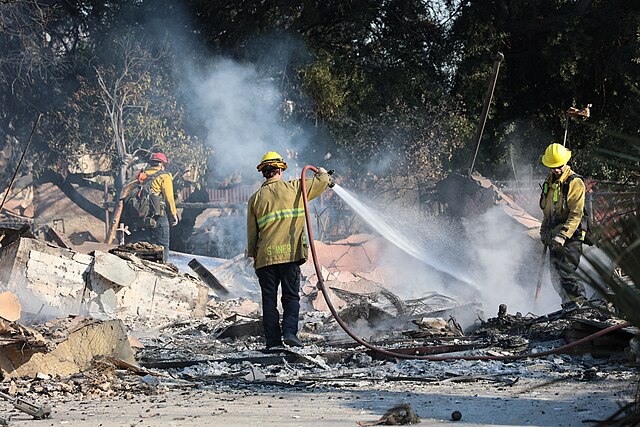
“The January 2025 firestorms have devastated the mountains and basins of Los Angeles County, underscoring the dire consequences of climate change, insufficient land and water management, and a lack of coordinated preparedness. Entire communities have been displaced, ecosystems decimated, and lives forever altered.

We, the undersigned, call upon the following entities to take immediate and transformative action:

Los Angeles County Board of Supervisors and City Councils:

  • Develop comprehensive water collection systems to capture and retain rainwater during storm events, ensuring availability for:
    • Firefighting efforts during wildfire seasons.
    • Cultivating and sustaining green corridors that act as natural firebreaks and habitat restoration zones.
    • Dust suppression in burned or arid areas to mitigate health impacts and protect vulnerable populations.
  • Incorporate Traditional Ecological Knowledge (TEK): Partner with local Indigenous tribal nations, communities, organizations and knowledge holders to guide restoration efforts, drawing on time-tested practices for managing land, water, and fire in ways that align with natural systems.
  • Appoint a Special Liaison for Land and Water Governance to oversee the integration of TEK and contemporary science into long-term strategies for fire prevention, water conservation, and ecological resilience.
  • Develop a systemwide strategic response plan in all school districts, inclusive of charter schools, to consider and prioritize the needs of children and youth by providing emergency resources and guidance to school level emergency response actions.
  • During recovery, halt evictions and sweeps of unhoused people as communities recover, a drastically increased number of local people find themselves without safe, forever housing, and seven+ people die daily on the streets of Los Angeles.

State of California:

  • Coordinate efforts to prevent and manage landslides in burn areas by:
    • Installing erosion control measures such as wattles, sediment basins, and plantings of fire-resistant vegetation.
    • Salvaging displaced soil following landslides to regenerate brownfields and restore degraded landscapes.
    • Funding research into long-term, regenerative strategies for mitigating debris flow and restoring soil health in post-fire regions.
  • Support TEK Integration: Provide grants to Indigenous-led organizations and communities for ecological restoration projects, ensuring that their expertise informs statewide fire and water management policies.
  • Provide grants and funding for local governments and institutions to implement labor and study programs that integrate ecological recovery with workforce development.
  • Offer incentives and accessible education through the CA Energy Commission and other statewide entities for construction with earth blocks, adobe, cob, and other natural.

Federal Government:

  • Establish a modern version of the WPA focused on climate resilience, supporting large-scale employment opportunities in fire recovery, water conservation, and landscape restoration.
  • Provide emergency funds and technical expertise for post-fire debris management, including soil salvage and toxic runoff mitigation.
  • Partner with Indigenous tribal nations and communities to develop national frameworks for integrating TEK into land and water governance.
  • Climate emergencies and disasters such as these should include defense of all community residents including the unhoused and migrant communities that live, work, worship or study in our communities. All exploitive deportation activities must stop.

Global Climate Advocacy Groups:

  • Partner with local and federal governments to implement innovative soil and water restoration technologies in burn zones while supporting education and employment initiatives focused on long-term ecological stewardship.

Key Requests:

  1. Management of Toxicity in Burn Zones: Test and remediate soil and water near burn zones to address contamination caused by fires, protecting public health and ecosystems.
  2. Landslide and Debris Management: Establish protocols to stabilize burn areas, collect displaced soil from landslides, and repurpose it for regenerating brownfields and degraded lands.
  3. Labor and Study Programs: Incentivize programs that employ local residents and train the next generation to restore ecosystems, enhance fire resilience, and create sustainable infrastructure.
  4. Traditional Ecological Knowledge (TEK): Partner with Indigenous communities to implement restoration practices that align with natural systems, ensuring sustainable land and water governance for future generations.
  5. Special Liaison for Governance: Appoint a dedicated leader to integrate TEK, scientific research, and community input into cohesive strategies for long-term ecological resilience.
  6. Water as a Resource: Ensure rainwater is retained and used strategically to prevent and fight fires, establish green corridors, and rehabilitate burn zones.
  7. Prioritizing keeping, restoring, and creating housing and safety for people of this place by pausing all evictions, sweeps, and identify and transfer land for earth-abiding housing by/for houseless people.

Why TEK and Governance Matter:

The integration of Traditional Ecological Knowledge (TEK) into fire recovery and prevention is essential for fostering harmony between human activity and natural systems. Indigenous knowledge offers invaluable insights into sustainable land and water management that can enhance resilience and promote biodiversity. Appointing a dedicated liaison ensures long-term, coordinated governance that honors both traditional practices and modern science, addressing the challenges of today while planning for future generations.

This is a collective plea for bold action to protect our communities, our natural landscapes, and future generations from the accelerating impacts of climate change. The time for incremental solutions has passed—this is a crisis that demands immediate, systemic change.”

Please sign your name on this petition HERE, which takes less than a minute to complete.

Thank you, and we’ll be in touch again in no time, Los Angeles.

J.T.
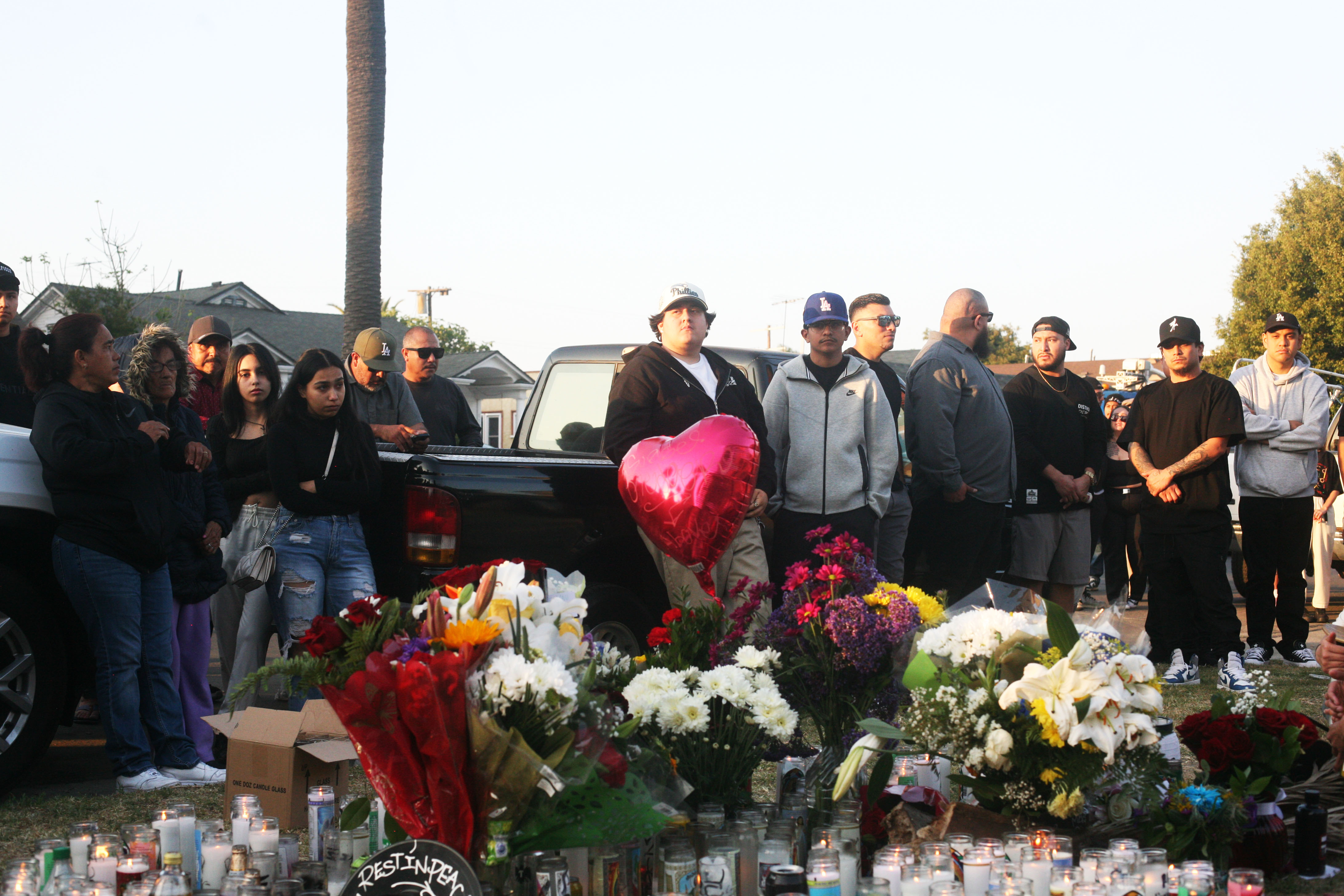
Tonight we raise a toast: To the Rios-Vela Family

This evening an array of old friends and neighbors are gathering at The Edmon in Hollywood for a Benefit Jam in honor of Sergio Rios Jr. and Ricardo Rios. At the same time, as Sergio and Amalia Rios prepare to bury their two sons soon, this fundraiser organized by Ivan Robles, Sergio and Ricky’s primo, is nearing its goal; please consider donating to ensure the family can better support Sergio’s two children, each less than two-and-a-half years old, in the days ahead.

J.T.

A Candle for Sergio Rios Jr. and his family, our family

This is and will always be Sergio Rios Jr., born and raised in our neighborhood; a soul who took care of every last one of us, including me when I was 16 years old in the pit cheering for Rage Against the Machine at Rock the Bells in 2007.

Seven years later, I was fortunate enough to take the lot of these photos during your birthday party at the “Black” bar on Santa Monica Blvd on October 24th, 2014, when you turned 24 years old just a few weeks ahead of me.

Now, there are countless people reeling and whose lives are upended mourning for you and Ricky; now, there are so many eyes across the city worn from tears, so many of our voices gripped by the salt, so many childhoods belonging to the next generation which will only get to hear about you and your other half’s light in every room we got to share with you all.

Now there’s this family you leave behind, and a lifetime of missing you facing us like Mount Wilson in the distance; for your boys, our brothers, now there’s this manhood unlike anything we could ever imagine in our boyhood.

But because I know you wouldn’t back down if the roles were reversed, I promise to take it on to the best of my ability; I trust with everyone else who loves you that you and your people’s name will never, ever be in vain so long as we have a chance to yell it out.

From our neighborhood to the top of Mount Wilson, this is and will always be Sergio Rios Jr.

J.T.

Excerpts from Zev [Yaroslavsky]’s Los Angeles

Zev Yaroslavsky, the former L.A. City Councilmember (CD-5) and former L.A. County Board Representative (District 3), was first elected to office nearly 50 years ago at the age of just 26 years. He would serve as an elected official for nearly 40 years, retiring in 2014; in 2016, he became the director of the UCLA Luskin School of Public Affairs, where he has remained since.

Yarloslavsky’s memoir is a story replete with his commentary on various ongoing political issues in L.A., including the city’s notorious lack of affordable housing, Proposition 13, rent control (RSO), the 1984 Olympics and L.A.P.D., and even L.A.’s slow-growth movement.

At a talk at Kohn Chapel recently, Yaroslavsky noted that, “There are people who weren’t even born…halfway through my career who are now writing revisionist histories about the things that I was involved in. And I’m not gonna get into an argument with them, but I want to make sure that my side of the story is in print, and people can take it or leave it.”

Below are 10 excerpts from his book for your consideration. You can also hear more from his side of the story in his recent appearance on former L.A. City Councilmember Mike Bonin’s What’s Next, Los Angeles Podcast.

On L.A.’s political climate at the time of his election (1975)


“To be sure, there were problems galore. The city was grappling with rising crime, property tax rates, and rents. Neighborhood groups were angrily pushing back against unwanted development and traffic congestion that was eroding their quality of life. Black people, Gays and other marginalized groups were bitterly protesting their treatment by the Los Angeles Police Department, and a long-simmering dispute over busing and school integration was boiling over.”

On Property Taxes in California before 1978


“At the conclusion of the town hall meeting, one elderly widow approached me, and the ensuing conversation has been etched into my memory ever since. She showed me copies of her 1976 and 1977 property tax bills. The ‘76 bill was for $1,500, an amount she could barely afford, but the ‘77 bill rose to $7,500, a five-fold increase. “I’m going to have to sell my house. I’m going to have to leave the home in which my late husband and I raised our family,” she said. “I don’t want to leave. Where will I go?” She didn’t want to leave her church, her doctors, and her social network. It was a crushing blow. This story was playing out in hundreds of thousands of households across our region.”

On the impact of Proposition 13


“Until 1978, property taxes were the principal source of funding for schools, counties and cities. After Proposition 13, however, there weren’t enough tax revenues to pay for all three. Amid lengthy wrangling in Sacramento, the state took over much of the funding for education, averting a breakdown of the California public school system. This was a seismic change. At the same time, the chastened legislature returned a portion of the $7 billion State surplus to local governments, to help them adjust to the new reality.”

On implementing Proposition 13 locally


“Remaking the budget was hard, the pressure was intense, and the stakes were high. But we made it work. The experience, you’ll excuse the expression, was taxing. It was seared into my psyche for the rest of my career. But there were glaring inequities built into the new law that bedevil California to this day. Longtime homeowners would enjoy a much lower property tax than a neighbor who purchased an identical home next door years or decades later. And thanks to a legal loophole, many new commercial property owners were not taxed based on the purchase price, avoiding a substantially higher tax. Over the years, calls to correct that inequity have proven politically too hot to handle. In November 2020, a State constitutional amendment that would have ended this exemption was narrowly defeated by California voters.”

On Prop. 13’s negative impact on communities of color and future families seeking to become homeowners


“Despite the approval of alternative fees and taxes, local government never fully recouped the financial losses caused by Proposition 13. Adopting budgets became an annual struggle to make ends meet, and vital social, capital, and operational investments were deferred or never made. The consequences fell more heavily on economically and racially marginalized communities, further exacerbating the structural inequities that plague our society.”

On opposition to Rent Control in L.A., including within his own district


“I told them that I understood their concerns. But more than 23,000 voters, many of them renters, elected me and I knew first-hand the financial hardships they faced because of never-ending rent increases. I had knocked on their doors and felt their pain. I was not going to sell them out.”

“Although I was an outspoken advocate for rent relief, the main credit goes to Councilman Joel Wachs for his leadership on this issue. He took on rent control as one of his core causes. His intellect, political acumen and perseverance made him the leading political force behind what ultimately emerged as the city’s landmark Rent Stabilization Ordinance (RSO). Pressure grew for a solution when it became clear that most landlords had no intention of passing on rent savings to tenants. Mayor Bradley, who had not previously spoken out on the matter, finally called for “dramatic action” to halt what he termed “outrageous” rent increases. As a result, the council passed a rollback and moratorium on rents in August 1978. The following year, after a furious battle, the City Council renewed the RSO. It did so each year until it approved a permanent law in 1982.”

“The new [Rent Control] law also exempted all apartment buildings built after June 1978, addressing the argument that rent control would discourage new construction. At the time, it seemed like an easy concession to make in order to get a permanent law on the books. Because of this exemption, however, the tens of thousands of new rental units built in Los Angeles over the next four decades were not subject to rent control. So, what were once “new” units, are today largely unaffordable to middle and low-income renters.”

On L.A. apartment buildings being converted into condominiums in the late 1970s and early 1980s


“I authored legislation putting conditions on conversions, allowing them only in planning areas where the rental vacancy rate was greater than 3 percent. In those days this was considered the equilibrium point between a rental housing shortage and a surplus. We also required owners to provide relocation assistance to renters who could not avert displacement. Still, the conversions continued. They contributed to a higher rent burden and increased poverty in segments of Los Angeles’ elderly population. Some of the most vulnerable tenants had to choose between rent and food, between rent and medicine. It was a dreadful predicament that continues to plague Los Angeles to this day.”

“Los Angeles faced a rent crisis not over the supply of housing, but over the supply of affordable housing, according to a 1981 report by the Rand Corporation. ‘What Los Angeles has, along with most of the rest of the United States, is a double-digit price inflation that increases the cost of producing housing services, and therefore increases rents,’ the report said.”

J.T.

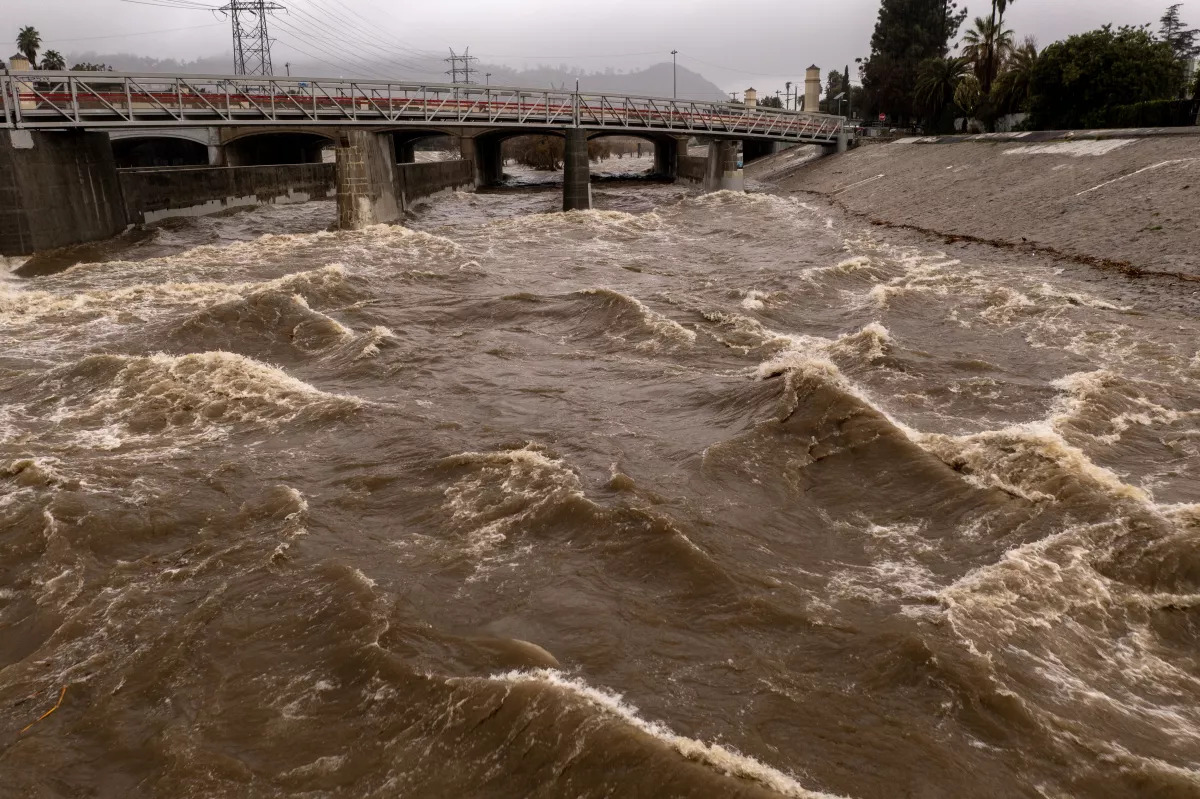
L.A. feels the storm, but Riverside and San Bernardino Counties will sustain the most waterfall

Feature photo courtesy of David McNew/Getty Images.

According to the L.A. Times, the strongest downpours from Hurricane Hilary are from now until about 11 PM PST: “The heaviest rains in Southern California were expected to fall in the mountains and deserts. Riverside and San Bernardino counties, where the worst of the storm was expected to hit, [are] anticipating 5 to 10 inches of rain for their mountains and desert areas.”

In Los Angeles proper, areas to watch for flooding include:

Long Beach, Thousand Oaks, Simi Valley, Malibu, Hollywood, Beverly Hills, Universal City, Downtown Los Angeles, Griffith Park, Culver City, Inglewood, Burbank, North Hollywood, Venice, Santa Monica, Van Nuys, Encino, Manhattan Beach, Alhambra, and Hermosa Beach.

Also keep in mind that in a once-in-a-century flood event, L.A.’s legacy of redlining continues to place Black and Immigrant communities most at risk, as a study conducted by researchers at UC Irvine points out: “Among the areas most at risk are a dense tangle of city neighborhoods intertwined with industrial zones, stretching south of [downtown L.A.] Many of the neighborhoods are clustered around the Los Angeles River, which was excavated and paved decades ago to help prevent flooding.”

A visual of Hurricane Hilary as it made its way to Baja and Southern California. Credit: NBC News.

Additionally, researchers note: “Whose homes would be flooded is only part of the problem. Inequities are critically important because recovery from floods is often prolonged and incomplete among socially marginalized, low-wealth and vulnerable communities.”

Residents in Los Angeles and Ventura County also felt a moderate earthquake at approximately 2:40 PM today, inspiring reports of a “hurriquake” on X. A subsequent tsunami was not expected, and according to Mayor Bass’ office: “LAFD has completed a survey of the City of Los Angeles following the 5.1M earthquake near Ojai. No damage or injuries were reported.”

Mutual Aid groups in Los Angeles have also called on L.A. city and L.A. County officials to open all “public buildings, hotels, libraries, public transportation hubs, parking structures, recreation centers, public school gyms and facilities, universities, council field offices, and Los Angeles City Hall to shelter unhoused people through the duration of the [hurricane].”

CBS News has published this list of Emergency Shelters in Southern California open during the storm.

J.T.