person inserting a videotape into the video player

You are invited to a special screening of Maria’s Story

This January 16th marked 32 years since El Salvador’s 1992 peace treaty, also known as the Chapultepec Peace Accords, which were signed between the Frente Farabundo Martí para la Liberación Nacional (FMLN) and the U.S. backed right-wing government of El Salvador, ending a 12 year war in the Central American Nation which killed at least 75,000 Salvadorans, disappeared 8,000 others, and displaced at least a million more.

By the early 1980s the U.S. had its hands in conflicts across the globe, from the mountains of Afghanistan to the coasts of Nicaragua and the forests of El Salvador; former president Ronald Reagan made his commitment to this modus operandi clear as soon as he was elected in 1980, moving quickly to establish the “Contras,” or counter-revolutionary death squads against the socialist Sandinista government in Nicaragua. The U.S. dollar’s role on these “Cold War” fronts–as is the case now with its support for Israel against Palestine in the “war on terror”–was an open secret.

In 1985 at the White House, Reagan stood alongside then-Salvadoran president Duarte, whom had only been elected in June 1984, and called him “a close friend.” He then went on to claim that “elections, economic reforms and communist guerillas losing ground [in El Salvador] would [not] have been possible without the economic assistance and military training and equipment that [the U.S.] provided.” The U.S. government would send between $4.5 – 6 billion in economic and military aid to El Salvador over the 1980s, though not without loopholes and controversy, including the Iran-Contra affair.

President Reagan’s and President Jose Napoleon Duarte’s of El Salvador Remarks during his Working Visit in the Rose Garden on May 16, 1985. Courtesy of Ronald Reagan Library.

This is all the more reason why it’s stunning that the war in El Salvador outlasted even Reagan’s tenure. In 1987, 37 year old Maria Serrano lost one of her three daughters, Ceci Serrano, to an ambush by the Salvadoran army on her pueblo. While Maria didn’t mention Reagan by name as she discussed “the enemy,” or those responsible for the attack, she did note that losing her daughter in a particularly ruthless and dehumanizing fashion to an army Reagan had so much praise for was a major factor in her decision to become a guerilla fighter and organizer with the FMLN.

Save the date! For next Thursday, January 25th at 7:30 PM in Boyle Heights, Los Angeles.

In Maria’s Story, using solar-powered batteries, film-makers shadow Maria on-the-run” for two months through highlands and waterfalls as she and fellow farmer communities devise a major offensive against the Salvadoran army, an offensive so effective it ultimately spurs both the FMLN and the U.S. backed Salvadoran government to sign the Peace Accords; weaving together the different moments which led Maria into such a precarious position to begin with, the film captures the undeniable humility of a people simply struggling to live free from the grip of empire in the late 20th century.

I’m now honored to present a screening of Maria’s Story at none other than the Re/Arte (medianoche) bookstore in Boyle Heights. Proceeds from the event will go towards supporting my upcoming visit to El Salvador as an Election Observer, and attendees will also get to check out all of the amazing libros–many of which are no longer in print or just anywhere else–at Re/Arte.

Tell a friend, bring your own concha–available nearby on E. Cesar Chavez Ave–and enjoy! It’s going to be an unforgettable time.

J.T.

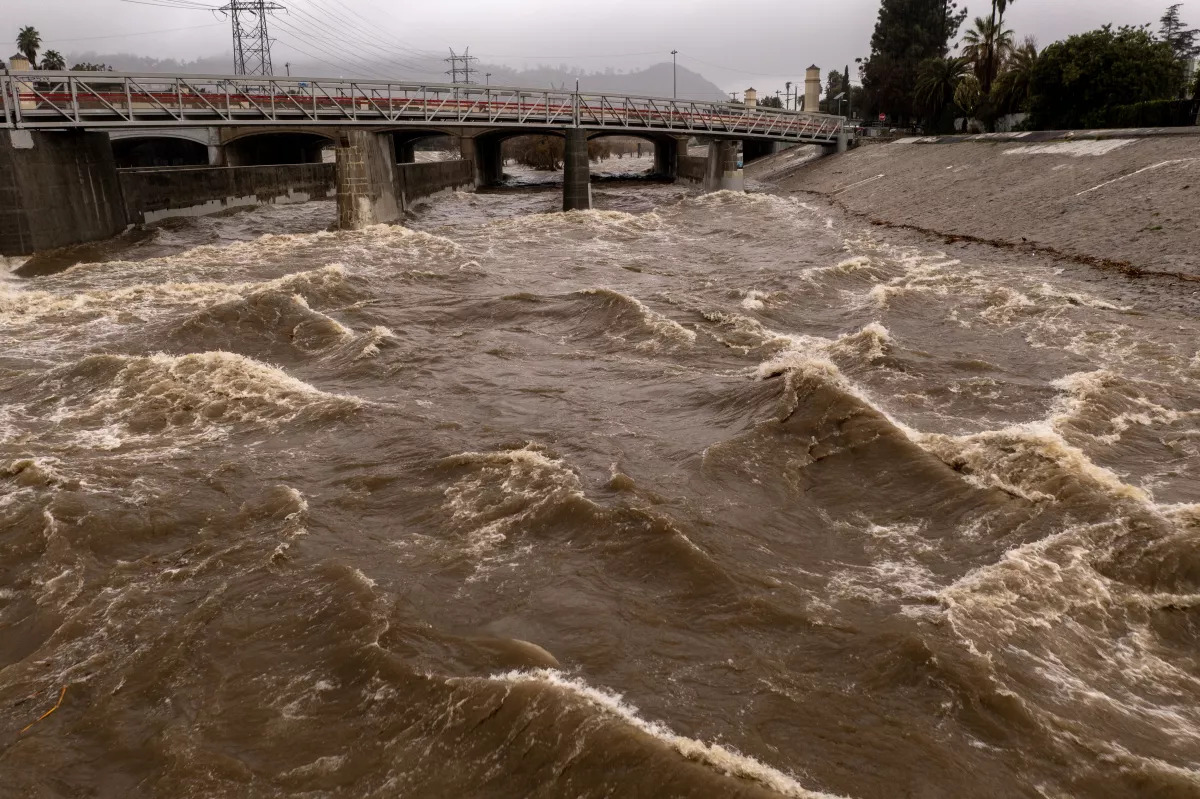
L.A. feels the storm, but Riverside and San Bernardino Counties will sustain the most waterfall

Feature photo courtesy of David McNew/Getty Images.

According to the L.A. Times, the strongest downpours from Hurricane Hilary are from now until about 11 PM PST: “The heaviest rains in Southern California were expected to fall in the mountains and deserts. Riverside and San Bernardino counties, where the worst of the storm was expected to hit, [are] anticipating 5 to 10 inches of rain for their mountains and desert areas.”

In Los Angeles proper, areas to watch for flooding include:

Long Beach, Thousand Oaks, Simi Valley, Malibu, Hollywood, Beverly Hills, Universal City, Downtown Los Angeles, Griffith Park, Culver City, Inglewood, Burbank, North Hollywood, Venice, Santa Monica, Van Nuys, Encino, Manhattan Beach, Alhambra, and Hermosa Beach.

Also keep in mind that in a once-in-a-century flood event, L.A.’s legacy of redlining continues to place Black and Immigrant communities most at risk, as a study conducted by researchers at UC Irvine points out: “Among the areas most at risk are a dense tangle of city neighborhoods intertwined with industrial zones, stretching south of [downtown L.A.] Many of the neighborhoods are clustered around the Los Angeles River, which was excavated and paved decades ago to help prevent flooding.”

A visual of Hurricane Hilary as it made its way to Baja and Southern California. Credit: NBC News.

Additionally, researchers note: “Whose homes would be flooded is only part of the problem. Inequities are critically important because recovery from floods is often prolonged and incomplete among socially marginalized, low-wealth and vulnerable communities.”

Residents in Los Angeles and Ventura County also felt a moderate earthquake at approximately 2:40 PM today, inspiring reports of a “hurriquake” on X. A subsequent tsunami was not expected, and according to Mayor Bass’ office: “LAFD has completed a survey of the City of Los Angeles following the 5.1M earthquake near Ojai. No damage or injuries were reported.”

Mutual Aid groups in Los Angeles have also called on L.A. city and L.A. County officials to open all “public buildings, hotels, libraries, public transportation hubs, parking structures, recreation centers, public school gyms and facilities, universities, council field offices, and Los Angeles City Hall to shelter unhoused people through the duration of the [hurricane].”

CBS News has published this list of Emergency Shelters in Southern California open during the storm.

J.T.

Happy 9th Anniversary from JIMBO TIMES!

From my newsletter this morning:

On Saturday, August *19th* at 7:45 AM, JIMBO TIMES turned 9! 🥳

Cheers! If you’ve already donated to my fundraising campaign for the anniversary, thank you so much! If not, I can now confirm that each supporter who makes a donation of $10 or more will get 5 Los Cuentos stickers in the mail, which go well on laptops, microphones, and much more.

To keep up with the campaign, make sure you’re following J.T. the L.A. Storyteller Podcast via Apple and Spotify. You can also keep up with me via my Monthly Newsletter below. Mil gracias!

Processing…
Success! You're on the list.

J.T.

**This has been updated from an incorrect date noted in an earlier newsletter for the 9th anniversary of JIMBO TIMES.**

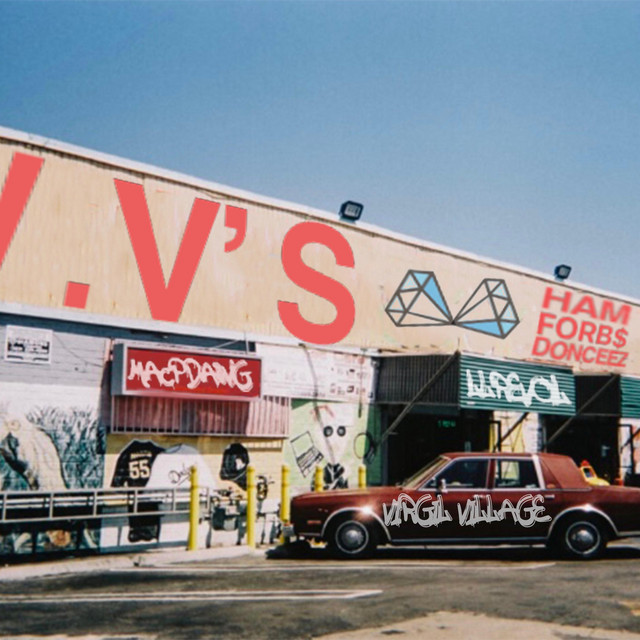
Check out VIRGILVILLAGE, the first album for the neighborhood straight outta Virgil Village

The landmark album in East Hollywood by the V.V’s features “Forbs,” “DeuceSeis,” “Don Cee,” “SickAssHam,” and “Fweago,” with production assistance from “DJ Aztecz,” also known as “Tecz” of Burnside Recording Studios.

For more of the cuento, be sure you’re subscribed to our newsletter with This Side of Hoover, Making a Neighborhood, which publishes every second and fourth Thursday.

J.T.