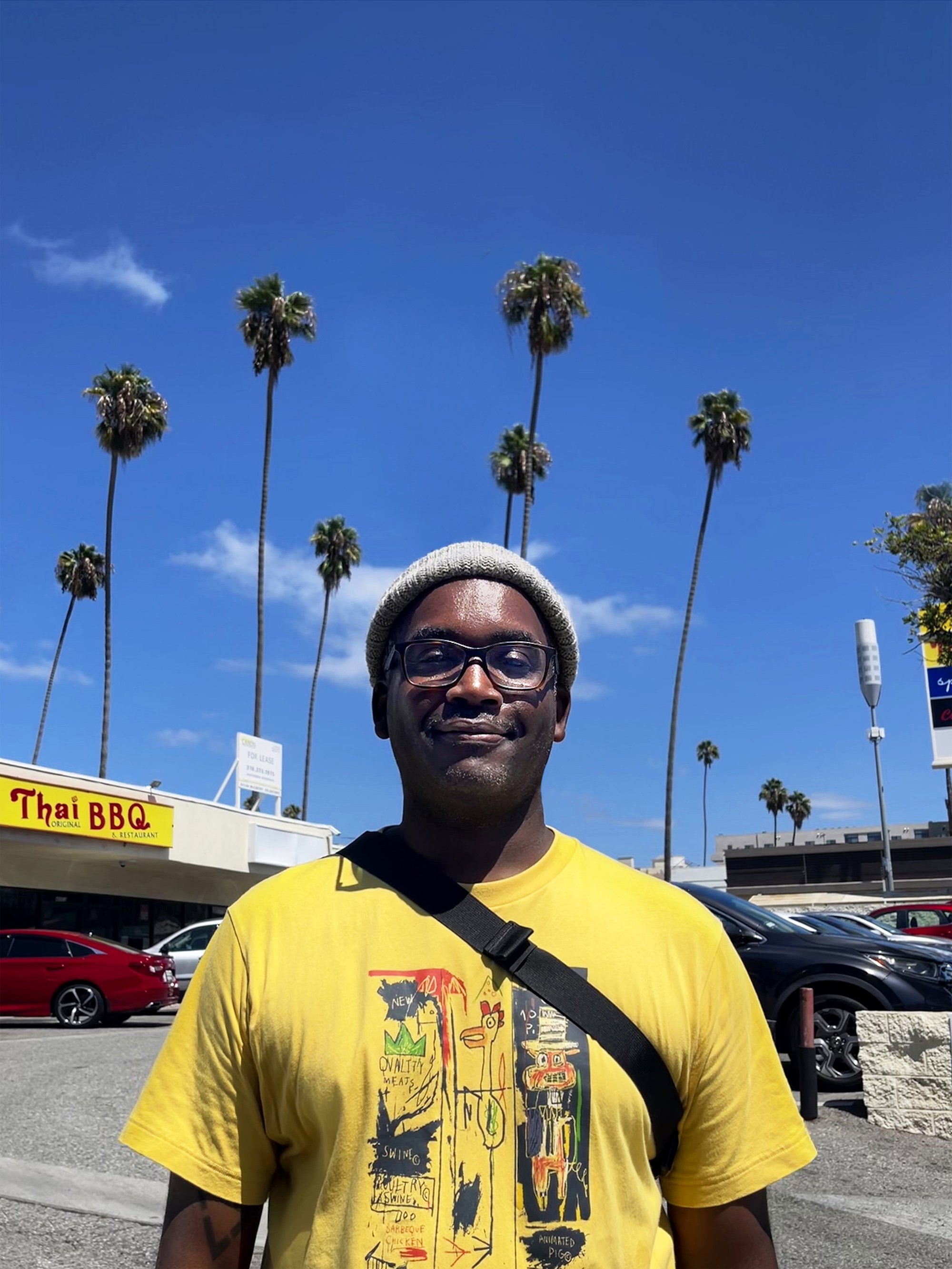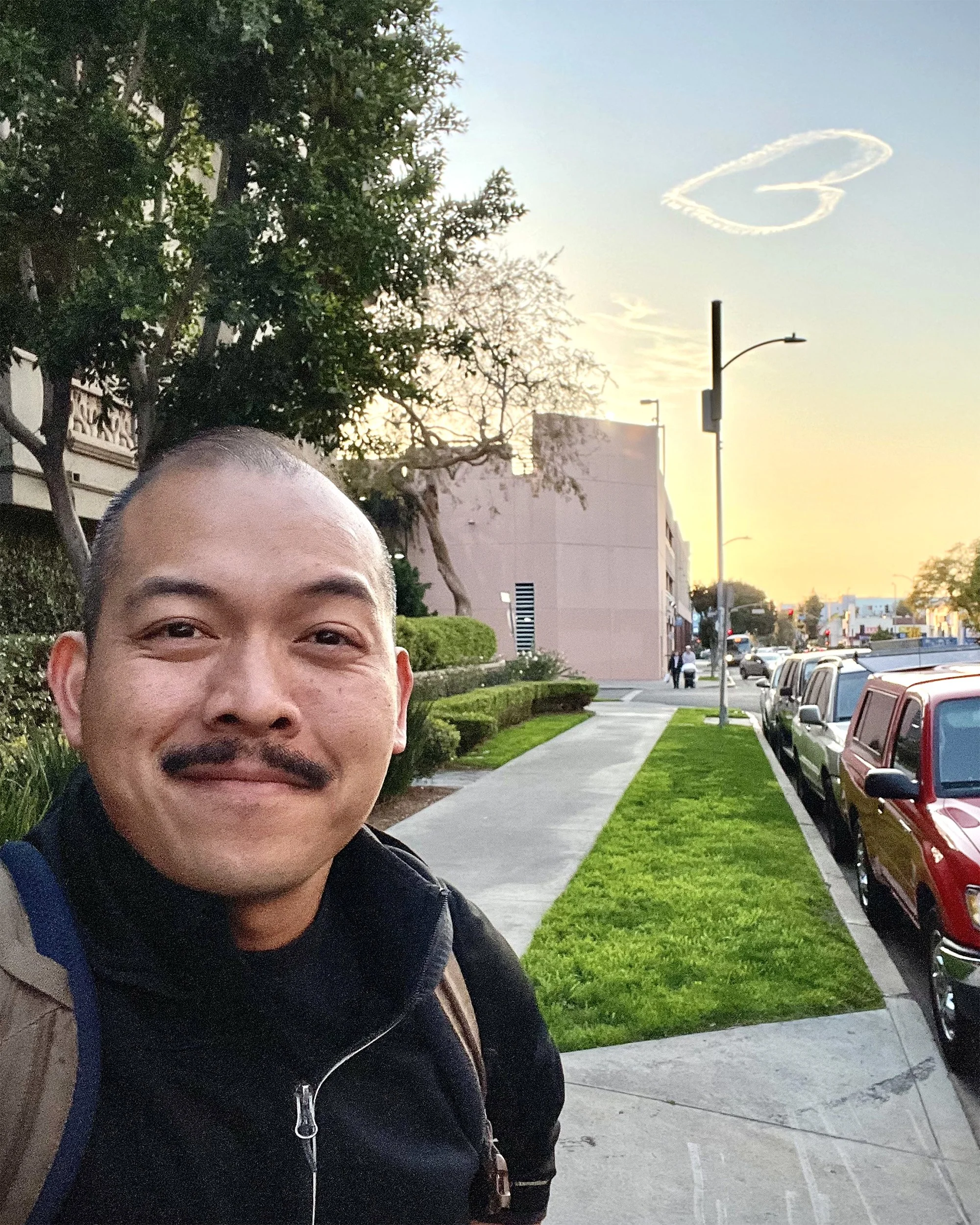
Godfrey Santos Plata: As Koreatown Goes, so Goes Los Angeles

This interview has been edited for length, flow, and clarity. Photos provided by Godfrey Santos Plata.


Jimmy: I’ve got a handful of questions about this special place known as K-Town, which you are a fundamental part of. 

Godfrey: Aw, thanks!

Jimmy: First of all, what comes to mind when you think of this neighborhood, this community?

Godfrey: I mean, I think “community” is a really important place to start. It’s the people. Two words that came to my mind when you asked me that question are “diversity” and “density.” I think those two things describe everything we have to offer but also the challenges that Koreatown faces. What we know about Koreatown is that it’s an amalgamation of so many different communities. Not only are there long-standing Central American communities and the Korean community, we know that, historically, there was a Jewish migration through here as well that eventually moved out west. And then, today, what we readily see—because of so many of the restaurants and bars—is that this is also often the place where people who are not from California or Los Angeles end up landing. And so it’s this really interesting mix of old and new all the time in a densely populated, three-square-mile area. It’s the most dense area west of the Mississippi. People think of New York City in terms of density, and we probably approximate that here in Koreatown.

What that means for me as a resident is that I love walking to everywhere that I need to go or taking public transportation to go everywhere I need to go. 

But, you know, going back to the challenges of diversity and density, it also means we don’t have enough housing for all of our neighbors. In the shadows of new buildings that are rising all the time to attract people moving to California for the first time, we are not accommodating people who have been living here for decades but can’t afford the rent. So that means that there are major tensions in imagining what the future of Koreatown is and who it’s for.

Jimmy: That’s absolutely right. But before we meditate further on the future, I want to ask what is one of your earliest memories in or through K-Town?

  Godfrey and his sister in their toddler years singing at their Gardena home soon after first arriving to the U.S.
Godfrey and his sister in their toddler years singing at their Gardena home soon after first arriving to the U.S.

Godfrey: When I immigrated to the U.S. from the Philippines, my family landed in the South Bay, in the Gardena/Carson/Compton area. So my first memories of Koreatown are actually on the news, following the beating of Rodney King by four police officers. We all watched it. It’s probably one of my first memories of video-captured police violence. And then we know what happened when the four officers were acquitted. That sort of unleashed a lot of tension about the different racial structures that created certain realities for particular racial groups, but also between different racial groups. So my first memories of Koreatown are Koreatown on fire.

Jimmy: Wow.

Godfrey: Koreatown populated with cars in the middle of the street, people hiding behind cars with guns or to avoid gunshots. These are my first memories of Koreatown as a child, having moved to the United States.

My parents actually don’t know this but after I learned how to drive, I had an “opportunity” with the family car one day. Normandie, Western, and Vermont all pass through Gardena. So I just followed Western all the way up, which actually leads to exactly where I live today, right off of Western. It’s really interesting to have lived on both sides of Western in my journey through Los Angeles. As an adolescent driving up this way to Koreatown, the density was attractive. There was so much stuff happening here that made it feel like a city, versus a place like Gardena where my parents settled because it was affordable and it was close to a lot of Filipino things down there near Carson. It was just a little bit… Well, it wasn’t this

Jimmy: So you’re saying that, after those early years seeing K-Town on fire, you also bore witness to the further development and densification of K-Town, and that actually called out to you as a young person who wanted to find some hip things to do at that point in your life.

Godfrey: Yeah. I mean, when I was growing up, I didn’t have a lot of permission to spend time in the way that I wanted to. And that’s why when I had the opportunity to actually make decisions on my own, I was curious about the things that my family wouldn’t make the choices to do. 

My family would rather preserve a lot of cultural comforts, like what restaurants they knew, what malls they knew in the South Bay. I was itching for something different, and there was something that was beckoning about Koreatown.

  Godfrey with high school friends reuniting after graduation in 2002.
Godfrey with high school friends reuniting after graduation in 2002.

Jimmy: And just like you said, all you had to do was— 

Godfrey: Literally go north on Western. And you see so much of the city, right? Just along any of those streets: Vermont, Normandie, or Western. That’s a podcast in and of itself, just to drive down those streets.

Jimmy: Yeah, those are absolutely core avenues for the city of Los Angeles, especially Central Los Angeles. You’ve sort of already spoken about it up to a point, but I’m curious about one key strength that you see in K-Town and then one drawback or shortcoming.

Godfrey: What a hard question! There are so many things I want to say about both strengths and challenges, but I’ll go back to the first things that came to me: diversity and density. I do think those are strengths, not just for Koreatown but for Los Angeles as a whole. The reality is that LA will see more density. And the diversity and the pedestrian ways in which we can live life in Koreatown—where we have our schools, churches, public transportation, restaurants, bars, everything within walking distance—is a reality that could exist for other parts of Los Angeles. 

We can imagine what that could look like through the way we get to do it here. As a Filipino, I love eating. I love food and I love being around lots of different types of celebrations, and in Koreatown, there’s no shortage of events on weekends that are popping up all the time. And people actually come to Koreatown on the weekends because of this, right? So the density and energy don’t serve just those of us who live here. They’re attractive and they boost an economy. I think there’s an imaginative possibility in the density and diversity for something really cool that can move Los Angeles forward. And yet people are scared of density, they’re scared of what that does. 

  Godfrey and an array of friends celebrating a birthday at    Southland Beer    in Koreatown.
Godfrey and an array of friends celebrating a birthday at Southland Beer in Koreatown.

I think it’s rightful to be scared of density when it pushes out folks who have made their lives and home here. You know, we are sitting at a coffee shop right now where we’re overlooking a parking lot, rather than a home or units of homes. There are a lot of land use questions when you have density, and it depends who owns that property. Is it publicly owned? If so, what say do the neighbors have? Then there are lots of cost-related questions that come into mind with density. A lot of safety questions, too. So I think that there are challenges in terms of land use, and a part of those challenges are also environmental. I mentioned the pedestrian nature of Koreatown, and I think I did that intentionally to open up our imagination to what that means environmentally. 

One of my wishes for Koreatown is that we have more green space, which is also really hard to realize in a densely-populated area that’s reserved primarily for housing and business. We want green space that serves the hundreds of thousands of people who deserve that. There’s so many families being raised here. But where do you put the green space when you’re balancing that with priorities of housing?

Jimmy: You know, I think of Central Park in New York as an example of balancing density and green space, how the two don’t have to be in such conflict. 

Godfrey: They don’t… Because of the political work I’ve done in the area, something that I’ve come to peace with is the fact that you’re never going to please everybody. I think we always have to choose who is the core compass for the decision-making for a particular neighborhood. Who’s at the center? And right now in Koreatown, a lot of that center is the potential future tenant of Koreatown who doesn’t even know they’re going to move here yet, as opposed to the people who are here all the time. 

I’m lucky to be in rent-control housing. As I mentioned, I love being able to walk everywhere. And there are establishments I frequent, in particular, a plaza at 740 South Western. There’s like a bar there for beer, there’s a ramen place, a boba place… It’s just this place that I can walk to. 

Recently, they were bought out by Jamison Properties, one of the biggest developers out here. And I think I would be more willing to say that that’s okay if I knew that 100% of that was going to go to affordable housing, because that’s actually what we need. But the reality is, in that building that’s going to have about 140 units or so, about 11 are going to be for affordable housing. 

Jimmy: So, 10%?

Godfrey: Yeah, 10%. That’s the requirement to access permission for that development to happen. That sucks, right? We haven’t centered the community that is currently here in making that decision. We’re centering the possible profit that could be made. When I talked with those business owners, they hadn’t been reached out to by the city to figure out what their next steps are. Where would their businesses go after this? What’s their recourse? Not only are we displacing tenants who could remain here in Koreatown, we’re displacing businesses and people’s livelihoods that allow them to stay in the area too. So there’s this ripple effect.

You know, when you mentioned Central Park earlier, I agree. I would love a vision like that for Los Angeles. But something I’ve learned on my visits to New York is that some of that park has also displaced Black and Indigenous communities, especially on the northern side. And I’m sure there are even more stories that I don’t know. That’s what we’re trying to figure out here, right? Like, what would a community vision for 50 years down the line look like for us? I’m glad Central Park helps us imagine what could be possible. But at some point, there was some sort of cost benefit at the start of the planning, right? 

Jimmy: I think what you’re alluding to is actually taking into account the legacies in the city of Los Angeles up to this point, and not pointing to some arbitrary place on the map and going, “Development can be placed here.” No, actually, there’s a legacy to honor. There’s a whole history of how the neighborhood came to be formed. And to just wipe that off is to lose culture, history, and what equity is supposed to look like in the 21st Century. So what we’re really talking about is honoring and honing in on the story here.

Godfrey: Yeah, and I think we have to be intentional about that. There’s an organization in L.A. that is trying to move toward what’s called a capital infrastructure plan, or CIP. And the state actually mandates that we move toward a CIP. San Francisco has done one, San Diego has done one. L.A. has put ours off. 

A capital infrastructure plan is the idea that we need to look at least 10 years into the future and imagine the L.A. that we want to live in. And that could mean parks, it could mean streets, it could mean lights, pedestrian infrastructure, transportation, all of those things. I think moving toward a CIP could activate us community members to articulate what legacies we really want to keep. But the way we operate as a city right now is reactively, band-aid by band-aid, like, “Oh, this street is unsafe. Let’s approve the bike lanes and bus lanes for it.” And then there’s, like, a six-year waiting window until it gets through the bureaucracy. I think forcing ourselves to backwards-plan from a vision at least 10 years into the future would give us the space to articulate what histories we want to keep a stake in the ground for while we envision things like parks, housing, etc.

Jimmy: It’s so interesting that you mention that because my follow-up question is about the infamous conversation about the redrawing of the maps in L.A.

Godfrey: Oooh!

Jimmy: We’re coming up on almost exactly one year since the audio tape of that discussion was first released to the public via The L.A. Times. I want to ask you if you caught wind of the discussions regarding K-Town when that recording was published, and what your overall sense was after hearing or learning about it.

  Getting out the vote for    Measure ULA    (for affordable housing and homelessness prevention).
Getting out the vote for Measure ULA (for affordable housing and homelessness prevention).

Godfrey: Yeah, so there’s a lot layered into this audio tape that we heard last October. Just to make sure folks are caught up, I should explain that census data is collected federally every 10 years, and that captures updated snapshots of populations and demographics. We then use that data to redraw lines and make sure that we proportion the appropriate number of people set out to represent us per district—currently 15 seats on City Council—so that one district theoretically doesn’t have drastically more people than the other, that kind of thing.

So, folks have been calling for Koreatown to be whole for quite some time. This is not a new thing. In prior iterations of our City Council maps, the density of Koreatown, even though it’s so small—three square miles—has made it difficult for redistricting commissions to figure out how to honor the voices of the 100,000-plus people. And so what they did was cut up and slice up Koreatown. And what that has meant for folks in Koreatown advocating for things at City Council is that they’ve had to figure out, “Well, which City Council member do I even go to?” “Does any City Council member even prioritize us when they only have a small slice of Koreatown?”

Jimmy: Like, your City Council member could be different from my City Council member.

Godfrey: Literally across the street from each other! Exactly! Different City Council offices can create different services to support unhoused folks. So it literally means that, in some cases, if unhoused folks moved from a set of blocks down the line to another set of blocks in a new City Council district, they might receive different treatment in trying to find housing, just because of the way these lines are drawn.

Two years ago in 2021 when redistricting happened based on the latest census data, there was a movement to consolidate Koreatown into a singular district. As a result, we’re all in Council District 10 now. At the same time that this was happening, three City Council folks and a labor leader were talking behind the scenes. To clarify, the tapes that we heard in 2022 were actually recorded in 2021, during the whole period of redistricting. And them having those conversations outside of public view was illegal based on the Brown Act,¹ which says that only two people can talk privately at any time. And here we had four people concocting a plan to figure out how to create districts that would meet their self-interests. And they made fun of Oaxacan folks who make this particular area of L.A. home, saying that they weren’t the same as otherwise Latinx folks in Los Angeles. So they were creating all this divisiveness within communities that often are amalgamated together. 

They also wanted to redraw the lines for Council Member Nithya Raman, and potentially give her a district where zero of the voters actually had knowledge of who she was. And where they ended up in their talk was a map where I think 40% of her district changed.

Jimmy: More than any other City Council member, by far.

Godfrey: By far. Your question was whether I thought of Koreatown immediately when I heard the leaked audio. Later that day, I literally went to get Oaxacan food based on what I heard, because it felt like a time when we needed to uplift and support each other. What was theoretically and performatively a public process just became a major blow of mistrust to people in Los Angeles. There were so many ways to make sure that the public was involved here. Yet we saw proof that, at the end of the day, all the public engagement clearly was not real despite the many hours that went into that. These Council members had final say and a labor leader was colluding with them. Thankfully, some of the stuff that was good stayed. Koreatown was finally whole. 

We will never know what else could have been done for the people of Los Angeles because we are now currently living in maps that have been spoiled. 

That’s why the same people who fought to keep Koreatown whole are now fighting for a redrawing of the maps. I believe that we can still keep Koreatown whole and not throw many communities under the bus at the same time. We’re not in competition with each other; we’re here to lift each other up. And a way to do that is to have an independent redistricting council, which the City Council is moving toward. I feel confident that we’ll be able to make that happen by voter passage of that on a ballot in 2024. 

A bigger question is whether or not we should even keep 15 City Council seats. Do 15 seats  create too large of districts that incentivize the type of moneyed Council member who is as corrupt as we heard on those audio tapes? My thinking is yes. What could happen if we had smaller districts that could just better represent our particular needs, as opposed to fighting each other’s communities? Putting communities of color against each other for representation is not necessary when we can just redraw the puzzle which was created a hundred years ago, in 1925.

  Godfrey and friends in front of Berendo Middle School, canvassing so residents know about a new vote center nearby.
Godfrey and friends in front of Berendo Middle School, canvassing so residents know about a new vote center nearby.

Jimmy: And to that point, the whole purpose of the Planning Commission was to create a map in which K-Town could be made whole at the same time that new mapping was consistent with the growth of L.A. and L.A.’s population. So there are already people who have dedicated hours of their lives to making better maps. But, of course, L.A. City Council has the approval power at the end of the day so they either take that into consideration or not. What you’ve described is a case in which they largely did not take the Commission’s recommendations into account and just went ahead with what they set out for on their own, which was obviously problematic. 

Excellent analysis on your part, per usual, Godfrey. I think you’ve already answered this to a great extent, but as a sort of final comment, what do you think would be key for elected officials to keep in mind with respect to K-Town?

Godfrey: Oh gosh, that’s really hard, especially because our districts are so large! I will, I suppose, uplift ways in which different candidates and elected officials have seemed to do right by Koreatown. I think we do right by Koreatown when we make efforts to engage not just folks who are already connected to organizations in Koreatown, but by literally knocking on doors, ensuring that outreach materials are in multiple languages, not just English, and taking the time in a high-tenant district to engage tenants. 

Unfortunately, what we know is true in this election industry that we’re in is that homeowners are often the ones targeted for engagement. And there are reasons for that. 

There’s probably some sort of class bias that tells us that a homeowner’s going to be more likely to vote because they can afford to own a home. It’s easier to get access to a homeowner. Meanwhile, tenants move a lot. They’re displaced from place to place. It’s harder to get into apartment buildings. So tenants are going to be harder to engage. And yet many tenants are going to fall in a particular set of economic brackets that need more attention, need more engagement, need more hope from elected leaders. So I would want to see any elected official representing Koreatown not just be inclusive for language and race and ethnicity, but also housing status. Koreatown is predominantly immigrants and people of color who are renters. That’s Koreatown for me. 

Jimmy: Godfrey, I am confident that this conversation will serve in a small but significant step towards getting your comments to more and more representatives for K-Town, whoever they may be. 

Godfrey: We’ll see. And if not, we’ll hold them accountable.


1. For the record, a report by the L.A. Times notes that in order for the meeting between these councilmembers to be illegal under the Brown Act, a majority of L.A. City Council Members or an L.A. City Council committee would have needed to be present.
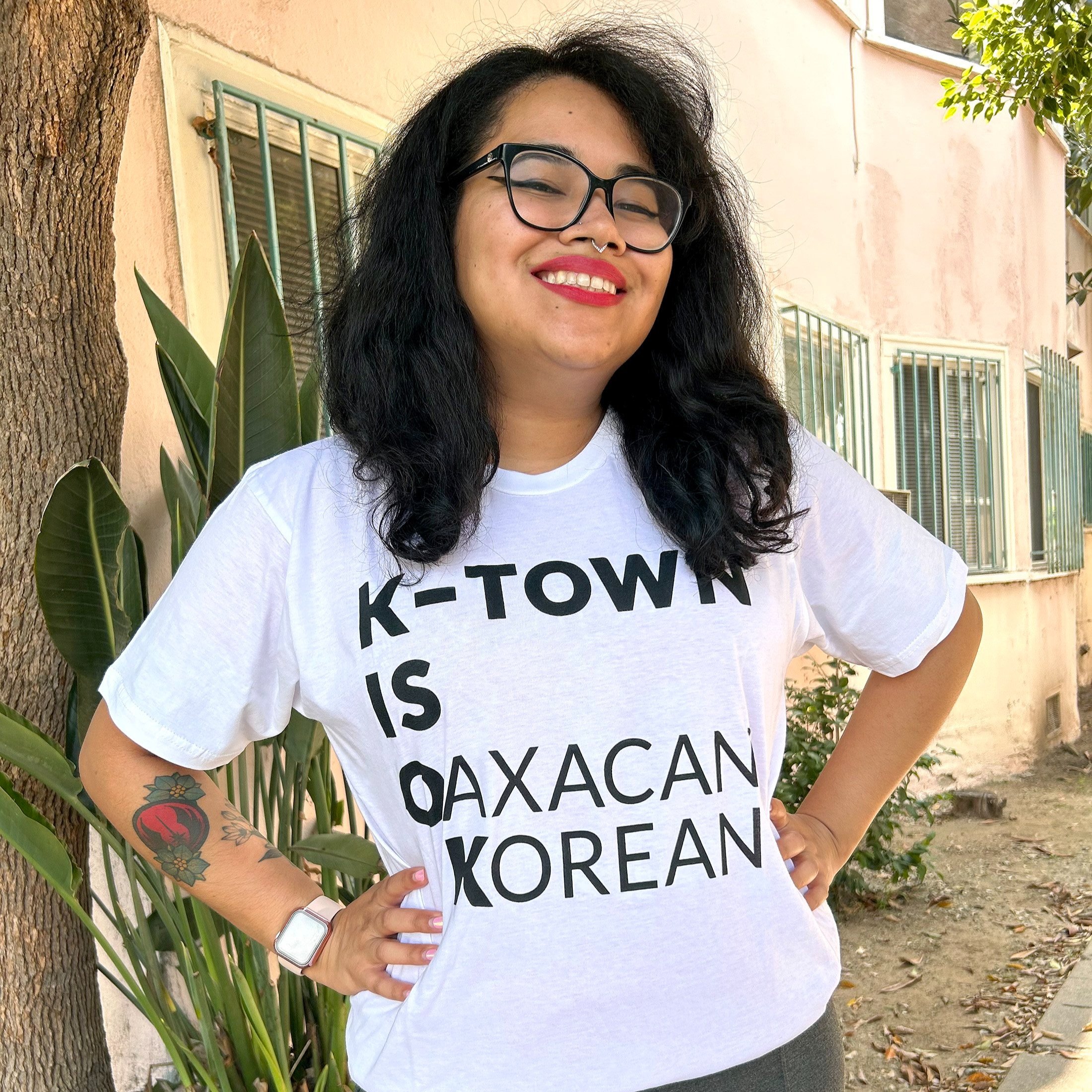

Connect with Godfrey: Instagram | Twitter 
Connect with LA Forward: Website

Diana Mabel Cruz, HEART LA

This interview has been edited for length, flow, and clarity. Portrait above by Jimmy Recinos.


Jimmy: Here we are at Alchemist Coffee to catch up a little bit. Thank you again for taking the time to chat with me. 

Diana: Thanks for having me!

Jimmy: It’s my pleasure! So my first question is: What is K-Town to you? What are a couple of things that come to mind about this place? 

Diana: I love that question so much. I immediately think of home. K-Town is home. It’s where I grew up. It’s where my dad grew up, where my family landed on my dad’s side in the 60s. 

Jimmy: As far back as the 60s?

Diana: 1964. 

Jimmy: Wow! 

Diana: Yeah, so I feel like a lot of my identity is tied to K-Town, even though I was kind of taught to not like my community in my youth. I had an interesting relationship with K-Town growing up. I was sent off to Brentwood and the Palisades to go to school so I had a really big disconnect… but I also never really fit in on the Westside. Then, when I came back from college, our housing was at risk. Suddenly, it was like, “Oh, wait. No, K-Town is home. This is my community.” And then I had to ask myself, “What is my place in it, really?” So I think where I’m at now with K-Town is that it’s home and I love it. I can’t imagine living anywhere else. 

I grew up right by Beverly and Normandie. That corner is like a little pocket of Central America, and it’s pretty important to my family. You have the Salvadoran panaderia. Across the street, you have the Guatemalan panaderia. And then kiddie corner to that is El Lechero Market. And there are all the street vendors with food from their countries. I’ve walked along Beverly from Normandie to Vermont many, many times over the years.

Jimmy: I love that. I especially love identifying Point A to Point B for ourselves in this town because it tells you a lot about the kind of movement you’ve witnessed since time immemorial, your slice of L.A.

Diana: Yeah. And it’s all in Koreatown. 

Jimmy: Of course, of course. And you’re right. All those panaderias, they fill such a crucial role. It’s cool to think about—at least for me—the role of panaderias from Beverly and Normandie to Beverly and Vermont. And then how when you get to, like, 3rd Street, there you go again: more panaderias, also restaurants… You’ve got the Jons, and a handful of other little goodies that make up the larger Central American community in this part of town. 

Diana: And those were the spots, right? Really early in the morning, you have the cafecito where, you know, the señores and the señoras are having their coffee. We couldn’t go to the Jons without seeing moms running into other family friends. Really hyper local—the familiarity and everything. 

Jimmy: Absolutely. Now, it’s probably difficult to select just one or two but I have to ask you about your earliest memories of K-Town. 

Diana: Hm… I grew up here. I’m like, which memory? Which one was my earliest one? I feel like they all kind of morph into one… Oh! There’s this hill, this really distinct hill by 1st and Edgemont where I have really early memories of me just, like, on my tricycle, rolling down it really, really, really fast. And, like I said, I have so many memories of me just walking. Walking to the Jons, walking to the train station when it was first built, when we were first able to get on the Metro on Beverly and Vermont. Walking to school, walking with my babysitter since my mom would have to go to work. I went on errands with the babysitter and her kids. A lot of walking! I think those are my earliest memories. 

Jimmy: I love that. And, I mean, it brings to mind that your home station off of that Metro Red Line—or the Metro B Line, they call it nowadays—is actually the Vermont/Beverly Station.

Diana: Yeah, that’s my home station. I honestly don’t remember it not being there. I know it was just an empty lot for a long time, but a lot of my memories just center around walking to that station to get everywhere else. 

Jimmy: Right, and probably walking from that station to get back home for the last leg of your journey. I think about that intersection and all of the activity—all of the chaos, up to a point, but the harmony—that is also at play. It’s complicated because you and I were talking earlier about the way the city’s evolved, and how the number of challenges facing the most vulnerable have only grown. I think our relationship with home and these places, including some of these intersections, are evolving relationships as we get older and as we become citizens with options, with the ability to speak out, to organize, and so on. So I think it’s great that Vermont/Beverly is actually your home station because we need you and others there to hold those in power accountable over what’s taking place on these streets, and to create a better way forward for our citizens, our pedestrians, our community. 

Now, that’s all about K-Town in the present, but you mentioned earlier that your family actually arrived here in 1964! Do you have photos of your family from that time? 

Diana: Yeah, lots of photos. Lots of stories. I recently learned El Lechero Market, which is now like a corner store, was literally el lechero {the milkman} market, where there used to be milk people. That was the headquarters for the people that used to deliver the milk to you. And some buildings along here on 1st Street—some of the more historic buildings—have slots for milk. And you could select cream or, you know, the type of dairy product that you wanted. So that’s how far back that market goes. 

Jimmy: Wow! Who told you about milk people? 

Diana: Well, I learned about milk people on TV. You know, you get your milk person to deliver milk to your door… But my grandfather was the storyteller in our family.

  A page in the Cruz Family photo album. First row, L to R: Diana’s First Communion at St. Kevin Church on Beverly Blvd; Diana’s dad in the 60s with neighborhood friends on Edgemont St., between 1st and Council; Diana’s mom with her sister, visiting from El Salvador. Second row, L to R: Diana commemorating her kindergarten graduation from Cahuenga Elementary School; Diana and her family outside their first apartment on Edgemont St.
A page in the Cruz Family photo album. First row, L to R: Diana’s First Communion at St. Kevin Church on Beverly Blvd; Diana’s dad in the 60s with neighborhood friends on Edgemont St., between 1st and Council; Diana’s mom with her sister, visiting from El Salvador. Second row, L to R: Diana commemorating her kindergarten graduation from Cahuenga Elementary School; Diana and her family outside their first apartment on Edgemont St.

Jimmy: Oh, I see. What do you know about when he first got to this neighborhood? What key highlights has he mentioned to you from that time, other than El Lechero? 

Diana: From the stories that I’ve heard, it was predominantly white here. My family was maybe one of the few people of color that were here at that time. I have pictures of my dad when he was a child. He’s standing with all his friends in front of these, like, 60s, 70s vehicles and a majority of them were white children. So I think my family was already here when white flight started to happen. I remember looking at those photos and being like, “Wow, what a different demographic than what this neighborhood was like when I was growing up.” I mean, it’s changing now, too. 

Jimmy: Right. And because we’ve talked a little bit about the intersections of K-Town, I want to ask you what one strength or one major asset you think stands out within K-Town? 

Diana: I think it’s the community itself. I mean, going back to the Riots, what came out of that was the Neighborhood Councils, right? People saying, “We need more of a voice, more agency in our communities, and we need closer ties to the electeds for our communities.” So you had people that came together from the community and were like, “We need to do something.” And even to this day, when there is so much disinvestment, you have organizations like Ktown for All that’s addressing the needs that the city isn’t. You have Tenants Unions, you have VyBe. VyBe is Vermont/Beverly because other people also have a connection to that intersection, community members that came together to support tenants in need. You also have KYCC… So many community groups that are so central to K-Town. I think that what makes K-Town so special is that there’s so much passion and love for the community. When the city falls short or city officials fall short, the community members step in and address the problems themselves. 

Jimmy: That’s right. I’m so glad to hear you say this. And what do you think is a major drawback or a shortcoming in K-Town? Something that is key for us to keep in mind as we consider planning and/or development in the neighborhood? 

Diana: For me, it’s always going to come back to housing. The lack of affordability, the lack of accessibility, the lack of healthy housing, the lack of housing that is habitable. When I look around, yeah, the demographics are different for sure. But there’s always been a long history of disinvestment in Koreatown. And where there is investment now, it’s in folks that are paying $3,000 for studio apartments, or the people that are coming in and contributing something financially. But I’ve never seen an investment in the people that are here—the longtime community members—or even the community members now that are living on the streets. I think that’s a big issue. I mean, it’s always going to come back to housing. 

Jimmy: That’s right. 

Diana: We don’t have vacancy control. We barely have rent control. So there are so many things to consider to address the housing crisis head-on.

Jimmy: You have an extremely personal relationship with that. You know exactly how deep this can get for people without a set of protections, for people who have to go and learn about their rights with last-minute notice. You have experience with the housing crisis in K-Town, and I’m wondering if you could say a little bit about that. 

  Diana and her mom in Koreatown, or Little Bangladesh, in 2018. Photo by JIMBO TIMES.
Diana and her mom in Koreatown, or Little Bangladesh, in 2018. Photo by JIMBO TIMES.

Diana: I mean, when I came back from college, we got our second no-fault eviction. I couldn’t do anything about it the first time when I was a child. My mom had to figure it out all on her own. The second time, I was immediately like, “What can I do?” So I just tried to exhaust all the community resources that I knew were there. I went to the Neighborhood Council. I went to the Tenants Union. I went to the Beverly-Vermont Community Land Trust (CLT). Beverly-and-Vermont keeps coming up! I think, again, it goes back to what makes K-Town so strong as a community. So I went and I was like, “Hi, I’ve lived here my entire life. I’m in danger of not living here. And it’s so bizarre to think about how I just can no longer afford to live in the community that I call home.” And I found so much support in that. So much of that experience is what led me to where I am now. And it just further fueled my passion and work in K-Town. 

Jimmy: So when was that second eviction filed against you and your mom?

Diana: 2018, 2019. 

Jimmy: Okay, so just about five years ago. Wow. You know, it’s interesting, Diana, because I saw the other day that the median purchase price of a home has gone from, like, $600,000 to about $900,000, since about 2018. Your story is very much an insight into why it has grown so exponentially. The need for housing has only increased. And so in this system that we accept and continue to abide by, the more scarce resources only go up in value. 

Diana: There’s also greed at the other end of the need.

Jimmy: That’s right. 

Diana: I see in my work today that landlords in K-Town are looking for just about every reason to evict tenants that aren’t paying market rates. Tenants that have lived here 20-plus years who pay very, very low rent. They’re finding any reason like, “Oh, your dog that has lived with you for six years is not on the lease. You need to go.” 

Jimmy: And so, with that in mind, this is the most opportune time to educate our communities and tell these stories so that folks know how they can stand up against these improper, inappropriate, and inhumane ways of approaching people’s form of living in the city. Like, in your case, you and your mom were very fortunate to connect with the bevy of resources here, and you’re at a better place now. 

Diana: Right. 

Jimmy: Can you tell me a little bit about your time with the CLT and how that’s transformed your living situation over the past couple of years? 

Diana: Yeah. I mean, if it wasn’t for the Community Land Trust, I wouldn’t still be within Koreatown. At the time when we were being evicted, we had spent well over $1,000 in just rental occupations alone. So our resources were being drained. I was doing AmeriCorps at the time, being paid like $7.25 an hour. My mom was retired. So we didn’t have very much to go anywhere. When I joined the Community Land Trust, I shared my story and I was lucky that some people in the community were made aware of a unit down the street that was for rent. It wasn’t online, it was just word-of-mouth. Word-of-mouth got me where I am now. And I mean, with the CLT, it’s the idea of community ownership. The land that we’re on is stolen, so the idea of land ownership is sort of bizarre to begin with. But what do we do with what we have? I think the best way forward is community ownership.

Jimmy: That’s right, absolutely. So, in October of last year, there were these recordings that emerged from L.A. City leadership. It actually concerned remaking the map in Los Angeles, redrawing the political boundaries. And in that convo, K-Town came up and there were some pretty offensive things said about people living in K-Town. I’m wondering if you heard of that when the news first broke out, or if it’s come to your attention more recently that K-Town was somehow involved in these talks. 

Diana: I remember what they said in the conversation, and—as egregious as it was—unfortunately, I wasn’t entirely surprised. There’s been a history of this kind of thing.  

Jimmy: What I’ve gathered from a number of folks is precisely that. Many of us, especially living in the city, can see with our own eyes where investment lies and where it is way far gone. So, to some significant extent, it doesn’t surprise us when our communities are being spoken about in this way, because how they’re being treated—or “abandoned” is probably more accurate to say—speaks for itself. But what might a civic leader or an elected official need to keep in mind going forward about this neighborhood and its needs, given your experience, given what you’re seeing on the ground, and given maybe a range of possibilities for improving conditions here? 

Diana: I would say it comes down to housing. For me, it’s when I can’t walk a few blocks of Koreatown without seeing somebody that doesn’t have access to shelter. I think we’re tired of being resilient. It’s a great quality that K-Town has, that we ask community members to stand up and be like, “Hey, we’re going to take care of this ourselves.” But at a certain point, it’s like, “Hey, electives, where are you?” There’s so much work being done internally. That work should also come from the institution, the place of power. What are we doing to shelter people that are unsheltered? And not just band-aid solutions, like tiny homes or shipping containers. What are we doing to get people into permanent supportive housing? What are we doing to encourage landlords to accept Section 8 vouchers or establish something like that? How do we get people the support that they need, the mental health support they need, and just the very basic food-and-shelter support they need? 

Jimmy: Diana, I really have to thank you for speaking with me. I appreciate your voice so much. I’m so happy that we can include it in this mosaic, in this collection of stories that we’re gathering for this community. So, once again, from my heart to yours, a huge thanks. 

Diana: I really do have a big love for this community and want the best for it. 

Jimmy: That’s right. 100%.


Connect with Diana: Instagram
Connect with HEART LA:
Website
Read more about Diana’s 2nd wrongful eviction in 2018 on JIMBO TIMES

Kwasi Boyd-Bouldin, Artist/Photographer

Above portrait by Helen H. Kim. All artwork below by Kwasi Boyd-Bouldin. This interview has been edited for length, flow, and clarity.


Helen: How did your fascination with documenting places develop? 

Kwasi: Well, I lived in a couple of different places as a kid, so neighborhoods always had a fascination for me. Like, how I would move to a new neighborhood and it would start becoming really familiar to me. Also, skateboarding was a really big part of my life. Even before skateboarding, I liked riding my bike. I was just one of those kids that was in the street all the time. So I started from riding my bike to getting heavy into skateboarding. Then I got older and got into graffiti. And graffiti became the lens through which I kind of viewed things. But these things were never really separate from each other. They all have a real connection to a geographic location. So that’s how my fascination with places got built. 

Helen: Speaking of which, can you tell us about your history in K-Town? 

Kwasi: So, basically, I moved to Koreatown when I was 10. I lived in the same apartment until the time I was 23, and then I got my own place right off of Olympic and Western, where I lived until I was in my early 30s. 

Jimmy: Do you know why your mom decided to move to Koreatown? 

Kwasi: It was a better neighborhood than where we were living. And rent was cheap. For a really long time. That was not only with Koreatown but also the Central Hollywood area.

Helen: So what do you think kept you in Koreatown? 

Kwasi: I just didn’t leave, you know what I mean? The main thing that kept me in Koreatown for so long was the rent when I moved out into my own place. That apartment was $550 a month and it was rent-controlled. The rent was starting to go up in the area by the time I left but I was still only paying $825. That’s how I was able to put myself through school, how I was able to be a photographer and buy film, how I was able to be an artist and afford supplies. I lived in K-Town, worked in Downtown, went to LACC and Cal State LA. And I just always had a camera with me in my daily routine, photographing Koreatown. I was burning through roll after roll and just recording everything, you know? The only reason I moved out of K-Town is because I got engaged and we needed a bigger place. We have kids now and, even though rent is still expensive where we live, we have a lot more physical space for them than what we could afford out here. But both sets of grandparents are in Koreatown, so we’re always around.

Jimmy: It sounds like family is pretty key. 

Kwasi: Yeah. Like, you can’t really replicate or communicate what it was like when we were coming up but we like having the kids around it all.

Helen: There’s this thought that there’s a lack of history or rootedness here, or that there’s an overall sense of disconnect. But for the people that grew up here and have stayed here, our experience of L.A. is, like, in a weird way, a provincial or small-town way of living. Your mom still lives here and you come over on Sundays. I was talking to my mom on the way here to let her know that I’ll be over for dinner later. Like, I go over to my parents’ for dinner every week, you know? And that actually exists in L.A. and in Koreatown. 

Kwasi: I was born in New York. I moved here when I was two. L.A. wasn’t aspirational for me, and it wasn’t exceptional. It just was what it was. I bump into people I went to elementary school with, working at a store that they’ve been working at forever. You get a chance to see people living their lives in L.A. in a way that mainstream media doesn’t see. But, I mean, this is very much the case for K-Town. It’s very much the case for, you know, Boyle Heights or South L.A.

Helen: What do you think distinguishes Koreatown as a neighborhood within the context of L.A.? 

Kwasi: Well, I mean, I think that K-Town is really different now to when I was younger. There’s a lot of hype now. It’s kind of weird. 

Helen: I know, right? 

Kwasi: When I was younger, “Koreatown” was the label because businesses were Korean. I had a few neighbors who were Korean but I had more Korean neighbors when I lived in Hollywood and, really, my neighbors were from all over the world. So the name wasn’t a mislabeling but it also wasn’t the whole story. Like, if you lived in K-Town, you knew what that name meant, and it didn’t necessarily mean that the people were Korean. And, there was this sense of community. There was gang activity and all that sort of thing but it wasn’t as epic as it was in some other parts of the city.  

And when I say “community,” skateboarding was huge in this area. You go back to all the skating videos from the 90s and they’re all filmed on Wilshire. So being a latchkey kid and being able to skate on Wilshire—that’s what all the neighborhood kids did, hanging out and skating. A lot of the communities in Koreatown—not all of them, but a lot of them—were really racially mixed. You pretty much only saw that in K-Town and parts of Hollywood, a little bit on the Westside. So that intersection, that free flow of different types of people, was kind of unique to the area. 

Helen: Being that you were a latchkey kid, what were your go-to afterschool snacks? 

Kwasi: Oh, there’s a lot. I used to really like… What are they called? Ho Hos? No, Zingers! And this candy that’s kinda like SweeTarts, but in a long pack. Kinda chalky and in, like, thin discs… 

Helen: I know what you’re talking about. Necco. Necco Wafers. 

Kwasi: Yeah, yeah, yeah. Also, my friends in elementary school introduced me to Tamarindo (Mexican tamarind candy). That, and the corn with the mayonnaise. And I used to like random things from the neighborhood ice cream trucks. Different trucks that frequented different neighborhoods had different snacks. I used to go to a private school for a few years called Our Savior right off of 6th and Wilton, and it was really reflective of the changing demographics in the area because it was literally half Black and half Korean, with couple Filipino and couple Latino kids. So at that school, the ice cream truck that used to come around there had more Asian snacks. That’s where I used to get Thai iced tea when I was like five. 

Helen: Wait, you were having Thai iced tea when you were five? 

Kwasi: Yeah, caffeine doesn’t bother me. I can have coffee and literally go to sleep right after.

Helen: You were a very sophisticated five-year-old! You’re all, “Ice cream? Forget that, I’ll have the tea.”

Kwasi: Yeah, you know, I was a fancy kid.

Helen: Feel free to reshape this question however it fits with your experience, but I’m curious to know how your identity as an African American man intersects with or was shaped by Koreatown. 

Kwasi: That’s just who I was in this place. But, I mean, I did live in K-Town during the L.A. Riots and that was intense because I was young. 

Jimmy: Oh, right. You here when the riots were taking place. 

Kwasi: Yeah, I was here. So there was like a hardening of racial lines in a lot of ways for a while. But, honestly, l was in junior high school and there wasn’t Twitter or the internet, so a lot of how things were wasn’t necessarily in my face. In general, there weren’t a lot of Black people in Koreatown but, like I said, it was so racially diverse—the crews and everyone. It wasn’t utopia, but it was fine, you know what I mean? I don’t think I came across anything particularly harsh—or particularly good—because I was Black in Koreatown. So I guess in that way it was pretty much the same as it was if you were anything else in Koreatown. After the Riots, when I told people, “I live in Koreatown,” they were like, “Wow, that’s weird,” because of the tension between Blacks and Koreans in the city as a whole.  

Helen: How old were you when the riots happened? 

Kwasi: Let me see… It was ’92, so I think I was 13. I was going to Bancroft Middle School in Hollywood at the time. I was the magnet kid that normally took the school bus home. But there were no school buses because there was an uprising. So I had to walk home. I don’t know if you all remember but it broke out south of us and the news was like, “It’s moving north.” What was crazy is that the way the media reported on that time and the way it was on the ground were actually really different. They were saying that Black people were coming up north into K-town as a mob. But that’s not really what happened. It was more that people in general were really upset. And the media couldn’t recognize that, much less understand it. 

So the day after it all started, my mom still had to go to work. And I went to school. And we had to walk home, me and my buddy Jaime. Bancroft is off Santa Monica and Highland so we just took Santa Monica all the way to Western. And the big Sears was on fire. The corner of Santa Monica and Western was on fire. 

Helen: So you’re seeing this as you’re walking?

Kwasi: Yeah, we literally walked by the place and it was on fire. Like, people were running out of the building. It was crazy. I was a latchkey kid because it was the ‘90s. So my mom wasn’t going to be home for a minute. I stayed at Jaime’s house for about an hour and then I walked home. I took Western down to Oakwood, and then Oakwood to Normandie, and then Normandie down. And right at Normandie and Beverly, there used to be a Chief Auto Parts and a 7-Eleven and a Chinatown Express and a liquor store. And the owners of that liquor store were on the roof with shotguns and I was 13 and I was like [whistles]. Later, I read the stories and stuff about how it was at California Market and down the street but I didn’t walk past that so I didn’t see it. But it was, like, cracking on literally every corner. 

Helen: Did you have conversations about any of this with your mom? 

Kwasi: No, not really. Even though my mom’s clearly American, she’s not from L.A. So although there wasn’t a barrier with language or anything like that, I was the person that was experiencing things and then explaining it all to her, you know? Her perspective was informed by what was on the news and my perspective was more informed by being—

Helen: Literally on the streets. Wow. So with all that happening with the Riots or the Uprising, did it shift how you perceived Koreatown or L.A. in general? Did you feel a shift in how you yourself were perceived?

Kwasi: I mean, I felt a shift, but the shift had a lot more to do with me growing up and starting to be perceived not as a Black kid but as a Black male. So it wasn’t necessarily because of 1992 and the Uprising. People start looking at you a certain way, you know what I mean? Living in Koreatown wasn’t always dope. Racism was always there. But I wouldn’t describe my whole childhood through that and I wouldn’t say that tainted how I experienced Koreatown. I always want to stress that. 

Helen: I totally get that. So, a few moments ago, you mentioned there weren’t a lot of Black people in Koreatown. Did you have a longing for that aspect of community? 

Kwasi: Yeah. That’s why I sought it out. But it’s L.A., so my culture was there. I wasn’t removed from it because I lived in Koreatown. I know it’s hard for some people who don’t have that connection, but my mom was who she was—very Southern—and I had four older siblings who were also around, so I was always surrounded from that perspective. 

Helen: So now as an artist, husband, and father, what do you think of present-day Koreatown? 

Kwasi: I mean, I like that there is some cultural weight to it outside of L.A. I read something about how some chef—I think he was Korean chef—he was saying how there are more high-end Korean restaurants in Koreatown than there are in the part of Korea that he’s from. It’s kind of cool for the area to have that level of development and that kind of reputation but I also feel like some of it is a projection, like with the rest of L.A. A lot of K-Town is unaffected by this stuff. It’s got all the same problems, and a lot of things have gotten a lot worse. The main thing is that the rent is just too high. Koreatown used to be a place where the rent increase wasn’t as big of a thing as it was in other places like Hollywood or Downtown. But it’s just like the rest of L.A. now. I feel like it’s lost a little bit of what made it dope to me growing up. Which was that, because it was an affordable place to live, everyone lived here. Like I said, it wasn’t a utopia, but there was a real opportunity to have a cool community. 

Like, even when I wasn’t a kid, when I was living off of Olympic and Western. The Starbucks that’s right there at Serrano and Wilshire? I was a 30-year-old dude that had a standing coffee date with this 54-year-old guy named Ted from Eritrea. We’d just sit at the Starbucks and talk about life and stuff. When Korea was hosting the World Cup, we watched the games together on the big screen there. People were losing their minds. Or like when the Lakers were winning championships. Robert Horry made that shot at the last minute and you heard the whole neighborhood scream. Literally, it was like, “Aaahhh!” from all the apartments. 

Helen: That’s beautiful. 

Kwasi: I feel like moments like that are gone. I think L.A. in general is losing a part of what it is because prices are getting so high. 

Helen: We have a lot of affection for L.A., partly because of the nostalgia for what it used to be. But we’re also realists. So considering the reality, what is your hope for the future of Koreatown? 

Kwasi: I don’t know. I don’t think I can have a hope for it. I really wish I did, but there’s no way out of the current situation without lowering the rent. There just isn’t. I’m fortunate. Like, I’ve been able to carve out a career for myself and we’re not struggling in any way. But everyone needs too many breaks just to live an okay life. They just need too many things to go their way. And if none of that stuff goes your way, you’re fucked. That’s L.A. in general, and I don’t necessarily see anyone in any position of power really talking about it like that. Or, even when they are, they’re triaging. They’re not addressing the fact that, like, you can’t get a single for under $1,500. That’s insane! What if you have a family? So, you know, my hope would be that that would be fixed. That’s my fantasy. 

I’ve been photographing the area so much because I can remember a time before things started to slide. And then, right when I thought it wasn’t going to slide anymore, it just accelerated. Even now, I really wish I could be like, “This has to be the bottom, like, it’s totally the bottom, right?” But there is no bottom. Without any incentive to fix things, there’s not ever going to be a bottom. 

Helen: So with this downward trajectory, what keeps you pursuing your documentation of place? 

Kwasi: Well, I mean, you have to. I think that if people from here aren’t telling what happened, then no one else could possibly get it right. So documenting is important. And, you know, people are still making their way here. Kids are still laughing and smiling. It’s so easy for me to be like, “Aw, it’s all shit!” But people are still living their lives. And maybe that’s where the answer is, where the hope is. You know, I feel like it’s important to be present so it’s not just outside people thinking, “Oh, this is a problem,” without the context of what came before, why it is the way that it is. L.A. is an interesting place. Everyone gets it wrong. I’m just too invested in L.A. to not interpret it constantly. We’re not going to raise our kids anywhere else so I may as well try to do something where I’m at. My art has given me a way to talk about things. Not as an authority but with a sense of investment. 

Jimmy: When you come to Koreatown with your family, with your daughters, what do you show them? 

Kwasi: My daughters are still so young. So we’re either hanging out at my in-laws house or we’re hanging out at my mom’s house. But with either one of them, we’ll go for walk in the neighborhood or go to Paris Baguette. We never want them to not feel comfortable in K-Town or in L.A. in general. 

Jimmy: I do wonder how y’all as parents present your respective cultures to your daughters, because that has to include a number of things. Language, food, music… The list goes on. 

Kwasi: One of the things I try to tell my daughters—and I show them how dope and vast the world is—is that they have a grandmother from Taipei and one from Savannah, and that’s them. We present both but we don’t really point out, “Oh, this is this,” or, “That is that.” We just present it as a whole. Whatever your culture might be and wherever you might be from, if you pour as much as you can into your kids, into who they are, when the world inevitably starts throwing those darts at them, it doesn’t work because they already have their foundation. That’s pretty much our approach. 

Jimmy: I mean, I think of something as simple as what you had said in terms of snacks. 

Kwasi: Right. It’s all pretty organic. My wife grew up with a lot of snacks that I didn’t grow up with. Just by default, my daughters will often have rice and seaweed for breakfast. Because that’s their mom, you know? These influences percolate into different places and, for them, there’s nothing exceptional about it.

Helen: Just like L.A. wasn’t exceptional for you. 

Kwasi: There’s nothing exceptional about it. From eating soul food to Taiwanese food to McDonald’s or whatever. It’s not an experience that other people have in the same way but, for us, it’s just the most natural experience. 

Jimmy: That’s badass.


Connect with Kwasi: Website | Instagram

Kimberly Espinosa, Koreatown Storytelling Program

This interview has been edited for length and clarity. Photos provided by Kimberly Espinosa.


Jimmy: Okay, very cool. And, yeah, I have some pretty simple questions because we want to keep our project as accessible as possible… And so, first, I want to thank you for taking the time to chat with me this morning. I really appreciate you’re working with us on this, because I’m excited to get your story and your voice out there, and this is how that happens. 

Kimberly: Yeah, thank you for having this space, it’s really nice to have. I’ve been thinking about this lately, about how much I’ve been talking about Koreatown. But it’s definitely nice to have more platforms where I can share my story and the community that I’ve been in, that I’ve been a part of. So, yeah, just thank you for having this.

Jimmy: Yeah, and I have to tell you, I’m really excited about your voice on this platform, because your story in K-Town is so unique at the same time that it’s so relatable for so many people who may or may not be aware of that yet. So I’m excited about what this platform and your voice together can do to bring people around this neighborhood and its challenges and all of its unmet potential that we’re slowly but surely uplifting here… 

Kimberly: Yeah, I think Koreatown has a lot to share so I’m excited to be part of that, too.

Jimmy: So what I’ll ask you to begin with is, essentially, what K-Town is to you? If you were explaining this to a stranger or somebody who you were meeting for the first time, what would you say about Koreatown in Los Angeles?

Kimberly: I think my short answer is that Koreatown is home. Like, that’s the first thing I would say in a natural conversation. If I were to unpack that, though… I also recently had an interview with someone about what Koreatown represented for them because I do interviews as an intern for the Koreatown Storytelling Program, and something stuck with me and resonates with me is that there’s the symbolic representation of Koreatown and then there’s the physical community. And so I think about those two things a lot and how they make this unique experience for my family and I.

I think it’s interesting how it’s developed, like the way that my connection with Koreatown has developed, because I don’t think the symbolic representation that I’m kind of talking about was as present in my mind, or that I wasn’t as conscious of it when I was growing up…at least not until I was in middle or high school. And that’s just because you know, when you’re just a kid, you don’t really think about things like that. So, for me, Koreatown has always been the place that I’ve been in. Like, this is where I was raised, this is where I went to school, and this is where I hung out with my friends. 

But now, of course, there’s that cultural aspect that I talk about in regards to Koreatown, and for me that’s something very special and something that I think, even if I go to other parts of L.A., is not the same. It’s very unique to Koreatown. Like, the Oaxacan community here is so vibrant, and so culturally rich through physical and non-physical traits.

Again, going back to the physical aspect of Koreatown, there’s so many places here where you can see the Oaxacan community, like the presence. And so for me, that’s something that’s very special because maybe not until I recently went to Mexico was it that I realized how Koreatown is like an extension of our family’s hometown in a way; you know, there’s the eight *regiones* of Oaxaca, but to me, there’s another *region* of Oaxaca right in K-Town, if that makes sense. 

It’s Oaxacalifornia, right? A lot of people talk about that experience. So for me, I find my home in Koreatown. Growing up here, you get to know a lot of people, and sometimes it doesn’t make sense how everyone is kind of like your family, right? Like, you have so much family here. But, yeah, I guess that’s me unpacking what Koreatown means to me. Of course, there’s a lot more, but that’s a little bit of what Koreatown means to me.

Jimmy: Of course. I really appreciate this response, and I think it is so much to unpack, just as you put it. And so for that reason, I’m only more excited to ask you about what one of your earliest memories of K-Town might be, especially given that this is home, that this is this place you’ve known for so long. I am definitely interested in hearing about what one of your earliest memories of Koreatown might be. 

Kimberly: So this actually came to mind recently. I was thinking about our weekends in Koreatown, and what that looks like. And the truth is, it doesn’t look the same every time. There’s always something happening, and it can look very different. For example, one of my early memories of Koreatown is going out with my family—my mom and my dad—to Shatto Park on Sundays.

There is a group of relatives, some uncles and cousins from our family’s hometown, that would play volleyball there every Sunday. I think they still play there every Sunday, I think at noon. Then afterwards, everyone hangs out, chatting and catching up. Because you don’t really get to do that throughout the week, because everyone’s working. I have a lot of memories but that’s a very significant one that just came to mind recently. 

Jimmy: Definitely, I recall our earlier conversation too where you mentioned the importance of more green space in K-Town. It’s interesting that, of course, in this example, you’re citing a mix of exactly those things, a mix of K-Town, as well as the green space, the space for recreation and activity that involves you and your family, you and your community. So I think it goes a long way in showing just how much green space as a safe space and as space for the community can and tends to do.

Kimberly: Yeah, I think Koreatown and green space is something that I don’t–or at least not before as much as now, I didn’t—really connect those two together. Just because, you know, you go outside, you see construction happening, and it kind of seems like green spaces aren’t really possible in a neighborhood like this just because of how everything in the neighborhood is spaced out. 

It’s very inaccessible and I think a lot of what I think about Koreatown now connects back to my relation with KYCC, the Koreatown Youth and Community Center. I feel a lot of their work makes me think about my experiences growing up in Koreatown and think about it in a different way. 

Like, one of the things that they’ve recently focused on is mobility access and green spaces, and so that’s something that comes to mind. And just thinking about how I’ve had a few friends that are not from Koreatown come over, and one of the things that they ask me is, “So what do you do for fun here? Like, what’s the thing to do in Koreatown?” But other than going to school, going to the mercados and stuff like that, you don’t really have a place, like a green space, like a park to go to. I mean, there’s Seoul International Park, there’s Shatto Park, there’s Lafayette, but Lafayette isn’t really in Koreatown… They’re just on the outskirts of Koreatown that are inaccessible to folks. 

And so with this heatwave happening right now, I just think about that a lot, how I wish that our neighborhood had access to more spaces like this. You know, going back to Mexico, and seeing how important nature is in day-to-day life there, it kind of makes me sad that that isn’t something that I can necessarily have here. I mean, you can go to Griffith Park and stuff like that, like you’re in L.A., but I don’t think it necessarily should be that way. 

I feel every neighborhood deserves green spaces and safe spaces to be in community, so that’s kind of one of the things that I wish we’re a little bit different about Koreatown. 

Jimmy: Yeah, I think that says a lot because you’re thinking, both in terms of real assets in Koreatown, including these families, these workers, these people who brighten the community, and who actually maintain it day by day, and then you’re also thinking about time after that, where if they would like to spend more time with their people, with their community, there should be a place for that. Every neighborhood, wherever it may be, sort of deserves that, and I think you very much are aware of that and you’re increasingly aware of it given your work at KYCC. So for a moment, could you tell me a little more about how you first got involved with the Koreatown Youth Community Center (KYCC)? 

Kimberly: Yeah, so KYCC. My relationship with the org, I think, really starts with my mom. My mom has always been a very active member of the community and because she wasn’t able to work for a very long time given an injury in her workplace, she started reaching out to folks and seeing where she could show up for the community. And so one of those places was Best Start Metro L.A., and for me, that was very interesting too, because I was the youngest child. And if you know Best Start Metro L.A., you know that they focus specifically on working with younger kids. 

But my mom, of course, wasn’t necessarily like, “Oh, I don’t have younger kids, I’m not going to be part of this.” It was more like, “I want to be part of the community, so I’m going to join this group.” And so that’s how she started becoming involved. And then KYCC was one of the community partners that they were in touch with. And so at one of their events focused on culture of respect—it’s an annual event that they had with several organizations in Koreatown—I started volunteering with that. I was only 13 or 14 years old, probably a little bit younger. And so I just started volunteering with that, and then afterwards my own journey with KYCC kind of started in high school when I started volunteering with the Bridge Program. It’s a tutoring program for Koreatown kids or kids around the area. And so I became very involved in that, I participated in that until my senior year. Throughout that time, as well, I became involved in the Koreatown Storytelling Program (KSP), which was a new program that was started within KYCC.

And so the cool thing about KYCC is that they offer various programs. It’s not just educational, or it’s not just housing, it’s environmental services, clinical services, and other very important things to the neighborhood. So I was part of both of those programs about the same time and I really liked that I started connecting with a lot more Koreatown youth during that time. Because before that, I was mostly connected with everyone from my high school, that was where I knew everyone, basically. 

But once I started participating in KYCC, I really started connecting with students from Fairfax, John Marshall, and other high schools around the area. That was a very cool experience, getting to know the youth in Koreatown with different backgrounds, in the sense that their high schools and demographics or high school experiences were different from mine. And so right now, I’m back at KYCC as a KSP intern, which is full circle for me because I kind of grew up with KYCC. Once you’re a student or a part of the staff here, you’re like part of the family. It’s kind of like the folks here are my aunts and uncles.

Jimmy: That’s really powerful. And I want to ask you for someone that may not be familiar with KYCC… You mentioned this story and getting to know the community there. And what I’d like to ask then is if KYCC is focused solely on, say, the Korean American community, or if it’s focused on the broader K-Town community, meaning services and programs for anyone who happens to reside in K-Town? Can you clarify that for us? 

Kimberly: Yeah, so I’m like a history person. So I know a little bit of KYCC’s history. KYCC originally started as the Korean Youth Center but it developed into KYCC given the demographics and just the culture here in Koreatown, which is not just the Korean population. So it’s very important to be aware of that history. Because I do feel sometimes folks may be a little bit scared to reach out since they’re thinking maybe it’s only Korean-serving, or Korean-American-serving. But the truth is that KYCC is open to all families in Koreatown… I would also say even the outskirts of Koreatown. I’ve seen the impact of their work. It’s very cool to see just how much KYCC is invested in the community. 

I see KYCC everywhere. I see their trucks outside sometimes for environmental services and it just makes me really happy that KYCC is a place where these different communities within Koreatown get to connect. Like KSP, it focuses on the multiple communities living within Koreatown. And that means interviewing folks that are Korean, but also who are Oaxacan, but that also are Bengali, right? Because Koreatown, it’s just… there’s so much to it. Now there’s Little Bangladesh, which I feel we can talk a little bit more about but, yeah, I’m just really glad that KYCC, the Koreatown Youth Community Center, has opened its doors for all the families, as far as I know, in Koreatown. So that just makes me really happy. 

Jimmy: Yeah, and I really look forward to the discussion on Little Bangladesh soon as well. I think it’s a rich discussion that so many folks would benefit from participating in. And with respect to these communities, with respect to services, with respect to representation and so on, I want to ask you if or when you became aware of these leaked recordings at L.A. City Hall on K-Town and about the people of K-Town, on who or what K-Town is. I want to ask you if that came to your attention at some point last year when the recordings first got out? Because you’re also a college student, and you’re a student out-of-state just as well, so I wonder a little bit about how that news made its way to your attention or not. 

Kimberly: Yeah, so I wasn’t in K-Town, I was away. I was at Northwestern when I heard the news. The news actually got to me, I would say, through multiple ways. I, of course, saw it through Instagram and folks posting about it. But I also think I received a message about a press conference or press release kind of thing from one of our relatives. But, yeah, I got that news and I was very frustrated. There are so many feelings that came to me during that time. 

The frustration, of course, of not even being able to be here in Koreatown, and show up for what was happening. And of course, where I was, no one was talking about it, at least not like many folks at home were talking about it, just because it’s a very different place. I mean, I don’t know if it’s because it’s college, or I don’t know what it is, but people weren’t really talking about it there. So the folks that I could talk with were folks that were from L.A. and folks on Instagram, and my mom too. I was calling her during that time, and I’m just on the phone telling her how I felt. It’s obviously very shocking, but at the same time, it’s not. It’s, like, you know, it kind of happens internally at city government-level, but to see it or to hear it just play out.. It’s a whole thing of its own.

I think my frustration also came just from the fact that I’ve seen our community in conversations with politicians. I remember Gil Cedillo would have these different community events, including with one of the organizations that my mom had support from. They would actually get a lot of support from them; and I was always very iffy about politicians and what their interest is when they show up to events like that, given past experiences. 

It’s always “Oh, we care about community, we care about this, we’re interested in this, please let us know how to help in this.” And then it’s just… I don’t know how to explain it. You’re showing up in these community events presenting as if you care about the community when, in reality, when you should be showing up for community, you’re dissing this community. And so, for that reason, I think it was frustrating. But also I was kind of thinking, oh, what can we really expect from these politicians? So, that’s kind of how it came to me at that time. And when I was back, of course everything had died down a little bit in terms of the coverage of Koreatown because, you know, during that time, everyone’s posting about Koreatown, posting about what politicians said and whatnot, but after that, the L.A. Times and other major news outlets didn’t talk about it as much. It all kind of just died down from there. 

Jimmy: I think that’s such an important perspective to keep in mind, and that’s why I’m happy to create this space and share it with folks because I think what you’re describing is something that our sort of media coverage has a tendency to look at very fleetingly, very momentarily, very much for the spectacle, for the sport of it, only to walk away, and only to have things return to the same shape they were before, more or less.

And so what I think we’re doing is creating space to hone in on this, to analyze exactly what this means to us, and how we move forward as a range of communities in K-Town and so on, so I really do appreciate that perspective. And I want to ask you, in turn, how it is that you found out about K-Town Is OK storytelling series, that me and my colleague have been up to. Could you tell us a little bit about that connection? 

Kimberly: I spend quite some time on Instagram, so that’s where I found out about K-Town is OK. I saw Melly post about it, and we’re really close. I’m a big fan of Melly, so I’m always keeping up with her work, and she shares a bunch of cool resources for the community. So that’s how I found out about K-Town Is OK. But then I also saw that Steve from KYCC was a part of it, so that was really cool too. 

Jimmy: So just on that note, I want to ask you about what K-Town is OK might bring to the table. Do you think that K-Town Is Oaxacan Korean…that concept, does it somehow take away from what K-Town is? Or does it maybe distort what K-Town is? Or does it contribute to the idea of K-Town, and what K-Town may still be? 

Kimberly: I think what I really appreciate about K-Town is OK and other programs like KSP is that folks are really getting to tell their own story through them. It’s not large newspapers, corporations or groups that take over the narrative when it’s convenient. It’s that we’re doing this work and it’s really folks from the community telling their own stories. 

And that’s what I think is most important in sharing what Koreatown is because, of course, Koreatown is different for every person and every community. Just because you’re living or working here or you’re from Koreatown doesn’t necessarily mean you’ll have the same experience as someone else. You can have very common experiences and I think that’s what connects a lot of folks here, especially given that a lot of us are from the working class.

But, at the same time, it’s important to acknowledge that we have different experiences, we have different interests, different things that make us unique and shape our reality here. So I think, in that sense, I do think K-Town is OK contributes to what Koreatown is and can be and has been just generally. It’s not this monolithic experience of growing up in Koreatown. I guess, because you have a lot of spaces that tend to just become very popular or very common for folks, you may share that experience or common experience, but again, ultimately, everyone has different reasons for showing up in a place, and who you show up with. So I think that’s what makes us different and alike at the same time. 

Jimmy: That’s so cool, Kimberly, and I’m so glad to have become connected. Shout out to Melly as well, for helping us create awareness for this project. I can’t wait to share more space together. I can’t wait for us to see these stories fly and make their rounds because it’s so crucial. And we’re really just getting started. So you’re very much a part of the basis and very much a part of building a foundation. So there’s nothing but respect and gratitude on my part for your time and your voice and everything that you shared with us just today. What an interesting world that you’ve described for us, and I’m so happy to be in community with that world through you and your voice. 

Kimberly: Thank you, thank you. Again, I’m really glad to be part of this because I’ve had multiple conversations about Koreatown recently, and I feel every time I kind of unlock something different or something new. And it’s not that it’s something that was just created, but it’s something I have to go back to my memory and really, you know, remember things that have happened. So, I’m just glad to be a part of this again, and thank you for hosting. 

Jimmy: Absolutely, yeah. And on that note, I really love this as a moment in time, as a slice of time that we’re capturing because later when you come back and you’re ready to take part in only more leadership for either KYCC or K-Town as a whole, here is a slice of time for you to look back on and remember as a part of that, so by all means. My final question is, if I can just take a screenshot of us during this zoom interview for reference. 

Kimberly: Yeah. 

Jimmy: Okay, sweet. Okay, uno, dos, tres. Yeah. Okay, let me make sure I got that. Okay, perfect.


Connect with KYCC: Website | Instagram
Connect with the Koreatown Storytelling Program:
Website | TikTok

Sam Y.: “K-Town Is My Community.”

In this interview, Sam describes meeting K-Town in her youth as a place of business for her parents; she also notes changes she’s witnessed in the area more recently, as well as the kinds of engagement elected officials for the community can keep in mind.

This interview has been edited for length and clarity. Photo by Avital Oehler.


Jimmy: What is Koreatown to you?

Sam: Koreatown, to me, it’s a lot of different things. It’s where I find a lot of community. It’s where my family has gathered professionally. It’s a source of history, both when my family got here but also before. It’s where I find most of my Korean food. It’s where a lot of Korean culture is retained. That’s what it is to me. It’s a community. It’s my community.

Jimmy: Cool. What is your earliest or one of your earliest memories of K-Town?

Sam: I remember K-Town when I was really young. We used to drive to my dad’s office all the time. I remember the drive, getting on the 2 (freeway) and getting off at Fletcher and then driving through Silver Lake before it was “Silver Lake”. We had to roll our windows up once we got to Koreatown, to his office there. We went there so frequently because my dad would have to work a lot and we’d just have to hang out at his office and help him. We did that drive so much that I can remember what it feels like in the car. I knew every turn as we were going through Silver Lake because we went there so many times. That is really the biggest connection in my early life to Koreatown.

Jimmy: You mentioned having to roll the windows up when you got to K-Town. Can you say just a little bit more about that?

Sam: I think even in Silver Lake, I just remember we weren’t allowed to have the windows down because, at that time, it wasn’t what it is now. Gentrification hadn’t hit. It was a different place. I don’t really remember it very much visually. I just remember the sense my parents had around it, which is that’s where they went to work. We didn’t really do much else there.

Jimmy: I would see it as you also going into the city. The city starts as soon as you’re off the freeway. The city is like this unknown entity. In any case, you just get your guard up because you’re not in the usual neighborhood. You’re not at home necessarily, though you are going to this other homeland or this other place that is a part of “home”. It’s the city.

Sam: Definitely the unknown. That was definitely the sense. It is the city. It’s unknown. Roll the windows up. Also, that being said, I think my parents, they veer on the side of caution. Even at home, when we lived in Sunland, we never went outside to go on a walk or something. It was always a very insulated thing. I think that is connected to the fear of the unknown.

Jimmy: What is one strength that you see for K-Town today and what is one shortcoming or weakness even?

Sam: I know K-Town mainly through my family. It’s basically where my elders have all gone through. They’ve all worked in K-Town. Their community is from K-Town. Then we dispersed. No one lives in K-Town, but that’s really the way that I see it. The strength of that is the connections that we’ve been able to make to other people… I like that I understand like the signs around me, that they’re in the Korean language. That, you know, there is this community that L.A. is famous for, like our Koreatown. I think that’s really cool.

I like that there are markets that I can go to, and restaurants. But also, yeah, the community that has given to my family. Like, I don’t know what our life would be like now if we didn’t have that, right? My dad was able to come to America and set up a business solely based on the fact that he was Korean and part of this community. I don’t know if he could have done that anywhere else, or to the level of success that he had. But I also think that there is a little bit of an insular environment in Koreatown. Like, the strength is the community, the language, the shared culture, but it is a little bit of a weakness in that some of my family members who are really ingrained in Koreatown haven’t really had to look anywhere else. They haven’t had to be exposed to to a lot of Los Angeles. They think Koreatown is L.A.

So I see that kind of coming out in different ways. It’s like, my dad’s been here since he graduated college, but he doesn’t really have a full grasp of the English language because he hasn’t had to really use it. I mean, obviously he does, but so much of his dealings have been in Koreatown. So, you know, he works within kind of a zone. And I think a lot of people his age in Koreatown are kind of operating under the same environment.

Jimmy: I really like that response. I think what you’re also getting at is that you’re looking at it in terms of how the generations before ours in particular—those pioneering generations—have fared and are faring through the neighborhood and community. But if we were thinking about it, if we were thinking about K-Town as this piece of land (you mentioned the land, culture, language, food, and community)… If we were thinking about the land’s weaknesses or needs, what might some of those be in your eyes? Needs for the land, needs for the built environment, needs for where it’s at nowadays?

Sam: Just to clarify, the strengths and weaknesses of Koreatown’s built environment? Like as an urban entity?

Jimmy: And as a neighborhood, yeah. As this slice of Los Angeles, what might it need? If you can take a magic wand and provide something for it, let’s say?

Sam: It’s interesting because, if I look at it from like a planning perspective, my answer now is a little different because it’s post-pandemic. I think it has changed in the last couple of years because when I go there now, it feels a little bit shakier. It doesn’t feel quite as connected as it used to be. There are primary arteries that are obviously still connected in form, but it used to feel a lot more like you could go down any street, at least for me.

There were the smaller streets like Harvard and Kingsley. You could just walk down and there was life everywhere. But I feel like now it’s been disjointed a little bit. I don’t really know what happened because I don’t go there that often. I hadn’t been there in a while until recently. But I guess if I’m thinking about it as “what could I do about it?” it would just be—I mean, it’s kind of the urban planning answer—like, activating the ground, activating unused corridors and lighting up spaces and just making it so that there’s just more connectedness. That really struck me when I was there the last couple of times.

Jimmy: Yeah, I could totally see that. I mean, I can see that for not just K-Town but for a lot of different neighborhoods. My next question is… If you are aware of the discussion on K-Town at L.A. City Hall, or by members of L.A. City Hall? Were you aware that members of L.A. City Hall had talked about K-Town recently?

Sam: Specifically about K-Town? No.

Jimmy: You may or may not have heard that like these L.A. City Hall members resigned over the last couple of months. And part of what really got out through the media was these anti-Black comments made that were just completely indefensible, to be certain. And at the same time, what actually generated that discussion was this discussion about redrawing political maps in L.A.’s various districts. So there are 15 districts, and part of the challenge for K-Town over the last 20 years has been that, politically, it’s been divided into about three different areas. And that has made it difficult for neighborhoods or communities inside of K- Town to go to one office and get one set of resources and to come together. Because if we are having to go to different places for our needs, that makes it difficult for us to come together and really call for what we need as one unit. And so there were these comments by L.A. City Hall Council Members where they talked about K-Town as a political area. The discussion was something along the lines of “what is K-Town?” So then one council member said, “K-Town is a misnomer.” He said K-Town’s like not even really Korean. K-Town is, like, Oaxacan. There are a bunch of Oaxacans there. And it was just this misunderstanding and also this misrepresentation of the neighborhood.

I think it’s a telling experience of what immigrant communities have gone through in their interaction with the city, and how they’re still getting by, especially independently as small business owners, entrepreneurial types, innovative, creative types… With this said, my final question for you is: in your opinion, what should political leadership or civic engagement prioritize in a place like K-Town? So going back to the magic wand, what do you think political or city government entities should prioritize or consider for K-Town?

Sam: I have to think about it a little bit because I frequent K-Town for very specific things. Like, yes, I am Korean and, yes, I am historically baked into K-Town. But I don’t know what the people who are working there, living there need from political leadership. I’m not ingrained into the place on a daily basis. So I don’t know if I’m really in a position to say what K-Town’s needs are. Or if I had the magic wand, if I should be the one to use it. You know what I mean? It’s really not mine to use.

Jimmy: Yeah, I could totally see that. I think another way of looking at it would be… If we’re going back to that community, including the one that your father is a part of as a small business owner, what might you see in terms of the city engaging that community?

Sam: I think honestly, the thing that I go back to is just engagement, period. Because I don’t actually know what it is that he as a small business owner would actually need or want, except for being connected to political leadership and resources. Like, I know that there‘s stuff that is kind of pushing my family out of Koreatown in terms of business, and I don’t know if it’s just because this is happening everywhere or if it’s Koreatown specifically. But I also know that people like my dad don’t necessarily feel empowered to do anything about it. They’re not going to push back, especially because they don’t really know where to push. So I guess it would be just engagement. That being said, I do like that Koreatown is not just Koreans anymore. I mean, I honestly I don’t know if it was already like that before.

I do want Koreatown to retain its identity as a place but, like I said before, there is a weakness of it being kind of an environment based in the past. And there is opportunity for some unity with other communities there today. There are some shared interests and shared engagement that I think would be really cool for people like my my parents and my uncles and my aunts to be a part of. It’s a really good opportunity because it’s already naturally there. It’s just that no one’s brought it together yet.

Jimmy: 100 percent. Okay. Thank you.