TRUMP’S MASS DEPORTATION HITS ITS OWN WALL

LET THE CITY KNOW:

This round-up can also be viewed on YouTube.

So much to read, yet, such little time. This reality notwithstanding, here are four articles I think you should check out this weekend and why.

1. Aryan Brotherhood members found guilty of ordering L.A. County murders from prison – Matthew Ormseth, L.A. Times

2. LADWP paying up to $1,975 an hour to Munger, Tolles & Olson, to defend against lawsuits from the Palisades – Matt Hamilton & David Zahniser, L.A. Times

3. Trump’s Mass Deportation Plan Hits Its Own Wall – Brittany Gibson, Axios

4. Revisiting Obama‘s Presidency and its Impact on the Democratic Party – Yeva Nersisyan, The Hill

Let The City Know!

(And please refer any typos in the captions to your local A.I. committee.)

J.T.
Petition for Immediate Action to Address Firestorm Catastrophes in Los Angeles County

From the brilliant minds of Lauren Bon, Metabolic Studio, Patrisse Cullors, The Center for Art and Abolition, Anawakalmekak, Chief Ya’anna Vera Rocha Regenerative Learning Village,  Gabrielino-Shoshone Nation of Southern California:

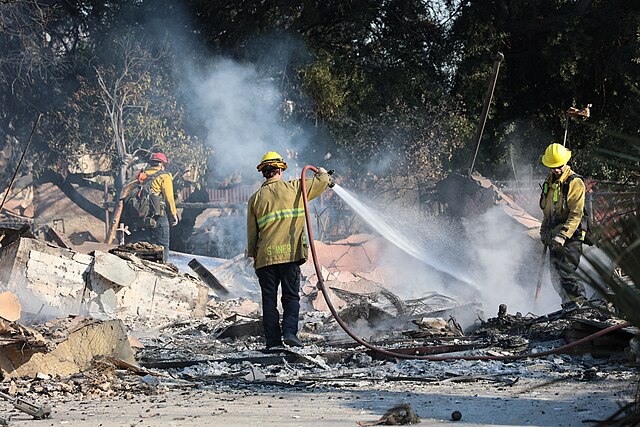
“The January 2025 firestorms have devastated the mountains and basins of Los Angeles County, underscoring the dire consequences of climate change, insufficient land and water management, and a lack of coordinated preparedness. Entire communities have been displaced, ecosystems decimated, and lives forever altered.

We, the undersigned, call upon the following entities to take immediate and transformative action:

Los Angeles County Board of Supervisors and City Councils:

  • Develop comprehensive water collection systems to capture and retain rainwater during storm events, ensuring availability for:
    • Firefighting efforts during wildfire seasons.
    • Cultivating and sustaining green corridors that act as natural firebreaks and habitat restoration zones.
    • Dust suppression in burned or arid areas to mitigate health impacts and protect vulnerable populations.
  • Incorporate Traditional Ecological Knowledge (TEK): Partner with local Indigenous tribal nations, communities, organizations and knowledge holders to guide restoration efforts, drawing on time-tested practices for managing land, water, and fire in ways that align with natural systems.
  • Appoint a Special Liaison for Land and Water Governance to oversee the integration of TEK and contemporary science into long-term strategies for fire prevention, water conservation, and ecological resilience.
  • Develop a systemwide strategic response plan in all school districts, inclusive of charter schools, to consider and prioritize the needs of children and youth by providing emergency resources and guidance to school level emergency response actions.
  • During recovery, halt evictions and sweeps of unhoused people as communities recover, a drastically increased number of local people find themselves without safe, forever housing, and seven+ people die daily on the streets of Los Angeles.

State of California:

  • Coordinate efforts to prevent and manage landslides in burn areas by:
    • Installing erosion control measures such as wattles, sediment basins, and plantings of fire-resistant vegetation.
    • Salvaging displaced soil following landslides to regenerate brownfields and restore degraded landscapes.
    • Funding research into long-term, regenerative strategies for mitigating debris flow and restoring soil health in post-fire regions.
  • Support TEK Integration: Provide grants to Indigenous-led organizations and communities for ecological restoration projects, ensuring that their expertise informs statewide fire and water management policies.
  • Provide grants and funding for local governments and institutions to implement labor and study programs that integrate ecological recovery with workforce development.
  • Offer incentives and accessible education through the CA Energy Commission and other statewide entities for construction with earth blocks, adobe, cob, and other natural.

Federal Government:

  • Establish a modern version of the WPA focused on climate resilience, supporting large-scale employment opportunities in fire recovery, water conservation, and landscape restoration.
  • Provide emergency funds and technical expertise for post-fire debris management, including soil salvage and toxic runoff mitigation.
  • Partner with Indigenous tribal nations and communities to develop national frameworks for integrating TEK into land and water governance.
  • Climate emergencies and disasters such as these should include defense of all community residents including the unhoused and migrant communities that live, work, worship or study in our communities. All exploitive deportation activities must stop.

Global Climate Advocacy Groups:

  • Partner with local and federal governments to implement innovative soil and water restoration technologies in burn zones while supporting education and employment initiatives focused on long-term ecological stewardship.

Key Requests:

  1. Management of Toxicity in Burn Zones: Test and remediate soil and water near burn zones to address contamination caused by fires, protecting public health and ecosystems.
  2. Landslide and Debris Management: Establish protocols to stabilize burn areas, collect displaced soil from landslides, and repurpose it for regenerating brownfields and degraded lands.
  3. Labor and Study Programs: Incentivize programs that employ local residents and train the next generation to restore ecosystems, enhance fire resilience, and create sustainable infrastructure.
  4. Traditional Ecological Knowledge (TEK): Partner with Indigenous communities to implement restoration practices that align with natural systems, ensuring sustainable land and water governance for future generations.
  5. Special Liaison for Governance: Appoint a dedicated leader to integrate TEK, scientific research, and community input into cohesive strategies for long-term ecological resilience.
  6. Water as a Resource: Ensure rainwater is retained and used strategically to prevent and fight fires, establish green corridors, and rehabilitate burn zones.
  7. Prioritizing keeping, restoring, and creating housing and safety for people of this place by pausing all evictions, sweeps, and identify and transfer land for earth-abiding housing by/for houseless people.

Why TEK and Governance Matter:

The integration of Traditional Ecological Knowledge (TEK) into fire recovery and prevention is essential for fostering harmony between human activity and natural systems. Indigenous knowledge offers invaluable insights into sustainable land and water management that can enhance resilience and promote biodiversity. Appointing a dedicated liaison ensures long-term, coordinated governance that honors both traditional practices and modern science, addressing the challenges of today while planning for future generations.

This is a collective plea for bold action to protect our communities, our natural landscapes, and future generations from the accelerating impacts of climate change. The time for incremental solutions has passed—this is a crisis that demands immediate, systemic change.”

Please sign your name on this petition HERE, which takes less than a minute to complete.

Thank you, and we’ll be in touch again in no time, Los Angeles.

J.T.

person sitting and posing in traditional native american clothing

This map shows at least 62 different tribes in California prior to European contact

The map is courtesy of the Northern California Indian Development Council, which has provided resources for American Indian communities since 1976. According to the U.S. Library of Congress:

“The earliest Californians were adventurous Asians who made their way across the Bering Straits to Alaska thousands of years ago when a warmer climate and a now-vanished land bridge made such travel easier. These men and women and their descendants settled North and South America, spreading out to form the various nations and tribes whom the first European visitors to this hemisphere dubbed ‘Indians.’ The mountain ranges of the Pacific Coast isolated these early settlers from the cultures that developed in neighboring Mexico and the western United States.”

Source: Northern California Indian Development Council.

There were at least six unique language networks in what would become California. In the L.A. basin area, the Gabrieleño, Tongva, or Kizh nation is noted as part of a network which spoke an “Uto-Aztecan” language.

In early 2024, the California Department of Fish and Wildlife is set to return 40 acres to the Pauite-Shoshone people in the Owens Valley in the department’s first ever such move.

In the “Southland,” 2023 also saw an Indigenous Charter School in El Sereno purchase 12 acres of land on behalf of the Gabrieleño Shoshone Tribal Nation to establish what will one day be known as the Chief Ya’anna Learning Village.

Be sure you’re subscribed to J.T. the L.A. Storyteller for more updates on Native American and California Native history soon!

Processing…
Success! You're on the list.

J.T.

adult alone boy building

It’s official. The number of homeless people in the U.S. has hit a record high of 653,000 on any single night

The 2023 Annual Homelessness Assessment Report to Congress was published this past December 15th; key findings of the 117-page document include that:

On a single night in 2023, roughly 653,100 people – or about 20 of every 10,000 people in the United States – were experiencing homelessness. Six in ten people were experiencing sheltered homelessness—that is, in an emergency shelter (ES), transitional housing (TH), or safe haven (SH) program—while the remaining four in ten were experiencing unsheltered homelessness in places not meant for human habitation.

Experiences of homelessness increased nationwide across all household types. Between 2022 and 2023, the number of people experiencing homelessness increased by 12 percent, or roughly 70,650 more people.

The 2023 Point-in-Time (PIT) count is the highest number of people reported as experiencing homelessness on a single night since reporting began in 2007. The overall increase reflects the increases in all homeless populations. Homelessness among persons in families with children experiencing homelessness rose by 16 percent. Similarly, the rise in individuals experiencing homelessness was 11 percent.”

It’s also important to note that point-in-time (PIT) estimates are widely considered to be undercounts–possibly by up to half–including since PIT counts are usually coordinated in the Winter morning, when many folks living on the street are out seeking some sort of refuge. Additionally, a 2019 article from Bloomberg pointed out a discrepancy between the department of Housing and Urban Development (HUD)’s number of unsheltered Americans versus that of the National Center for Educational Statistics (NCES); in 2015, HUD identified just under 565,000 people without shelter, but the NCES counted up to 1.3 million homeless children attending public schools that year.

While virtually every state, including Alaska and Hawaii count homeless people within their boundaries, since 2007, when point-in-time counting of unsheltered folks began, the five states with the largest growth in homelessness have been “blue” or democratic; however, it’s also key to consider that blue states have historically been far denser than “red” or Republican-led states.

On the other hand, the wealthiest 1 percent of Americans are also breaking records. According to Americans For Tax Fairness, a lobbying association, as of November 2023, the collective wealth of 741 billionaires in the U.S amounted to $5.1 trillion. The organization also notes that:

“[U.S. Billionaires’ wealth] is up an astounding $2.3 trillion (78%) since enactment of the Trump-GOP tax law in 2017—a fiscally irresponsible measure heavily slanted towards the rich that undoubtedly contributed to billionaires’ wealth growth over the last six years.”

To be certain, though, of 332 million people in the U.S., 741 billionaires represent just about 000002%, or two hundred-thousandths of the overall population.

J.T.

bed of california poppy flower

California leads the States in donations to Trump through Q3

When governors Gavin Newsom and Ron DeSantis held their “debate” this past November, one minor fact missing from the discussion was that donors in “the Golden State” have actually led the nation in supporting Donald Trump’s re-election campaign so far. Data from the Federal Election Commission shows that since August 2022 – September 2023, Californians have made at least 167,000 donations for the 2024 presidential election, $6.2 million of which has gone to the former president. Texan donors came in second for Trump over the last year at $5 million, while Floridians placed third for him at $4.6 million. New Yorkers, by contrast, contributed little more than $1.7 million to Trump, who himself is a former New Yorker. Trump first announced his intention to run for a second presidential term in November 2022.

In 2020, 23 of 58 counties in California went to Trump, including Kern, Shasta, El Dorado, and Placer counties, or where the state is far more rural than Hollywood and San Francisco still lead many to imagine. Trump tallied over 6 million votes from California that year, or more than any Republican candidate in state history. This also helps to explain why even though Trump lost areas like Orange County, there was still growth in support for him through certain segments of it, including in Asian-American and Latino communities there.

California’s 52 Counties and their choice for the presidency in 2020. Image courtesy of Wikipedia.org

Still, $6 million from Trump voters in California during the past year does not mean the state as a whole is friendly to his camp. Instead, it’s indicative of an energized California Republican electorate early in the race, one that is bound to be outmatched at a rate of 2 to 1 by California’s Democratic supporters as the U.S. inches closer to November 2024. Yet the volume of donations from Trump voters across the state over the last year are consistent with California’s towering economic weight going into the 2020 election as well.

At that time, the nation’s most populous state led the nation with presidential campaign contributions at more than $290 million. New York came in second at $141 million, while Texas and Florida doled out $109 million and $103 million, respectively; of dollars from California for Biden or Trump in 2020, more than 3/4ths went to the Democrat.

But where exactly does all this money go?

chicago cityscape
Michigan sky-line. Photo courtesy of by Pixabay.

To the “swing-states,” of course! In the form of television and radio ads, not to mention text messages and social media. This is because the electoral college system, which is a winner-take-all system in which just 51% of a state’s popular vote awards the state to any given candidate, makes it so hundreds of millions of dollars from California or Texas just support Biden or Trump landing slim majorities in a few swing-state counties. As the Washington Post noted recently:

“Former secretary of state Hillary Clinton, who won the 2016 popular vote by 2.9 million votes, or 2 percent, could have won the electoral college if about 80,000 people in Michigan, Pennsylvania and Wisconsin had voted differently. In 2020, about 45,000 votes in Georgia, Arizona and Wisconsin could have changed the outcome of that race, even though Joe Biden won the popular vote by more than 7 million.”

In summer 2023, then, the University of Virginia’s Center for Politics noted that given the last few election cycles and which states were won by a slim majority for the Democratic or Republican candidate, there are likely just four states to watch for 51% going to Trump or Biden in 2024:

“The four Toss-ups are Arizona, Georgia, and Wisconsin — the three closest states in 2020 — along with Nevada, which has voted Democratic in each of the last four presidential elections but by closer margins each time (it is one of the few states where Joe Biden did worse than Hillary Clinton, albeit by less than a tenth of a percentage point).”

In all likelihood, then, those $6 million for Trump from California’s red counties are pouring down in counties throughout Arizona, Georgia, Wisconsin and Nevada. According to the Washington Post, outreach in some of these areas is already focusing on “Black, Latino, and young and female voters.” But to appreciate how much the electoral college system undermines California voters for the presidency, consider that even if the entire population of all four of these swing-states were suddenly combined, the Grizzly bear state would still have nearly 13 million more people to count for taxation and representation.

The Center for Politics also noted that Pennsylvania and North Carolina may also be in the mix in 2024. And it’s key to underline that the Center’s report was published prior to the brutal conflict in Palestine and Israel this fall, which has definitely diminished support for Biden from certain swing-state voters who chose him over Trump in 2020. Nowhere has this been more pronounced than in Minnesota and Michigan, where key swathes of Muslim and Arab American communities are now determined to deny Biden a second term.

For those wondering how Q3’s donations to Trump from California worked out locally, in the city of Los Angeles, out of just over 4,600 donations to presidential campaigns, there was an overwhelming sum of donations to Republican challengers for the office over the last year. But a division between donations to Republican alternatives to Trump and Trump himself reflected the dilemma for the GOP nationally. For example, 842 of donations from this set netted $507,000 for Joe Biden, while just over 1,300 donations from the same set provided nearly $900,000 for Republicans like Chris Christie, Ron DeSantis, Nikki Haley, and Vivek Ramaswamy, among others.

By contrast, while Trump garnered just over $200,000 from the city of Los Angeles over the last year, he did so from more than 2,300 donations, which will also shift soon given his growing lead over the pack during this fall season. For the record, about 162 donations from this L.A. set also went to third-party and long-shot candidates such as Cornel West and Marianne Williamson.

Want to guess how many donations for Trump or Biden sailed out from 90210, or the Beverly Hills area zip code?

Naturally, this is a developing story. To get the scoop on Q4’s reports and hear more, be sure you’re subscribed to J.T. the L.A. Storyteller!

J.T.