Susan Park: Community Organizer for Korean Language Access

This interview has been edited for length, flow, and clarity. Photos provided by Susan Park.


Helen: I get the sense that you make time for the community a lot, on top of all the things that you already do! So thank you for making time for K-Town Is OK. To start, could you tell me a bit about your immigration story?

  Winter 1969/1970, Seoul
Winter 1969/1970, Seoul

Susan: I was born in Seoul, South Korea, in October of 1969. My family moved to Los Angeles in January of 1975. I distinctly remember that my father, older brothers, and I did not want to move to America. It was my mother who wanted to come. I say “moved” rather than “immigrated” because the decision was not one of need. It was one of choice. My family was upper class in Korea and we had a lot of social currency and political power. 

I also think that saying you’re an immigrant implies some kind of benevolence on the part of America, which I did not feel and don’t think really exists. When we came to Los Angeles in January of 1975, we were treated like pariahs. 

Helen: By whom? 

  Seoul, late 1972/early 1973: Susan with her two older brothers and uncle, who was a member of South Korea’s National Assembly
Seoul, late 1972/early 1973: Susan with her two older brothers and uncle, who was a member of South Korea’s National Assembly

Susan: By everyone. By non-Koreans. My best friend back in Korea dealt with a really heavy stigma because she was the child of a North Korean defector who was accused of being a spy by the South Korean government. And now, in America, I was like, “Okay, so now I know what it feels like to be my friend.” My family and I experienced people yelling racist slurs at us when we were walking down the street. This was a really common occurrence. It was like Trump’s America. 

Asian Americans who are five, seven, ten years younger than me will sometimes say, “It wasn’t that bad. Are you sure?” I have to explain to them that things got a little bit better every year. When they were in kindergarten, I was already in fifth, sixth grade, or even 10th grade. So there was a big, big difference in our experiences. 

  Los Angeles, March of 1975: A park near Hancock Park, celebrating Susan’s oldest brother’s 11th birthday
Los Angeles, March of 1975: A park near Hancock Park, celebrating Susan’s oldest brother’s 11th birthday

Helen: I came almost ten years after you, and I see how there would be that big difference. Even within my own family, my sister is five years younger than me, and our high school experiences were very different. The racial dynamics were strikingly different at the same school, half a decade apart.

Susan: Every year, it just kept changing. Things are still changing, but they’re changing asymmetrically. 

Helen: What are your earliest memories of Koreatown? 

Susan: Koreatown wasn’t really Koreatown when we moved. It was just a few stores. In Korean, we would just call it 한인촌 {Hanin-chon}—you know, the Korean neighborhood or village. There were some stores on Olympic, a few on Western. Koreatown back then was a high-crime area. So if we were racialized and attacked while walking somewhere, say, north of Hancock Park, it was worse in Koreatown. It was an inhospitable place for a lot of Koreans.

Helen: But your family would go there anyway? 

Susan: Yeah, we’d go there to shop. We would go to Olympic Market. There was another Korean market down the street, I think in the same strip mall where 함흥회관 {Ham Hung Restaurant} is, that little plaza. We’d also go to 김방아 {Kim Bang Ah, an iconic K-Town shop from 1969 to 2018} to get 메주 {meju | dried fermented soybeans in brick form} and 떡 {tteok | rice cake}. And then for other things like herbs and mochi, we would go to Chinatown and Little Tokyo. Back then, Chinatown was just banging. You could barely walk the streets because there were so many Asians who came to shop in Chinatown.

Back in 1975 or thereabouts, you were probably rich if you were coming to America. You had enough money to buy a plane ticket. This was back then when the living wage in Korea was a few dollars a day. I mean, imagine, right? 

Helen: Coming to America was a dream in the 70s, in that it was both an aspiration and an impossibility for a lot of people.

Susan: Yeah. And you had to have somebody in America who could sponsor you. [Immigration and Nationality Act of 1965 opened immigration for people outside of non-Western, non-Northern Europe. There was a seven-category preference system, with one of the categories being having relatives who were U.S. citizens or legal permanent residents.] That meant you were from a multi-generationally literate family. So most of the Koreans who came back then were highly skilled, part of the professional class. And they built lots of very tight-knit Korean communities in Koreatown and the San Fernando Valley, and it was based on your dad’s hometown, your mom’s hometown, or the same high school, junior high, college, whatever, they attended back in Korea. 

Helen: Sounds like that was true for your family as well? 

Susan: Yeah. 

Helen: So what is K-Town to you now? 

Susan: It’s home, and it’s a big part of my heritage as a Korean in America. I have a very long memory of Koreatown: the growth of it, the decimation of it in 1992, and the regrowth of it, which was led by corporate and retail real estate developers. There’s also the gentrification, even by Korean-Americans who come from other parts of the country.

Helen: What do you find unique about Koreatown in the larger landscape of L.A.? 

Susan: If you’re engaged with Korean businesses in Koreatown and the business owners see you as understanding Korean cultural norms and the language and such, it feels like you’re living in a small town. I drop off a fancy watch that my aunt gave me at the watch store, or I drop off my car to get service for tires. I don’t get a ticket, I don’t get anything. It’s just, “I’ll see you later,” you know? I tell non-Koreans friends about this and they’re like, “What? You just left a watch there? You left your car there? They didn’t give you a receipt? Is it just trust?”

And then Koreans in Koreatown, especially the elders… You have a lot more people from the provinces. So you’re more likely to hear 사투리 {satoori | Korean regional dialects} in Koreatown. It’s not super common, but it’s more common than other parts of L.A. I would say, overall, Koreans in Koreatown are different from Koreans who live elsewhere. 

Helen: You mean like the Valley or Orange County? 

Susan: Yeah. It’s very different. Koreatown is like a very small town. It’s not even like Seoul. It would be like a little neighborhood in Seoul, or a little village somewhere. People just act like that. Like, with some of the Korean seniors I help or church elders I meet for the first time, they totally act like we’re back in Korea, in 1975. It’s like, “Oh, you’re Korean? Then we’re 식구 {shikgu | family}.” Sometimes a very dysfunctional family. 

It’s like this even with American-born Koreans in Koreatown. This woman who I met for only the second time was like, “I don’t know why, but I feel so protective of you. I’m just going to treat you like my little sister, my 동생 {dongsang}.” So Koreatown does feel more like family in a way. It was very easy for me to start my nonprofit and gain a lot of immediate support from Koreans and Korean nonprofits. 

Helen: K-Town is also such a multiethnic, multicultural neighborhood. Could you speak to some of the changes you’ve seen in the perception of Koreans here over the years?

Susan: There were these narratives that had been brewing for a while, like, ”the Koreans stopped Little Bangladesh from getting a Neighborhood Council” or “the Koreans stopped a shelter from being built on Vermont” or “the Koreans are so insular”—that portrayed Koreans as being racist and as being a monolithic, singular voice. The most vocal group of Korean protestors at the homeless shelter rally were hired by real estate companies and developers to be vehemently against it. These people got conflated with all the groups of Koreans who came out. The real issue was that then Council Member Herb Wesson didn’t consult with Koreatown leaders and residents about the shelter. There’s this myth that Asians have too much. Meanwhile, I was seeing the rise of homelessness among Koreans and other AAPIs in Koreatown and how this was not being addressed. 

There’s also a sense of fighting for limited resources in Koreatown among Koreans and between different groups. Unfortunately, dialogue is extremely difficult since there are so many immigrant groups who can’t communicate with each other. This is why I think more bilingual children of immigrants need to step up to the plate for community healing and reconciliation. Marginalized peoples are in the same boat.

There are other weird narratives about Koreans not belonging in Koreatown. I started hearing from some people in the Latino political class that Koreans don’t live in Koreatown. And then we saw that whole controversy come to light in the recording of Nury Martinez, Gil Cedillo, and Kevin de Leon. They wanted a Latino takeover. Gil Cedillo says there aren’t Koreans in Koreatown: “It’s all Latinos, ha ha ha.” Their statements were so intentional and planned. 

Helen: And Cedillo said it so confidently… So what was your reaction to that? 

Susan: “Koreans exist in Koreatown!” You know, we built it from nothing. It used to be a terrible neighborhood that nobody wanted. We did not displace anybody. Koreatown is multi-ethnic, but it is also very Korean. My Cielo invited me to speak at a massive Oaxacan rally following the release of the Nury Martinez tapes.

There’s this idea that Koreans are all doing really well just because there’s a Korean-owned bank and it has a Korean sign. But I don’t own that bank. The Korean bank is just another corporation. We don’t even have any Korean credit unions. 

Helen: What I hear you saying is that people mistakenly assume that the presence of Asian-owned corporations in the enclave means that individuals who may be doing small business or living there have some correlating success or wealth.

Susan: Yes. Like we’re just this one big blob. I went to L.A. tenants’ meetings, and I was told that the Koreans own everything here but they don’t live here, that they are not tenants here. There are low-income, working-class Koreans whose presence is being denied, in Koreatown as well as south of Koreatown. There are a lot of older Koreans who live near West Adams, USC, and then to South Central. 

Helen: Seeing these issues arise drew you into more activism and involvement, I’m assuming? 

Susan: Yeah. I started a nonprofit called Asian Americans for Housing Environmental Justice to address issues of Koreans being displaced, and even erased in Koreatown. 

KYCC made a decision in 1992 to become multicultural and diverse, and that’s great. And the same thing with the Koreatown Immigrant Workers Alliance, KIWA. It used to be the Korean Immigrant Workers Alliance but in 1992 they made the decision to change their name and their path. We’re at the point where almost all of KYCC’s constituents are Spanish-speakers or Black or Indigenous, and Koreans are actually disproportionately underrepresented and underserved. KIWA is mostly Latino-serving. There are very few Koreans they’re serving, very few. They were trying to support the Korean workers at Coway [unionized in 2022], but that’s the first in a long, long time. I’ve got pretty decent knowledge of what’s going on with Koreatown nonprofits. 

As a high-level bilingual person with a very long history in Los Angeles, and knowing all the details of Koreatown—who the players are, where the narratives come from—I thought I was in a unique position to address these issues. 

Helen: We’ll come back to the specific issues your nonprofit addresses. Earlier, you mentioned Koreatown in 1992. What are your memories of the ‘92 riots/uprising?

Susan: I remember it really well. I remember feeling like Koreans were being targeted and scapegoated. It was national. There were things going on in New York too, for example. I thought it was really unfair to paint all Koreans in a certain light. Around that time, Radio Korea also had a hand in making Koreans feel entrenched and battled in specific areas like South Central. And though it all, I felt like the Korean side of the story wasn’t being heard. 

First of all, America holds Asians with accents largely in contempt. Then you have Korean-Americans who were trying to speak up without being prepared for it, with their halting English. They were recent immigrants so they didn’t know anything about Black American history. Nobody teaches you that before you come to America. They weren’t even teaching Americans Black American history. So the Koreans fell into the claptrap rhetoric of respectability politics, saying, “We work hard, we work hard,” which is going to fall on deaf ears. Black Americans work hard. Other people work hard. So we didn’t look good in the media. I resented the L.A. Times for framing the whole thing as a Black-Korean conflict. That was all over national media and I really felt like what the hell? 

Obviously, there were times when Koreans behaved inappropriately. The worst case was Latasha Harlins. [Harlins was a 15-year-old African-American girl who was mortally shot by South L.A. convenience store owner Soon Ja Du, 13 days after the videotaped beating of Rodney King which led to the ‘92 Uprising.] That was tragic. 

The Korean-American community has changed so much. But when the riots happened, that generation were folks who had experienced Japanese colonialism and war as children if they were older, or grew up in a post-war economy with all of the trauma, grinding poverty, and military dictatorship. 

Helen: In fact, the day that Korea was liberated from Japanese rule was also my dad’s third birthday. August 15,1942. 

Susan: So the older Koreans can get triggered when they hear that somebody’s attacking Koreans, you know? That sense of existential threat still affects us, that multi-generational PTSD.

Helen: Then do you think there’s a certain amount of validity in the comment that Koreans can be insular?

Susan: Well, when I was a kid, Korean food was thought of as just gross. 

Helen: Yup, totally.

Susan: Stinky, fermented. When I invited non-Korean kids over to my house, there was always some form of negative comments. So why do I want you in my home? Why do I want to explain my food to you? 

You know, there’s this American thing of, “Explain yourself and your history to me before I try to understand you.” Look, people don’t need to explain themselves to me for me to treat them like a human being. You don’t need to know my history for that, okay? There’s an American cultural tendency that all Americans pick up, where we want people to explain themselves to us. Like, “What are you doing here? Tell me about your culture, invite me to your party.” Not to mention the thing of grouping all Asians together. Most of the other children of color I grew up with were Black and Mexican. I’m comfortable at a cookout or Mexican kid’s birthday where there’s a pinata and the adults are drinking beer. I know these kinds of cultural behaviors better than I would if I went to a Filipino family reunion. Korea and the Philippines aren’t even near each other. But we still get boxed in with people we have nothing in common with. 

Helen: Something that’s really interesting to me is how you used to think as a kid, “Why do I need to explain my food to you?” but skip to 2023 when you’re explaining our food to people. 

Susan: This has been a high demand for a long time because I used to write about food for LA Weekly and KCET Good Food. And people were always like, “Why don’t you write about Korean food?” But back then, there was just not enough basic information out there about Korean food. So I’m really grateful for people like Maangchi and Korean Bapsang and My Korean Kitchen and Kimchimari. They did a great job of explaining the basics of Korean cooking to people. Now we’re at a time globally where there are enough people who know the basic stuff. People want more and they’re ready for it. They’ve studied enough Korean stuff so that I can drop more detailed, more complex information and they understand it. So that’s why I’m doing it now. 

Helen: I guess the distinction is that there isn’t that sort of entitled demand in the desire for information now. 

Susan: Yeah, it’s not entitled. 

Helen: You can tell that they’re genuinely interested. 

Susan: I mean, bless her. Maangchi was trying to pitch Korean food at a time when a lot of people didn’t know about it. People back then were like, “Well, what’s so special about this?” Maagnchi explained all the basic stuff to them. And now there are more people who say, “No, we know this is special.” 

There’s so much space in the world now for different kinds of messaging about Korean food. So I can see lots of like niches for myself. I really get deep into the history, etymology, and details of Korean food. Even Korean-Americans, they could ask their parents about these things but their parents will say, “What are you talking about?” 

Helen: Right. I feel like a lot of immigrant parents weren’t thinking in that intentional way about passing things down. They were head down and deep in survival mode, just trying to keep moving forward. Like, with my parents, if I really sit them down and ask specific questions, they have so much wealth of wisdom. So I’m trying to do more of that now. But when I was growing up, the answers to my questions were really basic, even if they did have the knowledge.

Susan: But now they’re giving you more detailed answers? 

Helen: Yeah. 

Susan: And they like doing that. 

Helen: Yeah, absolutely. 

Susan: My parents spent a lot of time teaching me things. Sometimes it was like a hostage situation when they were explaining things. 

Helen: Ha, that’s with my dad, too. 

Susan: Yeah, but I could tell now they enjoy talking about things. Back then, they were just like, “We have to give you all this information, like an encyclopedia. Because you’re gonna forget!” The anxiety of existential threat. 

Helen: Absolutely. Gosh, I felt that in my gut! 

We’ve covered such a wide range of topics today. I have one, final question. In light of your history and the work you do through Asian Americans for Housing and Environmental Justice, what is your hope for the future of Koreatown? 

Susan: The Koreans need help. They really know so little about American process. And Koreans who don’t speak English are also widely mistreated by non-Koreans. I see it every day in Koreatown. There needs to be increased access for Koreans and fellow AAPIs who have limited English proficiency (LEP), other linguistically marginalized people such as Indigenous people and even Black Americans who are also marginalized because they speak in African American Vernaculars vernacular. A lot of Koreans just don’t know what their rights are. They don’t really get any social services beyond the bare minimum. Right now and in the long term, the primary goal of my nonprofit is language access. So whatever programming we do, it’s for increased language access.

I want linguistically marginalized people to have more say in urban planning and environmental planning in Koreatown, to know what their rights are, and to be engaged with each other through my nonprofit and the community spaces I create. I’m good at that kind of stuff. I call it linguistic reconciliation rather than racial reconciliation. 


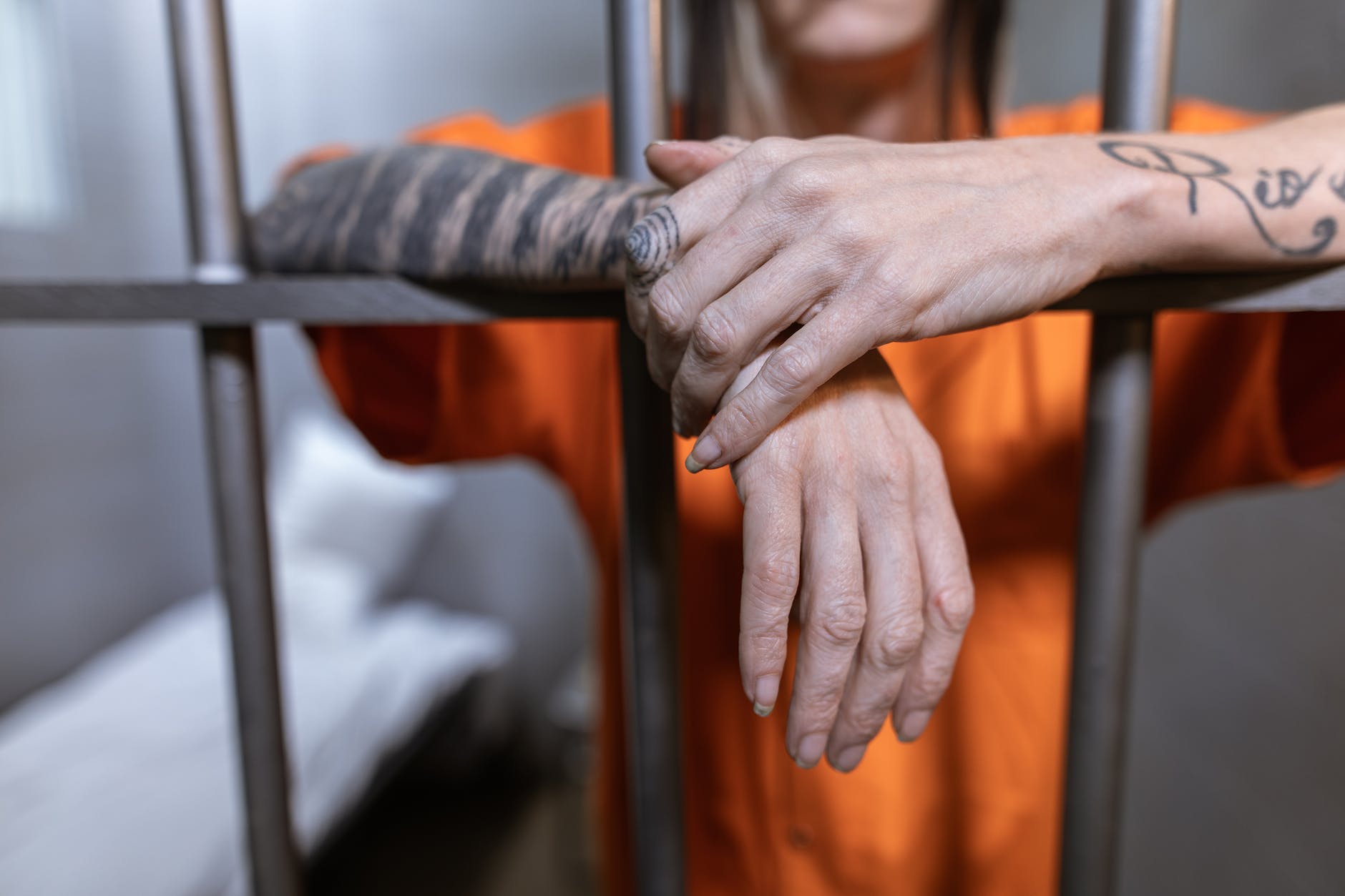
hands of a person with tattoo hanging from steel bars

Notes on Oppression and Violence, by Aletícia Tijerina

“Because I am Brown, I am oppressed.” When I speak this, I know it is not enough. The knowledge of racism is not enough. Because if I am still bound by my own self-hatred, I am the oppressor onto myself.

I ask myself, “How does a Brown sister, a Black sister, free herself?” Knowing I am oppressed, I must also know that I participate in this oppression. I must realize that I and all my darker sisters take the instruments of oppression and use them on ourselves. Our tools come in many forms.

We take from the oppressor the instrument of hatred and sharpen it on our bodies and souls. The internalization of “spic” and“nigger” begins at birth. Only consciousness must follow—or death.

Migrant Farm Labor Camp No. 109, Ohio, August 17, 1956:

The poor home of a migrant farm worker’s family was invaded today by police to rip the children from the groins of the Mexican mother. The Native American father had attempted to kill his three-year-old daughter. The incident was caused by severe economical distress and obvious hunger. The daughter mas placed in an orphanage.

The very roots of my radicalism began in the city streets.

Where was the point of departure from myself what time was it

What did the feeling look like how did it taste

Why did I swallow it?

Street culture and behavior is a way of surviving in industrial North America. It creates a passionate and violent language.

When I would whisper to a comadre, “I love you,” or yell “ I hate you” to an enemy, the passion of the language which exploded inside me sprang from the same source. I had learned that both love and hate are potentially violent. When I dared to love someone, he or she shared with me a basic understanding that through our hating we might survive. If we could hate enough and fight back enough we might be jailed less or knifed less or raped less often. As I grew older, I built upon the notion that hatred must seek revenge. I began responding to the harsh reality that I was worthless in society by broadening my violent actions. And in an odd way, I sought justice.

My responses were mixed with a pre-consciousness. A form of resistance.

I was incarcerated when I was sixteen on four felony charges and three misdemeanors. A plea bargain sent me to an experimental maximum security institution in Ohio instead of the Women’s prison. When I stole the jail transfer papers on me and others off the prison psychologist’s desk, I learned many of us had been sent here because we had high IQs. And, about me, the papers read “She is considered dangerous to society and herself.” Dangerous to society…

Dangerous to tell the violence I am. Dangerous to release the anger I am. Dangerous to write the truth of the source of oppression. Dangerous to name it—name the person, the myth and the props. Dangerous to be who I am. Dangerous to the social make-up of this country. Dangerous to write it. Dangerous to myself.

A poem I wrote in 1970 reads:

i stepped out

to meet the Cold

only the Cold warmed me feeling winter’s naked intent

the last Cold needle piercing my arm feeling white man’s consent

the lasting supply of bitter Crystals thru the dead of Snow.

i stepped out

to meet the Cold

only the Cold warmed my bleeding to escape

I was a junkie. Anglos have been consenting to us darkies shootin’ hard drugs since the beginning of their colonization. But the white man didn’t actually push the spike into my veins. I did. This act is clearly the embodiment of self-hatred. Hatred which goes back a long time. Goes back to the three-year-old girl terrorized by the knife of her father—to the White welfare woman whispering in my ears, “Your momma is a whore, you will grow up to be a no-good whore. . . .” Individual incidents in our lives—in our collective history—we North Americans—colonized and exploiter alike. Yet, it is our collective wills which have created the need for killer drugs. Violent responses in any form they take are accomplices to the wills which have created the need. The availability of drugs is not the problem or the dealer down on 122nd Street. They are only players in a far more complex value system of worth which nurtures self-hatred. Self-hatred which is directing and encouraging people to believe suicide is an option—as is alcohol or drug addiction or the reckless homicide on the highways.

We take from the oppressor the instruments of hatred and sharpen them on our bodies and our souls.

For us, because we were misfits—because we were dangerous, the authorities in control of our lives decided to use us as experimental guinea pigs—to monitor our brain waves—test out new drugs—experiment on how to control us, the very dangerous in society—how to mess with our minds.

We were all imprisoned for various crimes against the State: impersonating men; escaping abusive homes; setting fires; taking drugs; robbery ’cause we were hungry; plotting to overthrow the government. Most of our so-called “crimes” against the State were acts of resistance or rebellion against an oppressive family, school, society; for many of us, our cultural identity had been battered and abused since birth.

I was ward of the State from the ages of ten to twenty-one. My adopted mother had given up legal custody of me because of her mental break-downs.

It was after reading the Communist Manifesto,’ when I was thirteen, that I began to reason that the State had become the parent in my life. And it had been the State which had denied me my real mother, because she was brown and poor and undocumented. I understood too, that the hatred I possessed against the State had been nurtured in this denial. My hatred was more intense than the heat of soldering steel. My reign of revenge followed—robbery—assault on a policeman—possession of narcotics—crossing state lines with narcotics—documents indicating the plot to overthrow the government. The plot to overthrow my parents.

At the maximum security institution all of us darker sisters with curly, kinky, or otherwise offensive hair, had to straighten it to make it more acceptable to our white jailers. In rebellion to this forced cultural exploitation, I purposely jumped another inmate in the straightening room hair shop—breaking her nose and she laying a hot iron across my cheek. I was thrown into solitary confinement for two weeks. Yet, my purpose had been accomplished. Never again did the wardens lead me down the hallway to the hair shop , for fear I would start trouble again.

A radical is born with the will to survive and the strength to make trouble.

Yet, my hatred was consuming me. For all the talk of hatred against the oppressor, true liberation must begin with the liberation of one’s self from oneself.

In the basement of the prison was a roller skating rink that a couple of cell groups would use once a week. I liked going there, to watch the other girls round the rink, maybe seeing a good-looking one and making eye contact.

Racial tension in the prison was very high, even more so than on the streets. For there, we could not choose our peers, or escape our enemies. Descending into the cement basement of the prison, I accidentally bumped into a blue-eyed, brown haired white girl. It took only one half second for me to explode into hatred against her skin. I wanted to strike out at her, but the crowd pushed her forward and out of reach too fast. I hated her like fear loves weakness. Seating myself on the bench, I waited for her to round the floor. Suddenly, everything in the room faded. The music stopped, the sounds of skates weakened then stopped, people disappeared. I was facing a large emptiness alone. I blacked out, yet, while in this void, I heard a voice inside of me say, “See, when you hate so much you are blind to beauty and love can’t find you.” After hearing these words, the room reappeared, the music began again. I did not move for a long time. I didn’t move until I had vowed to myself to cease my hating and let love find me.

I had chosen to cross over, to allow the transcendence of hatred into the opposite, love. A meeting point inside of me let me see clearly there are two roads: one of hatred and one of love. It was still for me to act upon this knowledge to perform human acts which would build upon this vision of love.

When Martin Luther King Jr. said he had a dream—a vision of human love—he knew in the deep well of hatred is love. Love which knows the flesh of every human being is alive with feelings. Still, human love is a vision of love for all of us. Each moment we recall the vision of love we commit an act of resistance against the oppressor.

From Compañeras: Latina Lesbians

Notes

1. Karl Marx and Friedrich Engels, “The Manifesto of the Communist Party,” in The Marx-Engels Reader, ed. Robert C. Tucker (New York: W. W. Norton & Company, Inc.,1972), 33l—362.


This essay has been republished with permission from Aletícia “Kyle” Silverwood Tijerina. J.T. the L.A. Storyteller first quoted its words in a book review of Gloria Anzaldúa’s Making Face, Making Soul (1990), but the essay first appeared in Compañeras: Latina Lesbians (An Anthology), which was published in 1987 and revised in 2004.

An excerpt from Tijerina’s biography at Healing Arrows notes that: “Aleticia ‘Kyle’ Silverwood Tijerina co-founded Healing Arrows for Indigenous Social Justice and Wellness to address Indigenous human rights abuses and Treaty rights over water and lands. Kyle is a descendant of the Nassawaketon band of Odawa. A Native nationalist, she is a longtime activist and Sun Dancer at Big Mountain, Navajo Nation, where she supported the Diné people facing relocation off their traditional lands for over ten years. A professor of Native politics, Kyle taught American Indian politics.”

J.T.

Is It Time to Forgive L.A. City Hall?

First, Jimmy officially notes our first-ever panel: “IF NOT YOU THEN WHO: K-Town Speaks Up One Year After the Leaked Recordings.” This event is taking place on November 2nd, 2023, or just 15 days away from this recording, and you can RSVP for free here. Next, Jimmy places the discussion of the leaked recordings from last year under further consideration, contending that a lot was said not just by the L.A. City Council Members in question, but also by “the media,“ and that the truth is somewhere in between, not just in the headlines. Last but not least, Jimmy recommends our latest interview with Godfrey Santos Plata of L.A. Forward, which includes mention of expanding L.A. City Council very soon, among other things. To keep up with us, please subscribe to our newsletter. To make a tax-deductible donation to Quien Es Tu Vecindario for supporting K-Town Is OK’s first ever panel, please do so here.

——————

Host: Jimmy Recinos
Production & editing:
JIMBO TIMES
Original theme music:
2INFINITI88
Recorded at
Koreatown Media Lab, Pio Pico Branch Library, Los Angeles


Godfrey Santos Plata: As Koreatown Goes, so Goes Los Angeles

This interview has been edited for length, flow, and clarity. Photos provided by Godfrey Santos Plata.


Jimmy: I’ve got a handful of questions about this special place known as K-Town, which you are a fundamental part of. 

Godfrey: Aw, thanks!

Jimmy: First of all, what comes to mind when you think of this neighborhood, this community?

Godfrey: I mean, I think “community” is a really important place to start. It’s the people. Two words that came to my mind when you asked me that question are “diversity” and “density.” I think those two things describe everything we have to offer but also the challenges that Koreatown faces. What we know about Koreatown is that it’s an amalgamation of so many different communities. Not only are there long-standing Central American communities and the Korean community, we know that, historically, there was a Jewish migration through here as well that eventually moved out west. And then, today, what we readily see—because of so many of the restaurants and bars—is that this is also often the place where people who are not from California or Los Angeles end up landing. And so it’s this really interesting mix of old and new all the time in a densely populated, three-square-mile area. It’s the most dense area west of the Mississippi. People think of New York City in terms of density, and we probably approximate that here in Koreatown.

What that means for me as a resident is that I love walking to everywhere that I need to go or taking public transportation to go everywhere I need to go. 

But, you know, going back to the challenges of diversity and density, it also means we don’t have enough housing for all of our neighbors. In the shadows of new buildings that are rising all the time to attract people moving to California for the first time, we are not accommodating people who have been living here for decades but can’t afford the rent. So that means that there are major tensions in imagining what the future of Koreatown is and who it’s for.

Jimmy: That’s absolutely right. But before we meditate further on the future, I want to ask what is one of your earliest memories in or through K-Town?

  Godfrey and his sister in their toddler years singing at their Gardena home soon after first arriving to the U.S.
Godfrey and his sister in their toddler years singing at their Gardena home soon after first arriving to the U.S.

Godfrey: When I immigrated to the U.S. from the Philippines, my family landed in the South Bay, in the Gardena/Carson/Compton area. So my first memories of Koreatown are actually on the news, following the beating of Rodney King by four police officers. We all watched it. It’s probably one of my first memories of video-captured police violence. And then we know what happened when the four officers were acquitted. That sort of unleashed a lot of tension about the different racial structures that created certain realities for particular racial groups, but also between different racial groups. So my first memories of Koreatown are Koreatown on fire.

Jimmy: Wow.

Godfrey: Koreatown populated with cars in the middle of the street, people hiding behind cars with guns or to avoid gunshots. These are my first memories of Koreatown as a child, having moved to the United States.

My parents actually don’t know this but after I learned how to drive, I had an “opportunity” with the family car one day. Normandie, Western, and Vermont all pass through Gardena. So I just followed Western all the way up, which actually leads to exactly where I live today, right off of Western. It’s really interesting to have lived on both sides of Western in my journey through Los Angeles. As an adolescent driving up this way to Koreatown, the density was attractive. There was so much stuff happening here that made it feel like a city, versus a place like Gardena where my parents settled because it was affordable and it was close to a lot of Filipino things down there near Carson. It was just a little bit… Well, it wasn’t this

Jimmy: So you’re saying that, after those early years seeing K-Town on fire, you also bore witness to the further development and densification of K-Town, and that actually called out to you as a young person who wanted to find some hip things to do at that point in your life.

Godfrey: Yeah. I mean, when I was growing up, I didn’t have a lot of permission to spend time in the way that I wanted to. And that’s why when I had the opportunity to actually make decisions on my own, I was curious about the things that my family wouldn’t make the choices to do. 

My family would rather preserve a lot of cultural comforts, like what restaurants they knew, what malls they knew in the South Bay. I was itching for something different, and there was something that was beckoning about Koreatown.

  Godfrey with high school friends reuniting after graduation in 2002.
Godfrey with high school friends reuniting after graduation in 2002.

Jimmy: And just like you said, all you had to do was— 

Godfrey: Literally go north on Western. And you see so much of the city, right? Just along any of those streets: Vermont, Normandie, or Western. That’s a podcast in and of itself, just to drive down those streets.

Jimmy: Yeah, those are absolutely core avenues for the city of Los Angeles, especially Central Los Angeles. You’ve sort of already spoken about it up to a point, but I’m curious about one key strength that you see in K-Town and then one drawback or shortcoming.

Godfrey: What a hard question! There are so many things I want to say about both strengths and challenges, but I’ll go back to the first things that came to me: diversity and density. I do think those are strengths, not just for Koreatown but for Los Angeles as a whole. The reality is that LA will see more density. And the diversity and the pedestrian ways in which we can live life in Koreatown—where we have our schools, churches, public transportation, restaurants, bars, everything within walking distance—is a reality that could exist for other parts of Los Angeles. 

We can imagine what that could look like through the way we get to do it here. As a Filipino, I love eating. I love food and I love being around lots of different types of celebrations, and in Koreatown, there’s no shortage of events on weekends that are popping up all the time. And people actually come to Koreatown on the weekends because of this, right? So the density and energy don’t serve just those of us who live here. They’re attractive and they boost an economy. I think there’s an imaginative possibility in the density and diversity for something really cool that can move Los Angeles forward. And yet people are scared of density, they’re scared of what that does. 

  Godfrey and an array of friends celebrating a birthday at    Southland Beer    in Koreatown.
Godfrey and an array of friends celebrating a birthday at Southland Beer in Koreatown.

I think it’s rightful to be scared of density when it pushes out folks who have made their lives and home here. You know, we are sitting at a coffee shop right now where we’re overlooking a parking lot, rather than a home or units of homes. There are a lot of land use questions when you have density, and it depends who owns that property. Is it publicly owned? If so, what say do the neighbors have? Then there are lots of cost-related questions that come into mind with density. A lot of safety questions, too. So I think that there are challenges in terms of land use, and a part of those challenges are also environmental. I mentioned the pedestrian nature of Koreatown, and I think I did that intentionally to open up our imagination to what that means environmentally. 

One of my wishes for Koreatown is that we have more green space, which is also really hard to realize in a densely-populated area that’s reserved primarily for housing and business. We want green space that serves the hundreds of thousands of people who deserve that. There’s so many families being raised here. But where do you put the green space when you’re balancing that with priorities of housing?

Jimmy: You know, I think of Central Park in New York as an example of balancing density and green space, how the two don’t have to be in such conflict. 

Godfrey: They don’t… Because of the political work I’ve done in the area, something that I’ve come to peace with is the fact that you’re never going to please everybody. I think we always have to choose who is the core compass for the decision-making for a particular neighborhood. Who’s at the center? And right now in Koreatown, a lot of that center is the potential future tenant of Koreatown who doesn’t even know they’re going to move here yet, as opposed to the people who are here all the time. 

I’m lucky to be in rent-control housing. As I mentioned, I love being able to walk everywhere. And there are establishments I frequent, in particular, a plaza at 740 South Western. There’s like a bar there for beer, there’s a ramen place, a boba place… It’s just this place that I can walk to. 

Recently, they were bought out by Jamison Properties, one of the biggest developers out here. And I think I would be more willing to say that that’s okay if I knew that 100% of that was going to go to affordable housing, because that’s actually what we need. But the reality is, in that building that’s going to have about 140 units or so, about 11 are going to be for affordable housing. 

Jimmy: So, 10%?

Godfrey: Yeah, 10%. That’s the requirement to access permission for that development to happen. That sucks, right? We haven’t centered the community that is currently here in making that decision. We’re centering the possible profit that could be made. When I talked with those business owners, they hadn’t been reached out to by the city to figure out what their next steps are. Where would their businesses go after this? What’s their recourse? Not only are we displacing tenants who could remain here in Koreatown, we’re displacing businesses and people’s livelihoods that allow them to stay in the area too. So there’s this ripple effect.

You know, when you mentioned Central Park earlier, I agree. I would love a vision like that for Los Angeles. But something I’ve learned on my visits to New York is that some of that park has also displaced Black and Indigenous communities, especially on the northern side. And I’m sure there are even more stories that I don’t know. That’s what we’re trying to figure out here, right? Like, what would a community vision for 50 years down the line look like for us? I’m glad Central Park helps us imagine what could be possible. But at some point, there was some sort of cost benefit at the start of the planning, right? 

Jimmy: I think what you’re alluding to is actually taking into account the legacies in the city of Los Angeles up to this point, and not pointing to some arbitrary place on the map and going, “Development can be placed here.” No, actually, there’s a legacy to honor. There’s a whole history of how the neighborhood came to be formed. And to just wipe that off is to lose culture, history, and what equity is supposed to look like in the 21st Century. So what we’re really talking about is honoring and honing in on the story here.

Godfrey: Yeah, and I think we have to be intentional about that. There’s an organization in L.A. that is trying to move toward what’s called a capital infrastructure plan, or CIP. And the state actually mandates that we move toward a CIP. San Francisco has done one, San Diego has done one. L.A. has put ours off. 

A capital infrastructure plan is the idea that we need to look at least 10 years into the future and imagine the L.A. that we want to live in. And that could mean parks, it could mean streets, it could mean lights, pedestrian infrastructure, transportation, all of those things. I think moving toward a CIP could activate us community members to articulate what legacies we really want to keep. But the way we operate as a city right now is reactively, band-aid by band-aid, like, “Oh, this street is unsafe. Let’s approve the bike lanes and bus lanes for it.” And then there’s, like, a six-year waiting window until it gets through the bureaucracy. I think forcing ourselves to backwards-plan from a vision at least 10 years into the future would give us the space to articulate what histories we want to keep a stake in the ground for while we envision things like parks, housing, etc.

Jimmy: It’s so interesting that you mention that because my follow-up question is about the infamous conversation about the redrawing of the maps in L.A.

Godfrey: Oooh!

Jimmy: We’re coming up on almost exactly one year since the audio tape of that discussion was first released to the public via The L.A. Times. I want to ask you if you caught wind of the discussions regarding K-Town when that recording was published, and what your overall sense was after hearing or learning about it.

  Getting out the vote for    Measure ULA    (for affordable housing and homelessness prevention).
Getting out the vote for Measure ULA (for affordable housing and homelessness prevention).

Godfrey: Yeah, so there’s a lot layered into this audio tape that we heard last October. Just to make sure folks are caught up, I should explain that census data is collected federally every 10 years, and that captures updated snapshots of populations and demographics. We then use that data to redraw lines and make sure that we proportion the appropriate number of people set out to represent us per district—currently 15 seats on City Council—so that one district theoretically doesn’t have drastically more people than the other, that kind of thing.

So, folks have been calling for Koreatown to be whole for quite some time. This is not a new thing. In prior iterations of our City Council maps, the density of Koreatown, even though it’s so small—three square miles—has made it difficult for redistricting commissions to figure out how to honor the voices of the 100,000-plus people. And so what they did was cut up and slice up Koreatown. And what that has meant for folks in Koreatown advocating for things at City Council is that they’ve had to figure out, “Well, which City Council member do I even go to?” “Does any City Council member even prioritize us when they only have a small slice of Koreatown?”

Jimmy: Like, your City Council member could be different from my City Council member.

Godfrey: Literally across the street from each other! Exactly! Different City Council offices can create different services to support unhoused folks. So it literally means that, in some cases, if unhoused folks moved from a set of blocks down the line to another set of blocks in a new City Council district, they might receive different treatment in trying to find housing, just because of the way these lines are drawn.

Two years ago in 2021 when redistricting happened based on the latest census data, there was a movement to consolidate Koreatown into a singular district. As a result, we’re all in Council District 10 now. At the same time that this was happening, three City Council folks and a labor leader were talking behind the scenes. To clarify, the tapes that we heard in 2022 were actually recorded in 2021, during the whole period of redistricting. And them having those conversations outside of public view was illegal based on the Brown Act,¹ which says that only two people can talk privately at any time. And here we had four people concocting a plan to figure out how to create districts that would meet their self-interests. And they made fun of Oaxacan folks who make this particular area of L.A. home, saying that they weren’t the same as otherwise Latinx folks in Los Angeles. So they were creating all this divisiveness within communities that often are amalgamated together. 

They also wanted to redraw the lines for Council Member Nithya Raman, and potentially give her a district where zero of the voters actually had knowledge of who she was. And where they ended up in their talk was a map where I think 40% of her district changed.

Jimmy: More than any other City Council member, by far.

Godfrey: By far. Your question was whether I thought of Koreatown immediately when I heard the leaked audio. Later that day, I literally went to get Oaxacan food based on what I heard, because it felt like a time when we needed to uplift and support each other. What was theoretically and performatively a public process just became a major blow of mistrust to people in Los Angeles. There were so many ways to make sure that the public was involved here. Yet we saw proof that, at the end of the day, all the public engagement clearly was not real despite the many hours that went into that. These Council members had final say and a labor leader was colluding with them. Thankfully, some of the stuff that was good stayed. Koreatown was finally whole. 

We will never know what else could have been done for the people of Los Angeles because we are now currently living in maps that have been spoiled. 

That’s why the same people who fought to keep Koreatown whole are now fighting for a redrawing of the maps. I believe that we can still keep Koreatown whole and not throw many communities under the bus at the same time. We’re not in competition with each other; we’re here to lift each other up. And a way to do that is to have an independent redistricting council, which the City Council is moving toward. I feel confident that we’ll be able to make that happen by voter passage of that on a ballot in 2024. 

A bigger question is whether or not we should even keep 15 City Council seats. Do 15 seats  create too large of districts that incentivize the type of moneyed Council member who is as corrupt as we heard on those audio tapes? My thinking is yes. What could happen if we had smaller districts that could just better represent our particular needs, as opposed to fighting each other’s communities? Putting communities of color against each other for representation is not necessary when we can just redraw the puzzle which was created a hundred years ago, in 1925.

  Godfrey and friends in front of Berendo Middle School, canvassing so residents know about a new vote center nearby.
Godfrey and friends in front of Berendo Middle School, canvassing so residents know about a new vote center nearby.

Jimmy: And to that point, the whole purpose of the Planning Commission was to create a map in which K-Town could be made whole at the same time that new mapping was consistent with the growth of L.A. and L.A.’s population. So there are already people who have dedicated hours of their lives to making better maps. But, of course, L.A. City Council has the approval power at the end of the day so they either take that into consideration or not. What you’ve described is a case in which they largely did not take the Commission’s recommendations into account and just went ahead with what they set out for on their own, which was obviously problematic. 

Excellent analysis on your part, per usual, Godfrey. I think you’ve already answered this to a great extent, but as a sort of final comment, what do you think would be key for elected officials to keep in mind with respect to K-Town?

Godfrey: Oh gosh, that’s really hard, especially because our districts are so large! I will, I suppose, uplift ways in which different candidates and elected officials have seemed to do right by Koreatown. I think we do right by Koreatown when we make efforts to engage not just folks who are already connected to organizations in Koreatown, but by literally knocking on doors, ensuring that outreach materials are in multiple languages, not just English, and taking the time in a high-tenant district to engage tenants. 

Unfortunately, what we know is true in this election industry that we’re in is that homeowners are often the ones targeted for engagement. And there are reasons for that. 

There’s probably some sort of class bias that tells us that a homeowner’s going to be more likely to vote because they can afford to own a home. It’s easier to get access to a homeowner. Meanwhile, tenants move a lot. They’re displaced from place to place. It’s harder to get into apartment buildings. So tenants are going to be harder to engage. And yet many tenants are going to fall in a particular set of economic brackets that need more attention, need more engagement, need more hope from elected leaders. So I would want to see any elected official representing Koreatown not just be inclusive for language and race and ethnicity, but also housing status. Koreatown is predominantly immigrants and people of color who are renters. That’s Koreatown for me. 

Jimmy: Godfrey, I am confident that this conversation will serve in a small but significant step towards getting your comments to more and more representatives for K-Town, whoever they may be. 

Godfrey: We’ll see. And if not, we’ll hold them accountable.


1. For the record, a report by the L.A. Times notes that in order for the meeting between these councilmembers to be illegal under the Brown Act, a majority of L.A. City Council Members or an L.A. City Council committee would have needed to be present.


Connect with Godfrey: Instagram | Twitter 
Connect with LA Forward: Website